








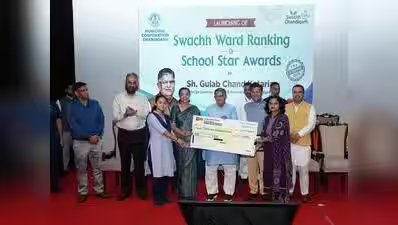
Chandigarh: In a bid to take Chandigarh’s cleanliness drive to the neighbourhood level and spur competition among wards, Punjab governor and UT administrator Gulab Chand Kataria Thursday launched the Swachh Ward Ranking 2026, under which the top-performing wards will be eligible for development grants of up to Rs 50 lakh.Calling for a citywide people’s movement on cleanliness, Kataria urged residents, elected representatives, RWAs, market associations, educational institutions, sanitation workers and officials to work together to keep Chandigarh clean and sustainable. He also emphasised greater adoption of the principles of reduce, reuse and recycle, promoting composting, recycling and the concept of waste-to-wealth.Addressing the gathering, the administrator said the initiative was not merely a competition among wards but an effort to build a culture of accountability, public participation and scientific waste management.“Chandigarh’s identity as the City Beautiful is defined not only by its architecture, greenery and planned sectors, but also by cleanliness, civic discipline and responsible public behaviour,” he said, adding that preserving the city’s legacy was the responsibility of the present generation.Kataria said the ranking exercise would move beyond city-level assessments and evaluate cleanliness at the ward, neighbourhood, street, market, park and household levels. He stressed that the entire waste-management chain, from waste generation and segregation to collection, transportation, recycling and final disposal, should be measured through outcomes rather than paperwork alone.The governor also welcomed the incentive mechanism proposed under the scheme. As per the plan, the top three platinum-ranked wards will be eligible for development grants of Rs 50 lakh, Rs 30 lakh and Rs 20 lakh, respectively. He said the ranking system should encourage healthy competition and help replicate successful practices across the city.Mayor Saurabh Joshi described the initiative as a major step towards making cleanliness a ward-level public movement, while MC commissioner Amit Kumar said the ranking framework would make sanitation monitoring measurable, transparent and outcome-oriented.Kumar said all wards would be evaluated on 55 parameters carrying 1,000 marks, covering the entire spectrum of sanitation and solid waste management. The exercise, he said, would help identify gaps, promote competition and facilitate sharing of best practices among wards.BOXSchool Star AwardsThe MC also highlighted its School Star Awards initiative to recognise educational institutions promoting cleanliness, waste segregation, environmental sustainability and student participation. Under the scheme, schools securing the top three positions are awarded cash prizes to encourage adoption of best sanitation and sustainability practices. The first-ranked school receives Rs 51,000, the second-ranked school Rs 31,000, and the third-ranked school Rs 21,000. The initiative seeks to foster a culture of environmental responsibility among students while promoting cleaner and greener campuses.