






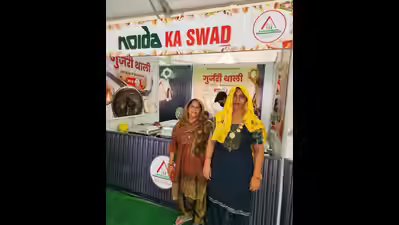
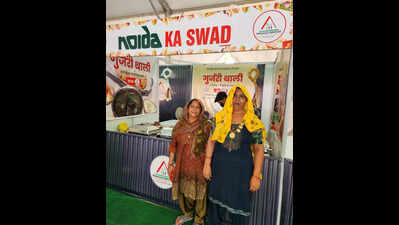
Noida: UP’s recently released list of signature cuisines would surprise more epicureans than delight them.Though it has some popular stalls, it’s not as if foodies are lining up for soya chaap of the Ghaziabad vintage — the district’s signature cuisine, according to the state’s list under the ‘One District, One Cuisine’ scheme. Neither is the Noida patisserie — cake and bakery items are the district’s ‘signature’ — known to make its truffles and croissants crunchier than the ones in Delhi, Gurgaon or any other modern Indian city.What, then, is ‘signature cuisine’ here?Before Gautam Budh Nagar became a place of expressways, IT parks and gleaming residential towers, it was a primarily agricultural district with a cuisine shaped entirely by the land, weather and agrarian life.This food culture still survives in village homes of the Gurjar community. A guest here is likely to be served ‘gochani roti’, made from a mix of wheat and chana flour and smeared generously with freshly churned white butter. Alongside comes a smoky saag prepared from sarson (mustard) leaves, chana greens and methi, sometimes accompanied by the lesser-known lesva ka saag. A tall brass tumbler of ‘chhaas’ (buttermilk) completes the meal.One could call this a signature cuisine, but it would not be a unique one. Similar meals are eaten across the agrarian belts of North India. Cuisines that are most closely associated with Ghaziabad, meanwhile, are rasaawal — a dessert made by slow-cooking rice in sugarcane juice — and shikanji, which is a local speciality in Modinagar.These cuisines are shaped by crops that could survive in the semi-arid plains of western Uttar Pradesh. At the annual UP International Trade Show in Greater Noida, a ‘Gurjari Thali’ was served at a stall under the banner ‘Noida ka Swad’. The platter featured bajra roti, white butter, curd or buttermilk, and saag soaked in desi ghee.Diwakar Bidhuri of the Gurjar Art and Culture Trust, which curated the stall, says the food reflects centuries of “survival farming”. “People ate what grew locally. Wheat was heavily controlled and rationed during World War II, so villagers depended largely on millets like bajra, jowar and makka,” he says.Wheat rotis, now an everyday staple in urban homes, were reserved for weddings, festivals or when an honoured guest visited the house.Geography also influenced what people ate. Villages in the region were traditionally divided into bangar and khadar belts. Bangar referred to higher land untouched by annual flooding, while khadar was floodplains nourished by river water. “Crops depended on which side of the river the land was located. Since irrigation facilities like tube wells were rare, farmers mostly depended on rainfall and the Yamuna. Crops such as sarson and chana were preferred because they needed less water,” says Bidhuri.As a result, leafy greens dominated kitchens. So saag made from mustard, chana and pawar leaves became everyday food. Bottle gourd and sponge gourd were among the few vegetables commonly cultivated. Almost every Gurjar household owned cows or buffaloes, making dairy central to the diet. So, buttermilk, curd, kadhi and kheer were not festive indulgences, but regular food items.Bijendra Arya from Makoda village says milk also had a place in social customs of the community. “In many households, kheer is still prepared on every full moon and new moon night,” he says.But while Gautam Budh Nagar has transformed into one of India’s fastest-urbanising districts, its native food culture has been largely invisible. Unlike Awadhi cuisine or the food traditions of Old Delhi, the Gurjar fare hasn’t entered restaurants or commercial food circuits. Locals believe the cuisine deserves formal recognition, especially at a time when millets are being promoted globally as nutritious and climate-resilient food.“This food is not limited to Gautam Budh Nagar. It belongs to the larger Harit belt that includes villages of Ghaziabad, Delhi, Faridabad, Haryana and much of western Uttar Pradesh. Hence, we cannot term it as a cuisine of Gautam Budh Nagar,” says food historian Pushpesh Pant.In the UP District Gazetteer published in 1966, wheat, rice, jowar, bajra and barley are listed as staple food of the Meerut region. Ghaziabad came into being as a district in 1976 and Gautam Budh Nagar 20 years later, in 1997.He terms the one district, one cuisine exercise “a mindless one”, carried out “without keeping in mind the region’s culinary history”. “Soya chaap as traditional cuisine of Ghaziabad is far-fetched. The cuisine, if at all we can call it one, has been straightjacketed to fit in as the district’s traditional cuisine. I would have even settled for shikanji, which is quite famous in Ghaziabad. Soya chaap, which was developed in 1960-80 in Punjab and parts of Delhi, has no traditional connection with Ghaziabad,” adds Pant.Pant is also dismayed by the omission of non-vegetarian items from the state’s list that assigned signature cuisines to each district. “In India, 68% of the population eats non-veg food and in Delhi, of which Ghaziabad is an extended arm, and Lucknow, different kinds of non-veg items were developed over centuries. Yet, these were not included in the list,” he says.Food expert Sohail Hashmi feels rasaawal would be an apt ‘signature’ cuisine for Ghaziabad. “Ghaziabad is part of the sugarcane belt and local cuisine by definition is food that is prepared from crops or eatables grown in abundance in that area,” he says. “The food culture of the Braj area like Mathura and Vrindavan and Delhi has influenced Ghaziabad, so kachauri, lassi and laddu (from Braj) and non-veg dishes from Delhi are integral to the local cuisine,” adds Hashmi.Ashutosh Singh, deputy commissioner of Industries in Ghaziabad, says the state’s cuisine list should not be seen from the prism of traditional cuisine. “It is meant to promote local delicacies and also provide financial assistance to people involved that comes under the aegis of the micro, small and medium enterprises ministry,” he says.The department earlier submitted a survey report to the ministry that found soya chaap and ‘rasili soya chaap’ had become popular food items consumed as snacks in Ghaziabad. There are around 100 small-scale industries involved in its making and over 1,000 retailers and 250 wholesalers involved in the trade, according to the department.“Raj Nagar District Centre, Indirapuram, Crossings Republik and Raj Nagar Extension are popular soya chaap centres. The soya is first boiled and then ground. Orange flavour is added to it and this product is supplied to eateries and vendors. They grill this soya and serve it,” explains Ramesh Kumar, who has been in the business for 18 years.The state cabinet recently approved Rs 150 crore for the one district, one cuisine scheme for the current fiscal, under which financial assistance of a maximum Rs 20 lakh can be given to those associated with the chosen items.As for shikanji, an official associated with the cuisine-identification exercise told TOI, “Shikanji was seriously considered. But it is not a drink that is consumed all through the year. Secondly, people involved in its business were found to be overqualified to avail themselves of the scheme’s benefits, so it was dropped.”As a result, leafy greens dominated kitchens. So saag made from mustard, chana and pawar leaves became everyday food. Bottle gourd and sponge gourd were among the few vegetables commonly cultivated. Almost every Gurjar household owned cows or buffaloes, making dairy central to the diet. So, buttermilk, curd, kadhi and kheer were not festive indulgences, but regular food items.Bijendra Arya from Makoda village says milk also had a place in social customs of the community. “In many households, kheer is still prepared on every full moon and new moon night,” he says.But while Gautam Budh Nagar has transformed into one of India’s fastest urbanising districts, its native food culture has been largely invisible. Unlike Awadhi cuisine or the food traditions of Old Delhi, the Gurjar fare hasn’t entered restaurants or commercial food circuits. Locals believe the cuisine deserves formal recognition, especially at a time when millets are being promoted globally as nutritious and climate-resilient food.“This food is not limited to Gautam Budh Nagar. It belongs to the larger Harit belt that includes villages of Ghaziabad, Delhi, Faridabad, Haryana and much of western Uttar Pradesh. Hence, we cannot term it as a cuisine of Gautam Budh Nagar,” says food historian Pushpesh Pant.In the UP District Gazetteer published in 1966, wheat, rice, jowar, bajra and barley are listed as staple food of the Meerut region. Ghaziabad came into being as a district in 1976 and Gautam Budh Nagar 20 years later in 1997.He terms the one district, one cuisine exercise “a mindless one”, carried out “without keeping in mind the region’s culinary history”. “Soya chaap as traditional cuisine of Ghaziabad is far-fetched. The cuisine, if at all we can call it one, has been straightjacketed to fit in as the district’s traditional cuisine. I would have even settled for shikanji, which is quite famous in Ghaziabad. Soya chaap, which was developed in 1960-80 in Punjab and parts of Delhi, has no traditional connection with Ghaziabad,” adds Pant.Pant is also dismayed by the omission of non-vegetarian items from the state’s list that assigned signature cuisines to each district. “In India, 68% of the population eats non-veg food and in Delhi, of which Ghaziabad is an extended arm, and Lucknow, different kinds of non-veg items were developed over centuries. Yet, these were not included in the list,” he says.Food expert Sohail Hashmi feels rasaawal would be an apt ‘signature’ cuisine for Ghaziabad. “Ghaziabad is part of the sugarcane belt and local cuisine by definition is food that is prepared from crops or eatables grown in abundance in that area,” he says. “The food culture of the Braj area like Mathura and Vrindavan and Delhi has influenced Ghaziabad, so kachauri, lassi and laddu (from Braj) and non-veg dishes from Delhi are integral to the local cuisine,” adds Hashmi.Ashutosh Singh, deputy commissioner of Industries in Ghaziabad, says the state’s cuisine list should not be seen from the prism of traditional cuisine. “It is meant to promote local delicacies and also provide financial assistance to people involved that comes under the aegis of the micro, small and medium enterprises ministry,” he says.The department earlier submitted a survey report to the ministry that found soya chaap and ‘rasili soya chaap’ had become popular food items consumed as snacks in Ghaziabad. There are around 100 small-scale industries involved in its making and over 1,000 retailers and 250 wholesalers involved in the trade, according to the department.“Raj Nagar District Centre, Indirapuram, Crossings Republik and Raj Nagar Extension are popular soya chaap centres. The soya is first boiled and then ground. Orange flavour is added to it and this product is supplied to eateries and vendors. They grill this soya and serve it,” explains Ramesh Kumar, who has been in the business for 18 years.The state cabinet recently approved Rs 150 crore for the one district, one cuisine scheme for the current fiscal, under which financial assistance of a maximum Rs 20 lakh can be given to those associated with the chosen items.As for shikanji, an official associated with the cuisine-identification exercise told TOI, “Shikanji was seriously considered. But it is not a drink that is consumed all through the year. Secondly, people involved in its business were found to be overqualified to avail of the scheme’s benefits, so it was dropped.”As a result, leafy greens dominated kitchens. So saag made from mustard, chana and pawar leaves became everyday food. Bottle gourd and sponge gourd were among the few vegetables commonly cultivated. Almost every Gurjar household owned cows or buffaloes, making dairy central to the diet. So, buttermilk, curd, kadhi and kheer were not festive indulgences, but regular food items.Bijendra Arya from Makoda village says milk also had a place in social customs of the community. “In many households, kheer is still prepared on every full moon and new moon night,” he says.But while Gautam Budh Nagar has transformed into one of India’s fastest urbanising districts, its native food culture has been largely invisible. Unlike Awadhi cuisine or the food traditions of Old Delhi, the Gurjar fare hasn’t entered restaurants or commercial food circuits. Locals believe the cuisine deserves formal recognition, especially at a time when millets are being promoted globally as nutritious and climate-resilient food.“This food is not limited to Gautam Budh Nagar. It belongs to the larger Harit belt that includes villages of Ghaziabad, Delhi, Faridabad, Haryana and much of western Uttar Pradesh. Hence, we cannot term it as a cuisine of Gautam Budh Nagar,” says food historian Pushpesh Pant.In the UP District Gazetteer published in 1966, wheat, rice, jowar, bajra and barley are listed as staple food of the Meerut region. Ghaziabad came into being as a district in 1976 and Gautam Budh Nagar 20 years later in 1997.He terms the one district, one cuisine exercise “a mindless one”, carried out “without keeping in mind the region’s culinary history”. “Soya chaap as traditional cuisine of Ghaziabad is far-fetched. The cuisine, if at all we can call it one, has been straightjacketed to fit in as the district’s traditional cuisine. I would have even settled for shikanji, which is quite famous in Ghaziabad. Soya chaap, which was developed in 1960-80 in Punjab and parts of Delhi, has no traditional connection with Ghaziabad,” adds Pant.Pant is also dismayed by the omission of non-vegetarian items from the state’s list that assigned signature cuisines to each district. “In India, 68% of the population eats non-veg food and in Delhi, of which Ghaziabad is an extended arm, and Lucknow, different kinds of non-veg items were developed over centuries. Yet, these were not included in the list,” he says.Food expert Sohail Hashmi feels rasaawal would have been an apt ‘signature’ cuisine for Ghaziabad. “Ghaziabad is part of the sugarcane belt and local cuisine by definition is food that is prepared from crops or eatables grown in abundance in that area,” he says. “The food culture of the Braj area like Mathura and Vrindavan and Delhi have influenced Ghaziabad, so kachauri, lassi and laddu (from Braj) and non-veg dishes from Delhi are integral to the local cuisine,” adds Hashmi.Ashutosh Singh, deputy commissioner of Industries in Ghaziabad, says the state’s cuisine list should not be seem from the prism of traditional cuisine. “It is meant to promote local delicacies and also providing financial assistance to people involved that comes under the aegis of the micro, small and medium enterprises ministry,” he says.The department had earlier submitted a survey report to the ministry that found soya chaap and ‘rasili soya chaap’, had become popular food items consumed as snacks in Ghaziabad. There are around 100 small-scale industries involved in its making and over 1,000 retailers and 250 wholesalers involved in the trade, according to the department.“Raj Nagar District Centre, Indirapuram, Crossings Republik and Raj Nagar Extension are popular soya chaap centres. The soya is first boiled and then grinded. Orange flavour is added to it and this product is supplied to eateries and vendors. They grill this soya and serve it,” explains Ramesh Kumar, who has been in the business for 18 years.The state cabinet recently approved Rs 150 crore for the one district, one cuisine scheme for the current fiscal, under which financial assistance of a maximum Rs 20 lakh can be given to those associated with the chosen items.As for shikanji, an official associated with the cuisine-identification exercise told TOI, “Shikanji was seriously considered. But it is not a drink that is consumed all through the year. Secondly, people involved in its business were found to be overqualified to avail of the scheme’s benefits, so it was dropped.”Traditional, not uniqueRiver ran through itSoya chaap ‘not cuisine’What survey found