




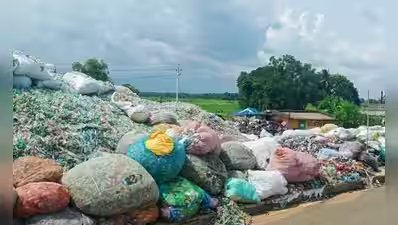
Panaji: Goa has supplied around 7.6 lakh tonnes of refuse-derived fuel (RDF) to cement plants, helping displace an estimated 3.2–5.6 lakh tonnes of coal, Goa Waste Management Corporation (GWMC) managing director Harish Adconkar said.He said stronger collaboration between urban local bodies, waste management agencies and cement manufacturers, along with a consistent supply of RDF, would be crucial to meeting the targets under the Solid Waste Management Rules, 2026.“Goa has made significant investments in scientific waste management, developing systems for segregation, processing, legacy waste remediation and converting RDF into an alternative energy resource. Going forward, stronger collaboration between urban local bodies, waste management agencies and cement manufacturers, along with consistent RDF offtake, will be essential to advancing circularity and sustainable resource utilisation,” Adconkar said.He was speaking at the 16th edition of the Conference on Alternative Fuel and Raw Material Usage (AFR), organised through the Energy Efficiency Council of the CII-Green Business Centre.The two-day conference brought together over 350 industry representatives, policymakers, waste management experts and technology providers to discuss ways to accelerate the adoption of alternative fuels and raw materials in the Indian cement industry.Sharad P Kale, special adviser to the chief minister and former head of technology transfer and collaboration at BARC, stressed the need to ensure that waste management solutions are guided by scientific principles and environmental responsibility.“While technology offers solutions, its application must be guided by sound science and environmental responsibility. Decentralised processing of biodegradable waste, minimising food waste and maximising resource recovery are essential to reducing landfill dependence,” he said.Kiran Ananth, executive director – Energy Efficiency, Renewable Energy and Green Entrepreneurship at the CII-Sohrabji Godrej Green Business Centre, said India produced around 491 million tonnes of cement in the financial year 2025-26, while the sector’s thermal substitution rate (TSR) reached 7.5%, with around 7 million tonnes of alternative fuels being used annually.“With over Rs 1,200 crore invested in co-processing infrastructure over the past six years, the priority is to maximise existing capacity through reliable RDF supply and quality assurance. India’s municipal waste stream offers significant potential to address both urban waste management and industrial decarbonisation. CII remains committed to fostering collaboration among governments, urban local bodies and industry to accelerate alternative fuel adoption and advance a circular economy,” he said.The conference also featured sessions on innovative approaches to domestic and industrial waste management, alternative raw materials for low-carbon cement and strategies to scale up alternative fuel use in the cement industry.