







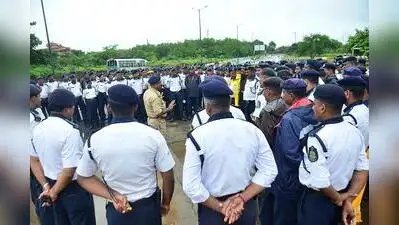
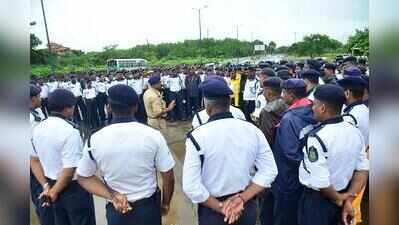
Panaji: Goa Police, whose origins trace back to the Policia do Estado da India (PEI) established by a Portuguese decree in April 1946, will be awarded the President’s Colour — the highest honour conferred on a military unit or police force. With this, Goa Police joins a select group of forces and is the fifth state to receive the President’s Colour.Before the PEI was formed, all policing duties, including maintaining law and order, were handled by the Portuguese military. The creation of the PEI marked the beginning of a dedicated civil policing system in the territory. It was tasked with maintaining public order and vigilance, and included multiple branches, such as public security, judicial police, internal and external traffic management, administrative and municipal policing, and civil identification. Two years later, detailed rules were framed in line with Portuguese legislation.A senior police officer said that during the transitional period, the PEI operated under the Corpo de Policia e Fiscalizacao da India (CPFI), a body established in 1924 to serve as the military’s policing arm.“For administrative efficiency, the PEI was organised into five territorial divisions, each headed by a commissioner reporting to the commander of the PEI. Over time, it evolved into the principal law enforcement agency of the territory, exercising powers of search, seizure, prosecution, and even extradition. Systems of reward and punishment were codified to enhance efficiency, and the strength of the force expanded steadily to meet the needs of an enlarging society,” the officer said.As Goa’s liberation movement intensified — especially after the civil disobedience campaign launched by Dr Ram Manohar Lohia in 1946 — the PEI became increasingly focused on containing political agitations. “The same organisation that had earned repute for administrative efficiency gradually came to symbolise the Portuguese regime’s repressive apparatus,” Goa Police said.Following Goa’s Liberation on Dec 19, 1961, the territory began reorganising its policing system on Indian lines. N R Nagu was appointed the first inspector general of police of liberated Goa, and other key appointments were made the next day. The services of PEI officials were protected, with retirement options offered to those who wished to opt out, while others were absorbed into the new structure.Initially, Portuguese ranks and designations continued, but by 1966, a major restructuring began based on the recommendations of B Shetty, additional DGP of the CBI, who reviewed the existing setup. Goa Police said his report highlighted systemic gaps and the need to rebuild public trust. Implementing his recommendations helped lay the foundation for the modern Goa Police, anchored in Indian laws, democratic accountability, and community confidence.Goa Police added that until Feb 2, 1999, the force was headed by an IGP. After that, the post of director general of police was created, bringing Goa Police in line with other state police organisations.Chief minister Pramod Sawant has invited Union home minister Amit Shah to attend the presentation ceremony of the President’s Police Colours to Goa Police. DGP Alok Kumar said the honour marks a prestigious moment for Goa Police, as it becomes the fifth state to receive the President’s Police Colour.