








Located on the eastern edge of Uttar Pradesh along the banks of the Ganga, Ghazipur has traditionally been known as an agriculture-dominated district with a rich cultural heritage and a strategic location bordering Bihar. For decades, the district’s economy revolved around farming, with limited industrial development and inadequate connectivity restricting its growth potential. However, over the last nine years, particularly since 2017, Ghazipur has witnessed a gradual but significant transformation driven by improved infrastructure, better law and order, welfare-oriented governance, and enhanced connectivity under the Yogi Adityanath government.Although Ghazipur is yet to emerge as a major industrial hub like Gautam Buddh Nagar, Lucknow or Kanpur, the district today presents a picture of steady economic progress and improving quality of life. Investments in roads, expressways, rural infrastructure, agriculture and public services have laid the foundation for sustained long-term growth, thanks to strving efforts of chief minister Yogi Aditynath who taken upon himself to remove the tag of underdeveloped from eastern part of the state.Ghazipur’s economy remains predominantly agriculture-based, but its economic profile has gradually diversified over the past decade. Available estimates indicate that the district’s Gross District Domestic Product (GDDP), measured at constant 2011-12 prices, increased from about Rs 8,477 crore in 2011-12 to approximately Rs 10,726 crore in 2018-19, registering an average annual growth rate of around 3.5 per cent. More recent estimates place the district’s GDDP at nearly Rs 11,400 crore, reflecting continued expansion despite the disruptions caused by the COVID-19 pandemic.One of the most notable changes has been the increasing contribution of the service sector. While agriculture continues to support a large proportion of the population, services such as transport, communication, trade, public administration and real estate have become the principal drivers of economic growth. The share of the tertiary sector rose significantly during the last decade, indicating the gradual transformation of Ghazipur from a purely agrarian economy towards a more diversified one.Agriculture remains the backbone of the district, although its share in the economy has declined due to the faster growth of services. Livestock, dairy farming, fisheries and allied agricultural activities have also expanded, providing farmers with additional income opportunities.
Purvanchal expressway: The game changer
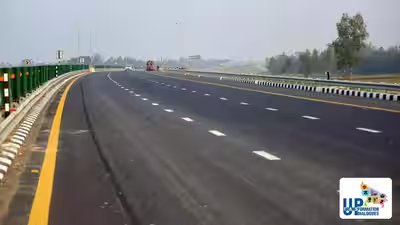
The single biggest catalyst for Ghazipur’s transformation has undoubtedly been the Purvanchal Expressway, inaugurated in 2021. Stretching over 340 kilometres from Lucknow to Ghazipur, the expressway has fundamentally changed the district’s connectivity with the rest of Uttar Pradesh.Earlier, travelling from Ghazipur to Lucknow often required nearly twelve hours because of congested highways. Today, the journey can be completed in nearly three to four hours. This dramatic reduction in travel time has lowered transportation costs, improved logistics and expanded market opportunities for farmers, traders and entrepreneurs.The expressway has also positioned Ghazipur as an important gateway to eastern Uttar Pradesh. Better connectivity is attracting investment in logistics, warehousing, food processing and other service industries. The corridor is expected to generate employment opportunities and stimulate industrial development over the coming years.
Better roads and urban infrastructure
Alongside the expressway, Ghazipur has witnessed significant improvements in road infrastructure. Several important roads within the district headquarters have been widened and modernised, improving urban mobility and reducing congestion. Major routes connecting Vikas Bhawan, Sainik Chauraha, district hospitals and other public institutions have been upgraded.Rural connectivity has improved considerably under the Pradhan Mantri Gram Sadak Yojana and various state government programmes. Better roads have enabled easier transportation of agricultural produce, improved access to healthcare and education, and strengthened the rural economy.The preparation of the Master Plan 2031 is expected to guide planned urban expansion, ensuring that future growth takes place in an organised and sustainable manner.
Agriculture remains the growth engine
Agriculture continues to employ the majority of Ghazipur’s population. The district is well known for the cultivation of paddy, wheat, pulses, vegetables and bananas. Farmers have increasingly benefited from government initiatives promoting irrigation, soil health management, mechanisation and improved seed varieties.Direct income support through the PM-Kisan Samman Nidhi, crop insurance under the Pradhan Mantri Fasal Bima Yojana, and the expansion of irrigation facilities have helped reduce risks faced by farmers.Diversification into dairy farming, fisheries and livestock has also gained momentum. These allied activities provide regular income throughout the year and reduce dependence on seasonal crop production. Self-Help Groups have encouraged women to participate in dairy production, food processing and small-scale rural enterprises, thereby strengthening household incomes.
Improving law and order
One of the major changes frequently highlighted in Ghazipur has been the strengthening of law and order. The state government’s campaign against organized crime and illegal encroachments has created a more secure environment for businesses and investors.Improved policing has encouraged commercial activities, facilitated infrastructure development and increased public confidence. Better governance has also ensured faster implementation of development projects across the district.
Welfare schemes transforming rural life
The implementation of central and state welfare schemes has significantly improved living conditions in Ghazipur’s villages.Thousands of families have received permanent houses under the Pradhan Mantri Awas Yojana. Rural households now enjoy better access to electricity, LPG connections under the Ujjwala Yojana, toilets under the Swachh Bharat Mission, and tap water through the Jal Jeevan Mission.Government schools have witnessed improvements in infrastructure under Operation Kayakalp, while healthcare facilities have been strengthened through Ayushman Bharat and the expansion of primary health centres.These interventions have enhanced human development indicators and improved the quality of life, particularly for economically weaker sections.
Industrial potential
Although Ghazipur is not a major industrial district, it possesses considerable potential in agro-based industries. Food processing, rice milling, dairy products, fruit processing and cold storage facilities can leverage the district’s strong agricultural base.The district also has historical importance because of the Government Opium and Alkaloid Factory, one of India’s oldest pharmaceutical establishments. This legacy provides opportunities for pharmaceutical and medicinal industries in the future.Traditional industries such as jute products, handicrafts and small-scale manufacturing also offer employment opportunities. Government policies promoting MSMEs, ODOP and food processing are expected to accelerate industrial development in the coming years.
Tourism and cultural heritage
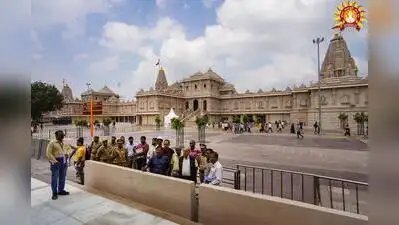
Ghazipur’s cultural and historical heritage offers untapped tourism potential. The district’s association with the Ganga, ancient temples, religious sites and historical monuments can attract both pilgrims and heritage tourists.Improved highways and better civic infrastructure have made these destinations more accessible. The development of tourism infrastructure can generate employment in hospitality, transport and local handicrafts.Ghazipur’s transformation over the last nine years demonstrates how infrastructure-led development, supported by improved governance and welfare programmes, can gradually reshape the economy of a predominantly rural district. While agriculture continues to remain its economic backbone, better connectivity, expanding services, improved law and order and growing investment opportunities are creating a new growth trajectory.The district still faces challenges, including limited industrialisation, relatively low per capita income and the need for greater private investment. However, with the Purvanchal Expressway acting as a powerful economic corridor, improved rural infrastructure, expanding agricultural diversification and continued policy support, Ghazipur is well positioned to emerge as one of eastern Uttar Pradesh’s important growth centres over the coming decade.The journey of Ghazipur reflects the broader transformation taking place across Purvanchal—a region once considered economically backward but now increasingly integrated with the mainstream development story of Uttar Pradesh.