








In the villages of Gorakhpur district in Uttar Pradesh, clay has been shaped into elephants, horses, birds, diyas, idols and decorative pieces for generations. For artisan families, terracotta was traditionally a hereditary skill and a source of livelihood, but limited access to technology, finance and larger markets often kept the craft confined to small household enterprises.The story of Rajan Prajapati, a terracotta artisan from Aurangabad in the Langdi Gulriha area of Gorakhpur, illustrates how this traditional occupation is being transformed into a modern enterprise. A recipient of the President’s Award, Rajan has built a business with an annual turnover of nearly Rs 1.5 crore and provides regular employment to more than 25 artisans. His journey has become an example of how Uttar Pradesh’s One District One Product (ODOP) programme is converting traditional skills into sustainable entrepreneurship.The transformation is particularly significant because Gorakhpur’s terracotta is not merely a handicraft; it is an important part of the district’s cultural identity. The craft received the Geographical Indication (GI) tag, with its GI application filed in September 2018 and registration formally granted in April 2020. The GI recognition establishes the geographical identity and authenticity of Gorakhpur Terracotta.
From traditional local craft to organised enterprise
Rajan’s success reflects a broader change in the way traditional artisans are approaching their work. Instead of depending exclusively on local traders and small orders, artisans are increasingly adopting modern equipment, improving designs, increasing production and seeking markets outside their districts.According to the information provided by Rajan, the ODOP programme played a major role in this transition. Modern equipment, technical guidance, training and market support enabled him to increase production while maintaining the traditional character of the craft. Electric wheels and other machinery reduced the limitations of purely manual production and made it possible to meet larger orders.Today, his unit sends terracotta products to markets in different parts of the country. During the festive season, dispatches can rise to 18–24 truckloads, demonstrating how a village-level craft enterprise can develop the capacity to participate in a much larger commercial market. Recent reporting on Gorakhpur’s terracotta sector also notes that individual consignments from Rajan’s unit can be worth several lakh rupees.The result is not merely an increase in business turnover. Rajan’s enterprise has created employment for more than 25 artisans, turning individual craftsmanship into a source of livelihood for other families as well. His workshop has also become a place where younger people can learn the techniques of terracotta making.
ODOP puts local talent at the center
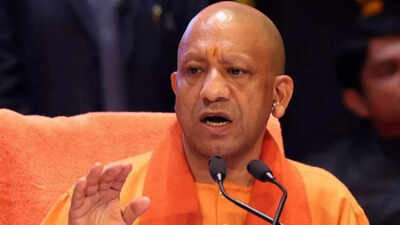
The Yogi Adityanath government launched the One District One Product programme in 2018 with the objective of identifying and strengthening the distinctive products and traditional industries associated with different districts. The programme seeks to preserve traditional skills while increasing artisan incomes, local employment, product quality and access to national and international markets.The approach marks an important shift in government policy. Instead of treating traditional crafts simply as cultural heritage, ODOP seeks to develop them as viable economic activities. For artisans, this means support at several stages—from skill development and modern tools to finance, branding, exhibitions, packaging and market linkage. The current ODOP framework includes margin-money and financial assistance, training and toolkit support, marketing development assistance and Common Facility Centres.The ODOP Training and Toolkit Scheme, for example, provides structured skill training and modern toolkits to artisans. The programme provides 10 days of free training, an honorarium of Rs 200 per day and a relevant advanced toolkit to eligible beneficiaries. The objective is to improve productivity, quality and earning opportunities.For traditional crafts such as terracotta, this combination of inherited skill and modern technology can make a decisive difference. A potter who once produced a limited number of pieces manually can, with improved tools and better market access, respond to larger orders without completely abandoning traditional methods.
GI tag adds value to the craft
The GI tag has provided another important layer of recognition. Gorakhpur Terracotta is officially registered as a handicraft under the GI system, with the registered applicant based in Aurangabad, Gulriha, Gorakhpur—the very area associated with the craft’s artisan community.For products rooted in a particular geographical and cultural tradition, GI recognition can strengthen consumer confidence and distinguish authentic products from generic alternatives. Combined with ODOP branding and market promotion, it gives Gorakhpur’s terracotta a stronger identity.The craft is now reaching major Indian cities and, increasingly, customers beyond India. Digital platforms and online marketplaces have further expanded the potential customer base, allowing products made in Gorakhpur’s artisan clusters to reach consumers who may never physically visit the district.
Nine years of a wider artisan-focused approach
Rajan’s story also fits into the larger artisan-oriented policy approach pursued by the Yogi government since 2017. ODOP, launched in 2018, has been complemented by schemes such as Vishwakarma Shram Samman Yojana, which seeks to strengthen traditional occupations by providing skill enhancement training and advanced toolkits to artisans, including potters and handicraft workers.The government’s broader ODOP framework also connects artisans with finance, entrepreneurship support, exhibitions, buyer-seller meets, branding, packaging and export promotion. Its objective is to build an ecosystem rather than provide one-time assistance.This ecosystem is particularly important for small artisans. Finance can help them purchase machinery; training can improve designs and production; common facilities can provide access to technology; and marketing support can connect them with buyers. In this way, government intervention attempts to address the traditional weaknesses of artisan enterprises simultaneously.
A model for Atmanirbhar Uttar Pradesh
Rajan Prajapati’s journey—from a traditional artisan background to an entrepreneur with a business of nearly ₹1.5 crore—captures the central idea behind the government’s vision of an Atmanirbhar Uttar Pradesh: local resources, local skills and local talent should become the foundation for local enterprise and employment.His achievement is also significant because he has not left his traditional craft behind in the process of modernisation. Instead, he has used technology and better market access to make the craft commercially stronger.His enterprise demonstrates the multiplier effect of entrepreneurship. One artisan’s improved income becomes employment for other craftsmen; higher production creates demand for raw materials and services; market expansion strengthens the local craft cluster; and the growing visibility of the product encourages younger generations to view traditional craftsmanship as an economic opportunity rather than merely a hereditary occupation.Gorakhpur’s terracotta journey therefore represents more than the revival of an old art form. It is a story of how a centuries-old skill can be connected to modern technology, branding, finance and markets. The success of Rajan Prajapati shows what can happen when government policy meets individual enterprise: a traditional craft can become a modern business, a local product can acquire global recognition, and a skilled artisan can become a job creator.For Uttar Pradesh, that is perhaps the most important message of the ODOP initiative—the road to self-reliance can begin not in a large industrial complex, but with the hands of an artisan shaping a piece of clay in a village workshop.