






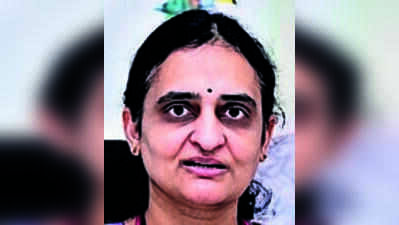
Hyderabad: When Pavitra Sirolkar learnt that her son Arav had Allan-Herndon-Dudley syndrome (AHDS), she knew the medicine had to reach him early. But procuring just one month’s supply of tiratricol from Germany meant arranging ₹12-13 lakh.On Nov 30, that struggle will ease for her and six other families. This is because Hyderabad-based paediatrician Dr Sivaranjani Santosh, who earlier led the ORS campaign, helped arrange a compounded version of the drug for seven children and will hand it over, along with KM Gopakumar of Access to Medicines India.The drug costs about ₹2.5 lakh per child per year, against ₹4.68 crore to ₹9 crore for the commercial version.AHDS, also known as MCT8 deficiency, is a rare genetic disorder. In children with the condition, a faulty gene prevents thyroid hormones from reaching brain cells properly. The brain needs thyroid hormones to grow and function properly. Tiratricol acts like these hormones and helps reduce some effects of the deficiency. More importantly, it helps control the effects of excess thyroid hormone in the body.However, securing the medicine was not easy. “Attempts to get it through the manufacturer’s compassionate-use programme did not succeed, and a plan involving a team from Erasmus and CMC Vellore also fell through. This is why, in Sept, I made an appeal on social media, urging people to tag the Prime Minister and Union health minister. The case then reached the Netherlands-based Pharmaceutical Accountability Foundation (PAF) through media reports, which explored compounding the drug. Transvaal Pharmacy in The Hague developed the formulation,” said Dr Sivaranjani.The beneficiaries are Arav, five children treated at CMC Vellore and a one-year-old whose father reached out after the appeal. A year’s treatment for all seven children costs about ₹15.08 lakh. Around ₹6.09 lakh was raised in India, while PAF is raising the remaining ₹9.13 lakh. With a shelf life of six months, the medicine will be imported in two batches.Dr Sivaranjani said imports cannot be the long-term answer. The permissions are patient-specific and for personal use and do not allow bulk import of the active ingredient or commercial manufacturing in India.“How can a medicine be available in the world but not be available for our children?” she asked. She now plans to approach the Union govt and is circulating a document among specialists to identify more children with the condition. There is no confirmed national count yet. “Meanwhile, Access to Medicines India is actively exploring the possibility of getting some companies to compound the drug in India,” Dr Sivaranjani added.Dr Sivaranjani had earlier led a campaign against sugary packaged drinks being sold as “ORS” or “ORSL” without the WHO-recommended salt-sugar balance. The campaign led food safety regulator FSSAI to bar the term “ORS” on such labels in 2025.