
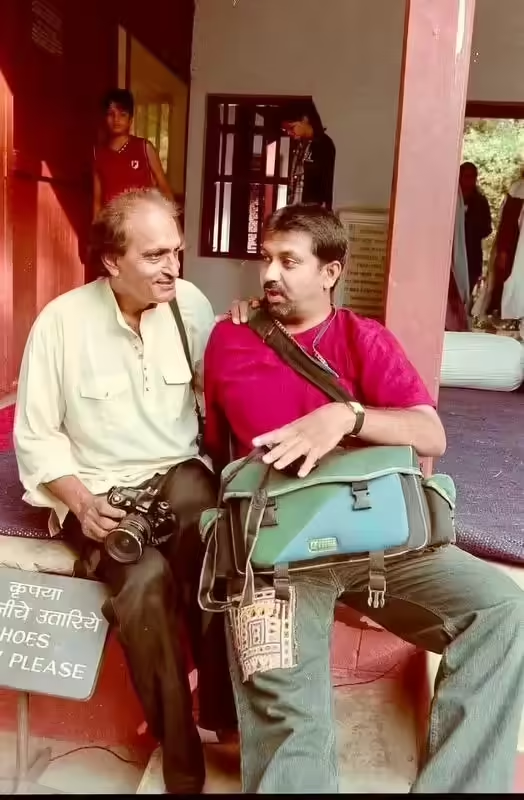
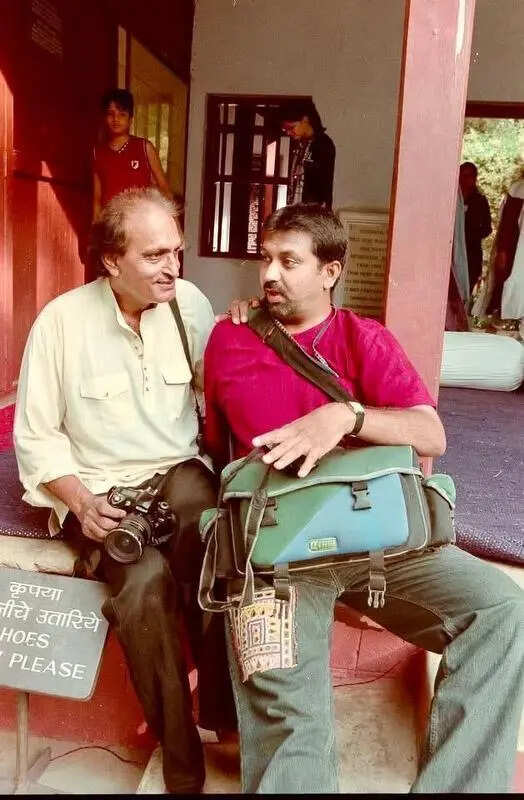
Ahmedabad: On Sunday, India lost Raghu Rai, one of its most faithful witnesses. A celebrated photojournalist whose images of Bhopal gas tragedy stirred the world’s conscience, Rai had spent his life ensuring nothing important went unseen. His portraits of Mother Teresa became the way many outside India understood her. He was the man Henri Cartier-Bresson chose for Magnum Photos.His six decades of work amount to the most complete visual record modern India has of itself. The world knew what his camera saw. Photographers in Gujarat remembered what he did when he wasn’t looking through a lens.He peeled fruits for his guests. He captured reflections on glazed surfaces. He ensured lunch was served before a conversation began. These were the gestures that those who looked up to him will never forget.Vivek Desai, managing trustee at Navajivan Trust and a photographer and cultural curator, first met Rai in Delhi in 1998. The first lesson had nothing to do with a camera. “He taught me how books are made,” Desai says. That education deepened through Rai’s Benaras project and eventually led to a collaboration on a book about Gujarat — one Desai insisted had to be published in the state. “He joked that choosing an Ahmedabad publisher might make the Delhi publishers angry,” Desai recalls, smiling. Rai chose local anyway, allowing Navajivan to publish the volume.What stayed with Desai, though, was something Rai said plainly, without ceremony — “My photographs will serve as a visual history for future generations.”“Almost every contemporary photographer has built a career following his style,” Desai adds. Ashok Chaudhary, a wildlife photographer from Mundra, came to Rai’s world through a dream. While on assignment at Hemkund Sahib, he dreamt of Rai feeding him fruit as a child. Weeks later, he tracked down Rai’s phone number and cold-called him. Rai invited him over. When Chaudhary and a colleague arrived at Rai’s Delhi residence, they saw him stepping out. “He told us, ‘I will be back’, and instructed his caretaker to make lunch while we waited,” Chaudhary recalls. When Rai returned and learned his guest was vegetarian, he picked a pear and peeled it himself. “My dream had come true!”Sameer Bhatt, a photographer from Bhuj says, “In 2013, Rai came to Kutch to document its monuments, culture, and the royal family. Every single moment spent with him held immense value.” “I remember how once my reflection caught his eye. He turned around, took his camera and clicked a picture of my son and me,” Bhatt says, adding, “He never missed a second.”