








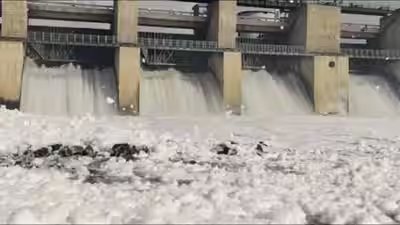
CHENNAI: Tamil Nadu water resources department is set to introduce real-time monitoring of water quality and levels at Kelavarapalli dam in Hosur amid recurring complaints of pollution. Pollution in the river has led to foam accumulating in the dam, raising concerns over the quality of water.The move comes against the backdrop of the southern bench of the National Green Tribunal recently taking serious note of non-compliance with its previous orders to prevent pollution in the inter-state river. The tribunal directed the Karnataka chief secretary, the chairperson of the Bengaluru Water Supply and Sewerage Board, and officials of the environment and municipal administration departments to explain their position within four weeks. It has posted the matter for the next hearing on Nov 30.The dam lies about 16km from the inter-state border and irrigates around 3,239 hectares of farmland in Hosur and Shoolagiri taluks. Farmers have complained of foul-smelling water being released for irrigation and white foam accumulating at the dam. “The water resources department conducts sample tests monthly and sends them to lab, while the real-time monitoring will be hugely beneficial,” an official said.The department on Thursday floated a tender to procure equipment to monitor chemical oxygen demand, biochemical oxygen demand, suspended solids, turbidity, pH, conductivity, total dissolved solids and dissolved oxygen. The readings will be sent to the department’s offices in Hosur and Chennai. SMS and email alerts will be issued when preset pollution or water-level thresholds are crossed.“Variations in pollution levels will be assessed based on the high and low inflows, and appropriate action will be taken,” the official added.A joint committee constituted by the tribunal stated in its November 2020 report that untreated or partially treated sewage from Bengaluru appeared to be a major source of pollution in the river. After the committee submitted a 17-point remedial action plan, the tribunal directed both states in July 2022 to protect the river from pollution. The plan included evaluating the performance of sewage treatment plants in Bengaluru, randomly verifying grossly polluting industries in the river basin, rejuvenating lakes, and improving sewage and solid waste management in villages adjoining the river up to Kelavarapalli.