




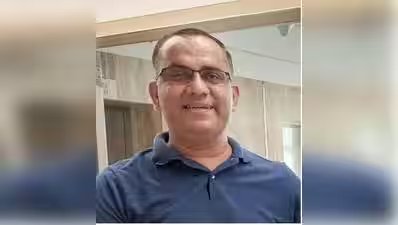
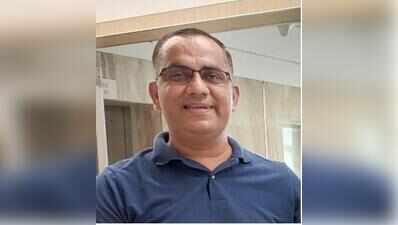
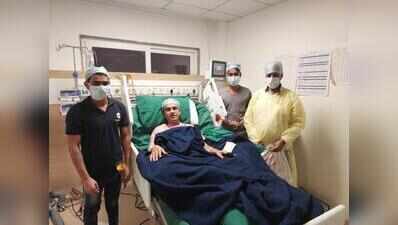
Chandigarh: With a borrowed heart beating in his chest, a 47-year-old assistant professor from Chandigarh not only reclaimed his life, but also a courtroom battle, where he appeared in person to fight for reimbursement of his medical expenses.The Central Administrative Tribunal (CAT), Chandigarh Bench, on Wednesday directed Chandigarh administration and other authorities to reimburse the entire medical expenses incurred by Sanjeev Kumar, an assistant professor in defence and strategic studies at Post Graduate Government College, Sector 11, Chandigarh, for his heart transplant and related treatment.The tribunal held that the authorities could not restrict reimbursement merely to prescribed package rates when the treatment was necessitated by an emergency and specialised facilities were unavailable at govt hospitals. “The extraordinary situation required extraordinary treatment,” the tribunal, comprising member (judicial) Suresh Kumar Batra and member (administrative) Anjali Bhawra, observed while allowing his application.“Standing at the lectern all through this past year as an applicant-in-person, I witnessed the challenges, complexities, delays and the bench’s nobility — where the spirit of the law prevailed over the rigidity of Punjab Medical Attendance Rules, 1940. I have always preached that a right only holds value when you fight for it; today, I have truly lived my right to life under Article 21,” Dr Kumar told TOI.He was diagnosed with advanced coronary artery disease on Sept 14, 2019, and underwent surgical implantation of a device to protect from cardiac arrest two years later. However, his condition deteriorated and he suffered heart failure in April 2022, necessitating emergency hospitalisation at a private hospital in Mohali.Following a medical emergency on May 25, 2022, heart transplant treatment was recommended on July 2, 2022. He was admitted to MGM Healthcare, Chennai, on Aug 7, 2022, and underwent a heart transplant on Aug 10, 2022.However, when he approached the authorities for medical leave and reimbursement of medical expenses, his leave request was rejected and his medical reimbursement claim only partly fulfilled.He had submitted a claim of around Rs 27.9 lakh towards the transplant and related expenses. Of this, around Rs 8.8 lakh was sanctioned in Feb 2023, and another Rs 1.2 lakh in Sept 2025, leaving a substantial amount unpaid. He moved CAT.The respondents — Chandigarh administration and education authorities — submitted that medical reimbursement of employees was governed by Punjab Medical Attendance Rules and a Punjab govt notification of Feb 13, 1995. An employee opting for treatment at a private hospital was entitled to reimbursement only to the extent of prescribed rates and not the entire expenditure incurred, they argued, maintaining that his claim had been processed in accordance with the applicable policy and the amounts verified by the competent authority had been sanctioned.Dr Kumar, appearing in person, disputed the authorities’ justification for restricting his claim, pointing out that the reduction of his verified medical expenses was made without consultation with a medical board or committee of technical experts.Examining the circumstances, the tribunal observed that the treatment was undertaken in a grave and potentially life-threatening situation and was not a case of elective treatment undertaken for convenience or personal preference.“The question is not whether reimbursement procedures may generally be prescribed, but whether those procedures can be applied mechanically to deny a substantial part of the expenditure incurred on emergent treatment, that was urgently required to save the applicant’s life,” the tribunal observed.“The reduction of claim, in the absence of a satisfactorily demonstrated expert assessment and without adequate consideration of these exceptional circumstances, cannot be sustained,” held the tribunal, and directed the respondents to reimburse the full medical expenditure incurred on the professor’s heart transplant and related treatment.