









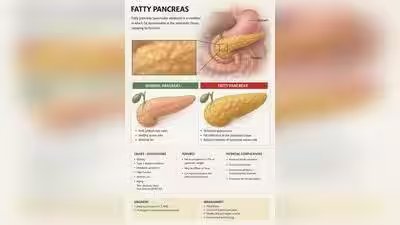
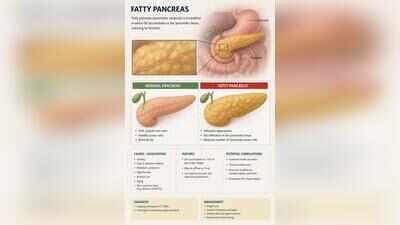
Mumbai: An international panel of experts has, for the first time, recognised fatty pancreas disorder (FPD) as a distinct disease, ending decades of uncertainty over whether excess fat in the pancreas is merely an incidental finding or a clinically significant condition.Called the Melbourne Consensus, the statement published in the ‘Nature Reviews: Gastroenterology & Hepatology’ warned that fatty pancreas could increase the risk of pancreatitis, pancreatic cancer and type 2 diabetes.The consensus distinguishes intrapancreatic fat deposition (IPFD), which is the amount of fat within the pancreas, from FPD, a disease in which excess fat damages the pancreatic structure and function through inflammation, scarring (fibrosis) and fat-induced damage. Although small amounts of pancreatic fat are normal and increase with age, excessive fat could even develop in lean individuals because of genetic, environmental and lifestyle factors.Although pancreatic fat has been recognised for decades, doctors have debated whether it is simply an incidental imaging finding or a disease in its own right. The Melbourne Consensus now classifies it as a distinct disorder and outlines how it should be diagnosed.“Pancreatic fat is difficult to assess with ultrasound, while MRI is expensive and largely confined to research settings,” said senior Delhi-based diabetologist Dr Anoop Misra, who was part of the global panel that worked on the consensus document. The panel recommends MRI-based proton density fat fraction as the preferred method to quantify pancreatic fat.Misra said the consensus has important implications for India, where pancreatic fat may contribute to the country’s high burden of diabetes. “One of our research papers, which is the only such study from India so far, shows that fat accumulation in the pancreas goes hand-in-hand with liver fat. Reducing both is important for controlling, and in some people even reversing, type 2 diabetes,” he said.Excess pancreatic fat is an issue because it triggers inflammation and damages insulin-producing beta cells, reducing the body’s ability to produce insulin.On the bright side, the experts said pancreatic fat is modifiable. “A calorie deficit of about 500 kcal a day or a 6%-10% weight loss in people with obesity can reduce pancreatic fat,” according to the paper. Mediterranean-style or lower-carbohydrate, higher-protein diets, along with regular aerobic and strength training, could also help.The paper noted that GLP-1 receptor agonists and SGLT2 inhibitors have been shown to reduce pancreatic fat by about 1.6% and 1.4%, respectively, after three to six months. However, these drugs should not specifically be prescribed to treat pancreatic fat, the paper added.A senior endocrinologist from Mumbai said that treatment for fatty pancreas should focus on the underlying conditions, such as unhealthy diet, insulin resistance, obesity, physical inactivity, smoking and heavy alcohol use. However, he added that fatty pancreas could even occur in people with a normal BMI.