








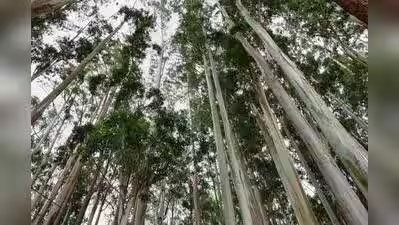
Ludhiana: Agroforestry systems using poplar and eucalyptus trees significantly improve soil health, carbon sequestration, and farm profitability, offering a highly lucrative alternative to Punjab’s traditional wheat-paddy cycle, according to experts from Punjab Agricultural University (PAU).Studies conducted by the university show that timber-based farming is outperforming conventional cropping in several sub-mountainous and plains regions, including Hoshiarpur, Rupnagar, Garhshankar, Tanda, and Kandi.Intercropping potentialWith poplar timber currently selling at around ₹1,500 per quintal and eucalyptus fetching ₹1,000 to ₹1,200 per quintal, farmers can earn ₹7 lakh to ₹8 lakh per acre over a five-to-six-year harvesting cycle.Poplar plantations allow intercropping with Rabi crops such as wheat and mustard because heavy leaf shedding occurs during winter. Additionally, Kharif crops like sugarcane, turmeric, and moong can be cultivated alongside young trees during the first two years.Tree planting density ranges from 215–250 trees per acre for poplar to 450–500 trees per acre for eucalyptus. While clonal eucalyptus grows well in high-pH soils, poplar requires more fertile, lighter soils.Soil health & carbon enrichment“Poplar sheds a large quantity of leaves every year. Since the tree is harvested after about five to six years, nearly 20 tonnes of leaves fall per hectare during one cycle. This significantly increases organic matter and improves soil organic carbon,” says Dr. Baljit Singh, Principal Soil Scientist at PAU’s department of forestry and natural resources.In a long-term PAU study across four successive six-year rotations, soil organic carbon increased from 3 grams per kilogram to 8.5 grams per kilogram.“Poplar is deciduous and leaf shedding begins in October, with maximum leaf fall occurring in December. The leaves decompose and enrich the soil,” Dr Baljit Singh explains. He added that agroforestry improves soil structure, water-holding capacity, and microbial activity, while dismissing the belief that clonal eucalyptus depletes deep groundwater, noting its root system grows laterally within 4 feet of depth.A separate study titled “Soil Physical Health and Carbon Sequestration under Poplar and Eucalyptus Based Agroforestry Systems in Relation to Tree Age” by PAU researchers Gurpinder Kaur and Naveen Gupta confirmed key improvements in Hoshiarpur district.Compared to conventional wheat-pearl millet systems, the study recorded significant advantages under tree plantations over two, four, and six-year cycles. Infiltration rate was 25.6% higher under poplar and 15.8% higher under eucalyptus. Whereas, saturated hydraulic conductivity improved by 44.2% under poplar and 13.2% under eucalyptus.The findings underscore agroforestry’s potential to address Punjab’s pressing challenges of monoculture, groundwater depletion, and soil degradation.