







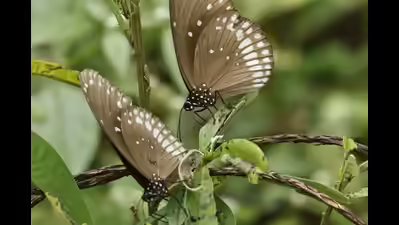

Pune: The persisting extreme heat has adversely impacted butterfly sightings this season. Naturalists and butterfly watchers are reporting lower activity on hills, gardens and urban green patches as compared to last summer.Extreme daytime temperatures in several parts of the city have reduced butterfly movement during peak hours and affected breeding cycles as host plants and nectar-bearing flowers are drying up faster than usual.“I have noticed a visible decline in the number of butterflies based on random urban sightings, all because of high temperatures. Even though trees are blooming, butterflies prefer feeding on herbs and shrubs which are comparatively low in number in the summer,” said founder and director of Ecoreviva Nature Foundation Dr Ankur Patwardhan, who developed a live laboratory of butterflies in his house in 2020. Over the years, he has studied aspects like composition of nectar, pollen transfer and colour preference of butterflies.“Butterflies are highly sensitive to temperature and moisture changes, and the unusually intense heat can lead to dehydration, shrinking vegetation cover and fewer flowering plants in many areas,” said a Mumbai-based naturalist.Aniruddha Joshi, a nature photographer, said, “The numbers of butterflies are lower than last year based on what I see in my home garden and visits to the hills. This is primarily due to the heat, but things are getting better now. Last year, because of the early rains, we saw some species earlier in the year.”However, butterflies that thrive in drier habitats have been sighted in abundance. Tejas Desai, who went on a butterfly walk on ARAI hills two weeks ago, said, “We spotted about 19 species of butterflies. We saw a lot of Orange Tips around the flowering acacia.”There are two peak seasons for butterflies — March and April on the Pune hills and adjoining areas due to local vegetation and host plant blooms. The second is Sept and Oct, just after the long spell of monsoon.Rajat Joshi, an environmentalist conducting butterfly walks in the city, said, “We have seen good numbers of the Crimson Tip butterfly, a local dispersing species on the Arai hills, owing to lesser rains in May. It wasn’t sighted last year this time. The species breeds on Cadaba fruticosa, a native climber found in the same habitat.” A few pre-monsoon showers have also brought in good sightings of Grass Yellow butterflies, he added.Amol Nargolkar, who has been looking after the family-owned 16-acre private sanctuary Sipna Farms, said, “We are seeing the regular 8-10 species in the butterfly garden. Apart from that, we have had sightings of the Tawny Coster and Commander species. We held one butterfly walk last month.”