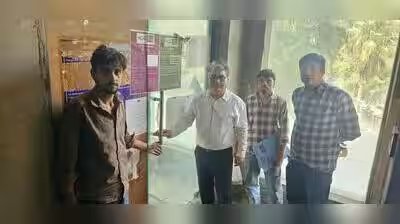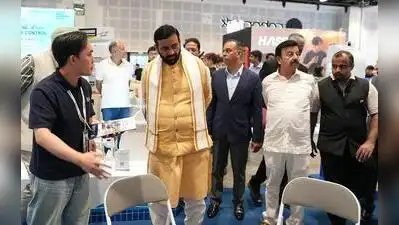







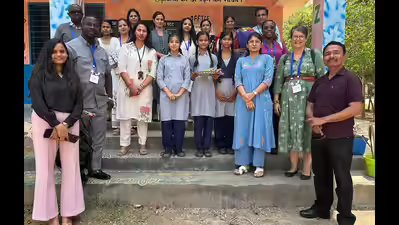
Gurgaon: Govt schools in Haryana drew global attention as education experts and policymakers from eight countries visited the state under the ‘South-South Learning Symposium’ to study the implementation of the NIPUN Haryana Mission. Delegates from South Africa, Nigeria, Rwanda, Ghana, Kenya, Tanzania, Nepal and the United Kingdom, along with representatives from UNESCO, UNICEF, the World Bank and the University of Oxford, toured schools in Gurgaon, Rohtak, Jhajjar and Sonipat to understand how foundational literacy and numeracy (FLN) is being strengthened at scale.During the visit, delegates studied the state’s use of technology and data in primary education through digital platforms used in classrooms and for monitoring.The delegation visited schools in sectors 43 and 44 (Kanhai) in Gurgaon, Kharawar in Rohtak, Balaur in Jhajjar and Kabirpur in Sonipat, observing the use of teaching-learning material such as activity cards, story-based methods and print-rich environments where walls and classroom spaces are used as learning aids.Officials have said that more than 35,000 primary teachers in the state have been trained under FLN initiatives, and over 8,600 schools are now linked with app-based monitoring systems. Data from digital assessments of over 8 lakh students is being used to track progress and identify learning gaps. The NIPUN Mentor App allows officials to conduct on-the-spot student assessments. The NIPUN Teacher App provides lesson plans and classroom tools, while the Parents App enables families to track their child’s learning progress. The role of Cluster Resource Persons (CRPs) in supporting schools and maintaining coordination was also highlighted during the interactions. Officials added that learning outcomes have shown improvement over the past two years.District coordinator for Gurgaon, Manoj Kumar Lakra, said, “The programme combines technology with regular mentoring to track each child’s learning level. The data from classroom assessments helps identify areas needing intervention without delay, and communication between teachers and parents has improved through digital tools.”Members of the visiting teams said the model offered useful insights into large-scale implementation of foundational learning programmes and that some of the practices could be adapted in their respective countries.