








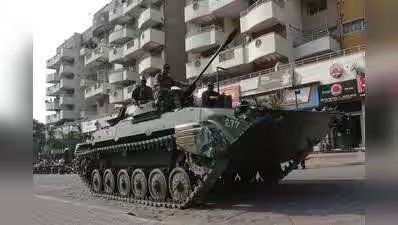
Pune: Defence Research and Development Organisation (DRDO) has developed indigenous armour panels that are 20% lighter than the existing ones and meet specified protection requirements against 30mm armour-piercing (AP) ammunition.The technology has been developed by Research and Development Establishment (Engineers) or R&DE(E), a DRDO laboratory in the city.The laboratory has offered the technology to private companies through the transfer of technology (ToT) route to facilitate its industrial production. Several leading companies have expressed interest in the system, a senior DRDO scientist told TOI.“The newly developed advanced armour is 20% lighter than the current system, matching global standards in this sector. We have carried out our in-house testing and met operational requirements of the force internally. We have offered the technology to private players through ToT. Some leading companies have evinced interest,” the senior official said.The armour technology is intended for future main battle tanks (MBTs), light tanks and future infantry combat vehicles (FICVs), which require effective protection without adding excessive weight. Lighter armour can help improve vehicle mobility, fuel efficiency and transportability, while reducing the load on engines and suspension systems.“Armoured vehicle manufacturers worldwide are working to improve protection while keeping vehicle weight under control. These are very crucial operational requirements of the mechanised forces against the backdrop of extensive use of drones and other advanced technology in the modern warfare,” a senior army officer told TOI, adding that modern military vehicles face threats from armour-piercing ammunition, anti-tank guided missiles, rocket-propelled grenades, mines and improvised explosive devices.“Conventional steel armour can provide protection but adds considerable weight. Defence manufacturers have therefore been developing advanced armour solutions using composite materials, ceramics and layered structures to improve protection relative to weight,” said another DRDO official, requesting anonymity.Lightweight armour is particularly important for light tanks and infantry combat vehicles, which need to operate across varied terrain while maintaining mobility. Reducing armour weight can also provide vehicle designers with greater flexibility to accommodate additional equipment and protection systems.“In view of the massive deployment of tanks in high-altitude regions, the lightweight effective system adds a new dimension to mountain warfare and it provides advantage to armoured troops operationally,” said another army officer.For India, developing indigenous armour technology can reduce dependence on imported systems and strengthen domestic defence manufacturing. Transferring the manufacturing know-how to private companies could help expand production capacity and support development of protection systems suited to requirements of the armed forces, said the DRDO official.The next stage will involve industrial production and assessing the technology for specific vehicle applications.