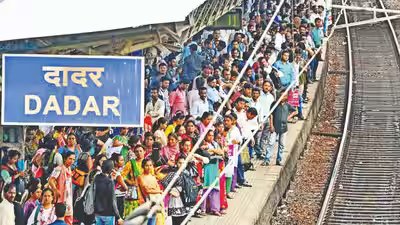









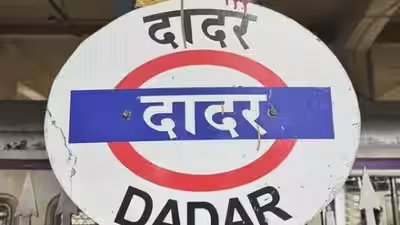
MUMBAI: The proposed renaming of Dadar station has drawn attention to the history, etymology and contemporary context of its name.Research historian Falak Chowdhary says, “The name Dadar, today synonymous with one of Mumbai’s busiest railway junctions and urban neighbourhoods, carries a history that goes much further back than its present-day identity. Its origins are rooted in the geographical, linguistic and cultural evolution of the former Bombay islands. Interestingly, the precise etymology of the name remains a subject of historical interpretation, with early historians documenting more than one possible explanation.”She says, “One of the earliest documented explanations appears in S M Edwardes’ The Gazetteer of Bombay City and Island (1909). Edwardes suggests that the Marathi word ‘Dadar’ means a bridge. According to this interpretation, the locality may have derived its name from a rudimentary bridge constructed across a creek or an arm of the sea. He also draws a comparison with another locality called Dadar near Rajapur in Ratnagiri district, where the name was associated with a bridge across a creek.”The historian says a second interpretation was recorded by Samuel T Sheppard in his 1917 publication, Bombay Place-Names and Street-Names. “Sheppard associates the word ‘Dadar’ with a staircase or ladder in Marathi. He also refers to the usage of the term among Koli communities for settlements situated on the outskirts of villages. These accounts suggest that the name may have originated from the geographical characteristics or settlement patterns of the region. However, neither interpretation can presently be considered conclusively established.“An equally fascinating aspect of Dadar’s history is its earlier association with the name Salvesong (also recorded as Salvasong). “The name is believed to have originated from the Portuguese word Salvacao, meaning salvation, and was associated with the Portuguese religious establishment of Our Lady of Salvation. The church, traditionally dated to 1596 and established by Franciscan missionaries, remains an important reminder of the Portuguese presence in this part of Mumbai. Popularly known as the Portuguese Church, it represents an important layer of Dadar’s religious and architectural heritage,” says Chowdhary.She points out that the historical landscape of Dadar was once very different from the densely populated neighbourhood we recognise today. “It formed part of the larger Mahim island region, characterised by indigenous Koli settlements, coastal activities, agricultural lands and coconut plantations. Portuguese-era records provide glimpses into the area’s economic life. Research by Vineet Shrikant Date, in his 2015 academic study of Dadar West, refers to Portuguese government tax records from 1726–36 that mention a distillery at Salvasong, indicating the production of alcoholic beverages from coconut sap.““Dadar’s transformation into an important urban neighbourhood gained momentum during the late 19th and early 20th centuries. The Dadar-Matunga-Wadala-Sion Improvement Scheme of 1899–1900 played a significant role in its planned development. As Bombay expanded, Dadar gradually emerged as an important residential, educational, commercial and transport centre, connecting the historic island city with the northern suburbs.”On the current context of the station’s proposed renaming, Chowdhary says, “Beyond its urban development, Dadar also occupies a significant place in India’s social and political history because of its association with Babasaheb Ambedkar. Chaityabhoomi, the memorial at Shivaji Park where Ambedkar was cremated on Dec 6, 1956, has become one of the most significant sites of remembrance