









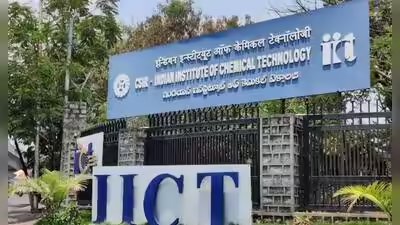
Hyderabad: Hyderabad-based CSIR-Indian Institute of Chemical Technology (CSIR-IICT) has developed the country’s first indigenous process technology for manufacturing hydrofluoroolefins (HFOs), a new class of refrigerants expected to replace high-global-warming hydrofluorocarbons (HFCs) in air-conditioners, refrigerators and automobile air-conditioning systems.The laboratory-scale technology, developed entirely in India, is now ready for transfer to industry. Scientists say the process uses readily available raw material and allows domestic chemical manufacturers to produce next-generation refrigerants without depending on imported technology. Once licensed, companies can scale up the process and supply HFOs to refrigeration and air-conditioning equipment manufacturers.IICT developed the technology platform for the production of HFO-1234yf, a next-generation refrigerant. HFO-1234yf is regarded globally as a promising alternative to conventional refrigerants because it has zero ozone depletion potential, low global warming potential, very short atmospheric lifetime, and better environmental compatibility compared with conventional refrigerants.IICT director Dr D Srinivasa Reddy told TOI that the institute’s work was aimed at building domestic capability in advanced fluorochemical manufacturing. “The initiative aligns with green and sustainable technologies, Atmanirbhar Bharat, import substitution, strengthening domestic manufacturing capabilities and supporting national climate commitments,” he said. The process had been developed after several years of research.From lab scale to industryDr Ravitej Singh, scientist at CSIR-IICT, said the environmental gain comes from the shorter atmospheric lifetime of HFOs. “HFCs take 13.8 years for degradation in the atmosphere (atmospheric life), while HFOs break down in about 11 days,” he told TOI. Since it is a new technology, the price may be slightly high initially, but the lower environmental impact makes it significant, he said.GFXIndia ratified the Kigali Amendment to the Montreal Protocol after the Union Cabinet approved it in 2021. The amendment, adopted at Kigali in Rwanda in October 2016, provides for the phase-down of production and consumption of HFCs by parties to the Montreal Protocol..*India will complete its HFC phase-down in four steps from 2032, with cumulative reductions of 10% in 2032, 20% in 2037, 30% in 2042 and 85% in 2047.*HFO-1234yf is regarded globally as one of the most promising alternatives to conventional refrigerants because it has:Zero Ozone Depletion Potential (ODP)Very Low Global Warming Potential (GWP)Very Short Atmospheric LifetimeImproved environmental compatibility compared with conventional refrigerants.* Hydrofluorocarbons. phasedown is expected to prevent the emission of up to 105 million tonne of carbondioxide equivalent of greenhouse gases, helping to avoid up to 0.5 degree Celsius of global temperature rise by 2100, while continuing to protect the ozone layer.