








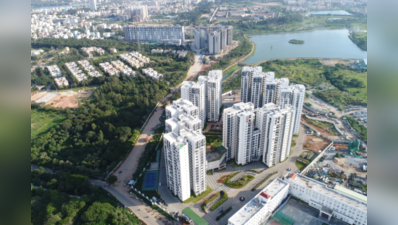
Bengaluru: In the wake of the recent tilted apartment tower incident that exposed flaws in a geotechnical investigation report, the Confederation of Real Estate Developers’ Associations of India (Credai)-Karnataka chapter has decided to include double verification of soil investigation reports as a suggested best practice in its developers’ handbook.The recommendation is advisory and not mandatory, but members will be encouraged to adopt it. Developers will be advised to get geotechnical investigation reports independently reviewed before foundation work begins, to minimise errors in soil assessment, which is critical for structural design and foundation planning.Credai office-bearers said the handbook is periodically updated based on industry experiences and evolving construction practices. The latest suggestion was prompted by Thursday’s incident, which highlighted the need for additional scrutiny of technical reports. While such cases are rare, the body said they underline the importance of robust quality assurance mechanisms.The recommendation comes after an 18-storey apartment tower at SNN Raj Etternia near Kudlu tilted, allegedly due to errors in the original geotechnical investigation. The developer has decided to demolish and reconstruct the affected 49-unit tower after a re-investigation found discrepancies in the soil report, while maintaining that the remaining towers in the project are structurally safe.The builders’ body also urged homebuyers to choose only credible and registered developers.In a message to fellow developers, SNN Raj Corp said the incident underscored the importance of accurate geotechnical investigations. It urged builders to consider independent verification of soil reports before finalising foundation designs, saying the additional cost is negligible compared with potential structural risks, hardship to homebuyers, and reputational damage.Builders said the incident has highlighted the need for robust geotechnical investigations and strict adherence to engineering standards, particularly in Bengaluru where soil conditions vary across locations. They said soil testing must be supported by quality checks, continuous supervision, and accountability during construction. While maintaining that existing guidelines are adequate, they stressed that effective implementation is key to preventing structural issues.Koshy Varghese, director, VDB Property Ventures Pvt Ltd, said peer review and cross-verification of soil test reports are essential for high-rise buildings, with samples collected from multiple points across the site. He said soil investigation forms the foundation of structural design and inaccurate reports could result in building failures or overdesign.He also raised concerns over the structural safety of illegal ground-plus-six buildings that have mushroomed across the city, where such safeguards are often absent.Suresh Hari, managing partner, Vishal Promoters and Builders, said Bengaluru’s varying soil profile makes geotechnical investigations challenging. “Proper soil testing, along with quality construction materials, engineering-based structural systems, continuous supervision, and stringent quality control, are essential for structural safety. The existing guidelines are comprehensive and adequate; the key lies in their diligent implementation,” he added.