









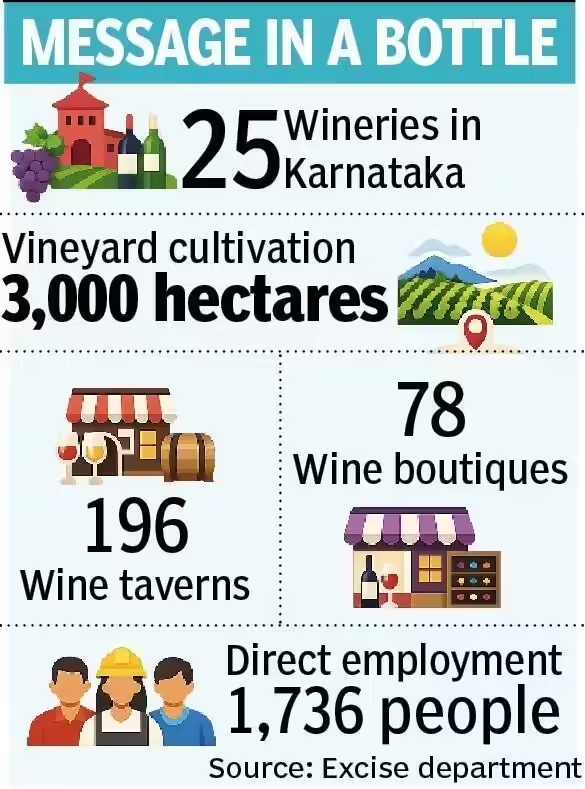
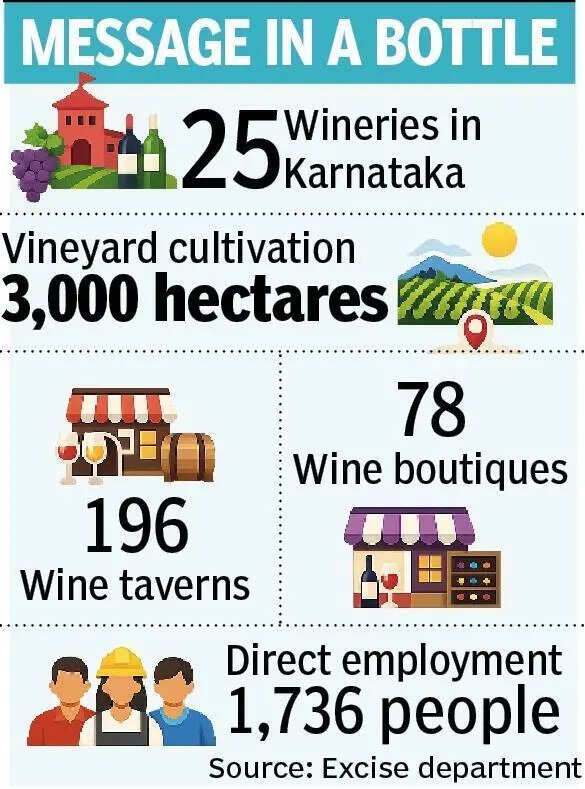
Bengaluru: With conventional revenue streams nearing saturation and expenditure pressures mounting, the state resource mobilisation committee has advised the govt to explore alcohol tourism. Constituted to identify new revenue avenues, the committee has recommended that the govt encourage wine tourism as a niche but growing segment within India’s travel industry. The panel has proposed developing Nandi Hills on the outskirts of Bengaluru as a primary hub for such activities. “In alcohol-related tourism, wine tourism has developed most visibly, combining vineyard visits, wine tasting experiences, food culture, and rural tourism activities,” the committee stated. “Such tourism models integrate agriculture, agro-processing, hospitality, and cultural experiences, generating employment and stimulating local economic activity.” The panel, led by retired IAS officer KP Krishnan, pointed to Nashik in Maharashtra as a successful example, pointing out that the city accounts for nearly 50% of India’s wine production. Citing 2023 estimates from Agricultural and Processed Food Products Export Development Authority, the committee revealed some 2.5 lakh tourists visit Nashik’s vineyards annually. It believes regions such as Nandi Hills in Chikkaballapur district, the Bengaluru Rural belt, and parts of northern Karnataka are well-suited for grape cultivation and wine production. Karnataka Wine Board said state has about 25 licenced wineries and over 3,000 hectares of vineyards, making it India’s second-largest wine-producing region after Maharashtra. While acknowledging that several wineries around Nandi Hills already offer tours and tasting sessions, the committee observed that tourism infrastructure — such as vineyard trails, wine festivals, and integrated hospitality facilities — remains “modest”. “Expanding wine tourism in Karnataka could generate significant economic opportunities by linking agricultural production with tourism and hospitality services,” the report said, adding that global experiences show such models can create high-value rural economic clusters while promoting local food culture and heritage. The committee also highlighted the need for regulatory reform to support the sector’s growth. Among its recommendations, it proposed allowing wineries to store unlabelled wine bottles within bonded premises under strict inventory controls and traceability norms. “This would provide greater operational flexibility, especially in managing production cycles, seasonal demand, and export requirements, while ensuring that labelling compliance is enforced prior to market release,” it noted. The panel also suggested introducing a ‘self removal procedure (SRP)’, enabling manufacturers to clear goods from bonded premises based on self-assessment, subject to defined compliance standards and audit mechanisms. “This approach reduces procedural delays, enhances operational flexibility, and aligns with modern excise practices while retaining regulatory control through post-clearance verification,” the committee said.