









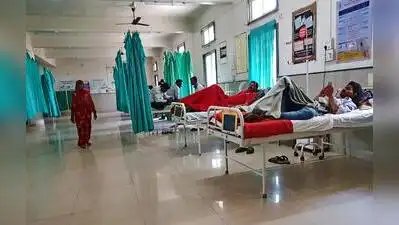
Pune: Intensive care units across Pune have hit full capacity, with both adult and paediatric wards reporting acute bed shortages as dengue and influenza cases spike. Relatives of critically ill patients are being forced to rush between hospitals in search of vacant beds, reviving demands for a real-time bed-availability dashboard like the one used during the Covid-19 pandemic.During the pandemic, the district administration maintained a live dashboard showing the availability of general, ICU, paediatric, and oxygen-supported beds. It was deactivated once cases fell, but with tertiary hospitals now reporting zero ICU slots—and some lacking even general beds—doctors and citizens are urging its immediate restoration.The current surge is driven by severe H3N2 influenza and complicated dengue infections, which are not only increasing new admissions but also delaying discharges due to prolonged recovery times. Medical experts warn that without transparent, real-time data on bed occupancy, the city risks repeating the chaotic scenes seen every monsoon.In July, TOIreported that the Pune Municipal Corporation (PMC) might revive the Covid-era dashboard within the next two months. However, due to staff deployment for special intensive revision (SIR) activities and the ongoing model code of conduct, the tendering process has been delayed, according to Dr Suryakant Devkar, assistant health officer at the PMC.He added, “We decided to reintroduce the dashboard after the issue was raised at a recent general body meeting where corporators stated that patients were being denied admission at private hospitals due to unavailability of inpatient department (IPD) beds, particularly in intensive care units. We have had four meetings with the IT department since July; the process is ready, and tenders will be floated once the model code of conduct is lifted. The dashboard will display real-time bed availability in private hospitals across the city. The move aims to provide patients and their families instant access to information on available beds, helping to reduce delays in securing hospital admissions.”The typical seasonal rise in demand for both general and ICU beds remains high between late Sept and early Nov, largely due to climatic variations and an increase in seasonal illnesses like dengue and influenza, said Dr Divij Mane, deputy managing director, Noble Hospitals and Research Centre. He added, “It is a recurring seasonal pattern observed every year and, at present, there is a cautionary surge in admissions. During this period, ICU and inpatient rooms oscillate generally towards full occupancy, reflecting the seasonal increase in demand for critical care. Tertiary care hospitals like ours are well-equipped to ensure efficient case turnover and optimise bed utilisation, so that no patient requiring critical care is left unattended.”The high number of occupied beds is also delaying planned surgeries. Dr Santosh Shinde, COO of Ruby Hall Clinic, said, “The situation has persisted for over a month, and the sustained inflow of patients is creating a considerable bed crunch. We are also seeing a longer queue for planned surgeries, as the unavailability of beds makes it challenging to accommodate elective surgical admissions.”The increased patient load over the past two months has been driven by seasonal gastrointestinal illnesses, as well as severe acute respiratory infections (SARI), including H1N1 and other respiratory illnesses, according to experts.Critical Care Specialist Dr Sameer Jog said, “An ICU bed is more than just a physical bed, monitor, and ventilator. It requires trained intensivists and nurses, round-the-clock diagnostics, blood bank services, and immediate access to specialist interventions. ICUs do not suddenly become empty when the monsoon begins; they are already treating heart disease, stroke, cancer complications, respiratory and kidney failure, trauma, severe infections, and postoperative patients. The monsoon can also increase the trauma burden with a rise in road accidents. It acts as a stress test, exposing capacity limitations that already exist throughout the year.”In Pimpri Chinchwad Municipal Corporation (PCMC) area as well, hospitals have been witnessing sustained pressure on bed availability, particularly in critical care areas. Dr H. H. Chavan, medical superintendent of DPU Super Specialty Hospital in Pimpri, said, “Our SICU, MICU, and CCM beds are currently almost fully occupied. General wards are at more than 80% occupancy, while private wards are also nearing full capacity. We have earmarked a separate, dedicated ward for patients diagnosed with H1N1, allowing us to provide appropriate isolation and specialised care while managing overall bed capacity. We are closely monitoring the situation and managing admissions and bed allocations based on clinical priority, ensuring that patients requiring critical or specialised care receive timely treatment.”Global Bed management systems:Since 2016, at Johns Hopkins Medicine’s capacity command centre, data from multiple IT systems have been consolidated onto a real-time “wall of analytics”. Staff members use it to monitor bed availability, manage patient transfers from outside hospitals, and optimise patient flow from admission through discharge. During the COVID-19 pandemic, this existing infrastructure allowed the hospital system to dynamically absorb and manage a massive influx of critical care patients.In March 2020, researchers at the Harvard Global Health Institute (HGHI) launched a highly influential geographic data modelling project. The entire US was bifurcated into 306 distinct “hospital referral regions” (HRRs), and the model mapped regional bed and ICU capacities against various Covid-19 infection rate scenarios. This explicitly highlighted which localised health systems were most at risk of running out of critical care space and ventilators, helping policymakers pivot from “panic to planning.”