





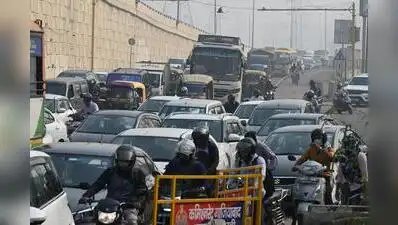
Ghaziabad: Delhi-bound commuters faced another slow crawl at the Ghaziabad border on Tuesday as police continued checking vehicles for emission compliance for the second day in a row.Traffic jams on NH-9 and Delhi-Meerut Expressway (DME) were less severe than those on Monday as cops remained more alert to the tailback of vehicles. But commuters still lost time in queues as the office rush gathered pace. With air quality remaining ‘very poor’ across the region for the second consecutive day, commuters questioned the rationale behind the checks during rush hours, saying they were adding to the problem of pollution rather than addressing it.The checks are part of Delhi’s restrictions – in force since Nov 1 – on vehicles that do not meet the prescribed emission standards. Police are screening vehicles at six points along the Ghaziabad-Delhi border — below and above UP Gate, outside Media House, Seemapuri, Tulsi Niketan and Loni. Vehicles found ineligible are being turned back, while the movement of those waiting to be checked has been slowing down the flow on already busy roads.The resulting queues also carry an environmental cost. Activists pointed out that cars and other vehicles stuck in slow-moving traffic or idling at checkpoints continue to emit exhaust. The checks are intended to keep more polluting vehicles out of Delhi, but bottlenecks at the border can add to local emissions as residents across NCR grapple with ‘very poor’ air.Police checked 192 vehicles on Tuesday and denied 38 entry into Delhi, said Varun Singh, ADCP (traffic). He said traffic personnel had been deployed at all six points round the clock in two shifts — from 8am to 8pm and 8pm to 8am.Some residents tried to cut the number of cars on the road by pooling their journeys, but found themselves caught in the same queues. Sonu Kumar, a Crossings Republik resident, said four persons who work in central Delhi are sharing a car to commute. They have been taking turns using their vehicles and coordinating drop-offs according to where they work — Connaught Place or Mandi House.Sonu also sought to know why manual inspections had to be concentrated during peak hours, when thousands were trying to get to work. “It makes little sense to check vehicles manually during peak hours, when people are travelling to work. Police could use AI, CCTV cameras or an app to identify vehicles instead,” he said.