





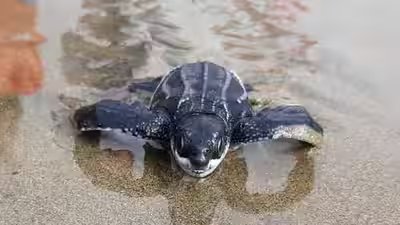
A critically endangered leatherback turtle tried to nest on an Ecuador sidewalk before finding a quieter beach; researchers tracked 146 eggs from her season and saw 134 hatch, a success rate of 91.8%

Photo courtesy: Cristian Soledispa_Refugio de Vida Silvestre Isla Corazón y Fragatas via Simon Fraser University In January, under the light of a full moon and one too many streetlights, a critically endangered leatherback turtle named Bella did something both remarkable and worrying: she tried to nest on a sidewalk in Ecuador.Disoriented by nearby streetlights, the…

Read Full News

Researchers blasted discarded wind turbine blades with electricity at 2,000°C for half a second, turning difficult-to-recycle waste into a graphene-rich material that could strengthen new turbine blades

While wind turbines are hailed for providing sustainable energy, what about the disposal? Wind turbines are often seen as one of the cleaner ways to generate electricity. Their towering structures and enormous blades have become familiar sights across landscapes, harnessing something as simple as the wind to produce power. But what happens when these machines…

Read Full News

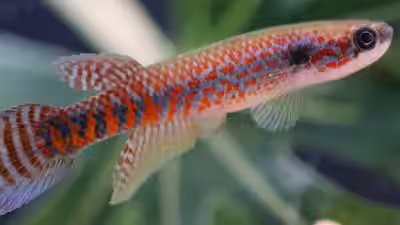
Scientists have named a new orange-spotted fish under 3 cm long that lives in just three forest pools in Brazil’s Amazon, and they warn mining, plastic and deforestation may already have pushed it to the brink

Image Courtesy: Yuri Gomes Abrantes What if you’re shopping for the perfect top for your night out and fall in love with this beautiful sparkly number, just to find out it is sold out in your size? What I can only imagine would be tenfolds the amount of the same disappointment; scientists have discovered a…

Read Full News

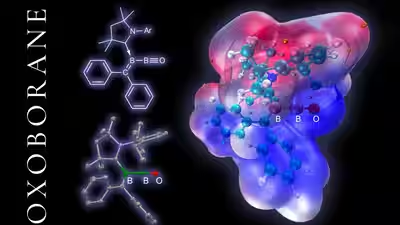
Two German doctoral students were studying an unrelated reaction when their flasks filled with strange orange and yellow solids, and they had accidentally made molecules chemists had chased since the 1960s

A routine chemistry experiment has led to an unexpected breakthrough, helping scientists isolate a class of molecules that researchers had struggled to capture for more than six decades. Two doctoral students at the University of Würzburg in Germany stumbled upon the discovery while investigating reactions that had nothing to do with their original research goal….

Read Full News

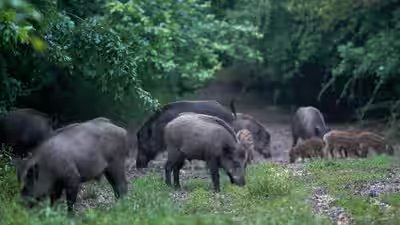
Feral pigs cause at least $3.4 billion in damage each year across the US; the government has awarded $51.9 million to 29 projects in 13 states to trap and remove the invasive animals and restore damaged land

Feral pigs cause at least $3.4 billion in damage each year across the US (Image Credit: Canva) Feral pigs have become a costly problem across the United States, damaging agricultural land, destroying natural habitats and threatening livestock and human health. Their habit of digging through soil in search of food can ruin crops, disturb vegetation…

Read Full News

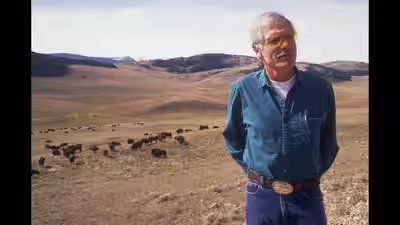
Ted Turner’s family is putting about 20 landscape paintings from his Montana ranch up for auction, with an estimated $20 million sale set to benefit a conservation foundation after his death in May

FILE – Ted Turner poses near a herd of his bison in September 1991 at his Flying D Ranch near Bozeman, Mont. (Linda Best/Bozeman Daily Chronicle via AP, File) The family of Ted Turner is preparing to sell around 20 landscape paintings that once hung in his Montana ranch home, with the proceeds set to…

Read Full News

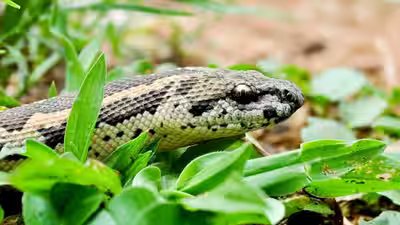
Researchers recorded three Sistan sand boas in Rajasthan’s Sikar district; the non-venomous snake, previously known from Iran and Pakistan, has now been officially documented in India

(Image credit: Wikimedia Commons) A snake species that is known to have inhabited parts of Iran and Pakistan has now been officially recorded in India’s diverse list of reptiles. Three live Sistan sand boas have reportedly been recorded in Rajasthan. Found in the northern parts of the Thar Desert, the three snakes were documented in…

Read Full News

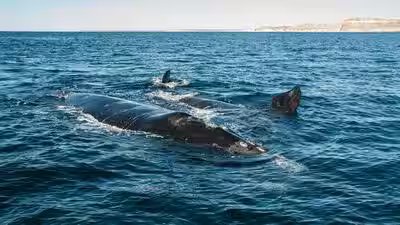
Scientists found a previously uncounted North Atlantic right whale calf beside its 38-year-old mother off Canada; the discovery raises the season’s total to 24 babies for a species with only about 380 left

Representative image of North Atlantic right whale from Canva Scientists have confirmed that a North Atlantic right whale calf spotted off Quebec in September was a previously uncounted baby from the most recent calving season, raising the season’s total to 24. The discovery, reported by the Associated Press (AP) and confirmed through analysis by the…

Read Full News

After examining 1,633 ancient skeletons from 30 sites in Peru’s Lambayeque Valley, researchers found signs of violence in only 25 people, despite thousands of years of floods and episodes of ritual sacrifice

Ancient communities living along Peru’s northern coast experienced devastating floods, food shortages and periods of mass human sacrifice, yet everyday violence remained remarkably uncommon. A new study published in Frontiers in Environmental Archaeology, also reported by science platforms Phys dot org and Scimex, has found that only a small fraction of people living in the…

Read Full News

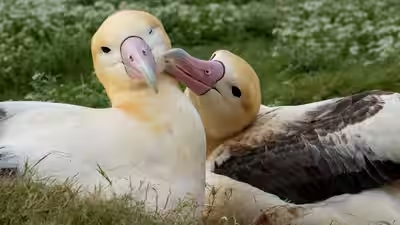
In 2016, two vulnerable short-tailed albatrosses paired up on Midway Atoll near Hawaii; after 10 straight seasons together, George and Geraldine have raised at least five chicks, and their offspring are also returning

Two vulnerable short-tailed albatrosses raise five chicks as their offspring return to Midway Atoll (Image Credit: Joe Owen via ACAP) Some wildlife partnerships become remarkable not just because they last, but because they help bring a species back to places where it has rarely been seen. On Midway Atoll in the North Pacific, two short-tailed…

Read Full News