








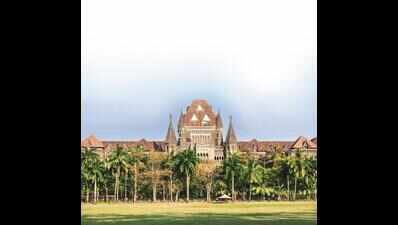
Mumbai: The Bombay high court last week, in a relief to three Vile Parle housing societies of 10 buildings constructed in the 1970s and two in November 1990, upheld the power of a deputy registrar to grant unilateral deemed conveyance of land with buildings and not let future FSI potential on portions of land reserved for public amenities delay the process.“Till municipal corporation acquires the land and pays compensation/TDR to the petitioner, conveyance of the land meant for the societies cannot be delayed,’’ said Justice Sandeep Marne in a June 18 ruling.“I must observe that this novel idea of utilising development rights flowing out of reserved land for construction of (two more buildings) now engineered by the petitioner is preposterous to the core,’’ said Justice Marne, but granted the builder partial relief.In 2017, a builder had filed a petition before the high court to challenge the deputy registrar’s grant of unilateral deemed conveyance of over five acres of the suburban plot along with the buildings on it to three cooperative housing societies.Justice Marne set aside a 2017 order of the registrar granting deemed conveyance of the entire five acres of the prime suburban land and directed conveyance of four acres instead.The societies, represented by senior counsel Birendra Saraf, have shown magnanimity in not claiming title to over an acre, noted the high court. The high court directed that the builder, represented by counsel Mahendra Ghelani, can claim benefits in terms of transferable development rights (TDR) in lieu of portions reserved for municipal market, primary school, land already taken over by BMC for road widening and 2m328 sq m encroached upon by slum-dwellers.The high court observed that TDR can be monetized, is freely tradable in the market and can be hoarded. “It is not necessary that the TDR must be utilised for putting up additional construction on the plot.,’ it said.The builder had undertaken to construct 10 buildings on the plot and on surrendering land for a DP road, secured TDR with which two more buildings were built and two more were planned. But a dispute over how much land was surrendered led to the two additional buildings remaining unconstructed.A housing society formed by flat owners of 10 buildings opposed the TDR-based construction. In 1985 the society filed a suit before the city civil court for conveyance of the entire five acres. In 1997 the civil court directed limited conveyance of only the land on which 10 buildings of the society stood. The society filed an appeal to challenge part conveyance, but withdrew its appeal to apply for deemed conveyance. The society then along with two more cooperative housing societies formed by the two additional buildings constructed, approached the deputy registrar under the Maharashtra Ownership Flats Act (MOFA) for deemed conveyance of the entire five acres. In May 2017 the deputy registrar granted it.More than three decades have passed since construction of the last building, Saraf had argued, saying it was high time that conveyance — a legal obligation of builders — was granted.The builder’s argument that the deputy registrar could not have decided the society’s plea for deemed conveyance after withdrawal of its appeal is completely misplaced, held the high court.