








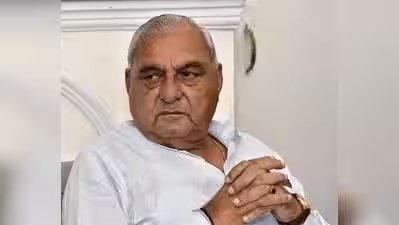
Jind: Leader of the opposition in Haryana assembly, Bhupinder Singh Hooda, said on Monday that the BJP govt had proven to be a “complete failure” in providing employment to youth, security to the general public, education to children, and quality healthcare services to patients.“This govt has devastated the state’s healthcare system. The situation is such that hospitals and medical colleges alike lack both doctors and other essential staff,” Hooda said.Hooda was in Jind city to express his condolences following the passing of Shamsher Singh, son of a former MLA. The former CM met the bereaved family and offered his sympathies. He remarked that the loss to the state’s politics caused by Shamsher Singh’s demise could never be filled.Later, while responding to questions from the media, Hooda expressed deep concern over the crumbling state of healthcare in the region. He pointed out that out of 1,064 sanctioned posts of pharmacists in govt hospitals, more than 450 remained vacant.Furthermore, there are 5,314 vacant positions for doctors and paramedical staff across govt medical colleges, comprising 2,572 posts for doctors and 2,742 for paramedical staff. Due to the absence of staff to dispense medication, long queues of patients are formed at the counters, he said.According to a report, in eight govt medical colleges across Haryana, 2,572 out of 3,843 sanctioned posts for doctors, approximately 67%, are vacant. More than half of the positions for paramedical staff are also unfilled. The situation in the newer medical colleges is even worse. At the Jind medical college, 555 out of 559 posts are vacant; in Mahendragarh, 492 out of 559 are vacant; and in Bhiwani, 477 out of 552 posts remain unoccupied, said the senior Congress functionary.Even at the state’s largest institution, PGIMS Rohtak, more than 40% of the positions for doctors and Group-A staff remain vacant, he added.“There is a severe shortage of specialist doctors, such as radiologists, gynaecologists, surgeons, and paediatricians at primary health centers, community health centers, and civil hospitals. Consequently, these institutions have effectively been reduced to mere referral centres,” Hooda said.“The primary reasons for doctors leaving their jobs include excessive work pressure, lack of timely promotions, limited career growth, shortage of adequate resources and equipment, and the prospect of better pay and working conditions in the private sector. Govt has failed to provide an environment conducive to the delivery of medical services, which is why doctors are choosing to leave,” the LoP explained.Hooda said this had a direct impact on ordinary patients. “Due to the unavailability of treatment at the primary and secondary levels, the entire burden has shifted onto larger hospitals and medical colleges. Patients are forced to endure long queues in OPDs, extended waiting periods for diagnostic tests, and a lack of timely access to specialist care. In many instances, patients lose their lives while waiting for treatment,” he said.