









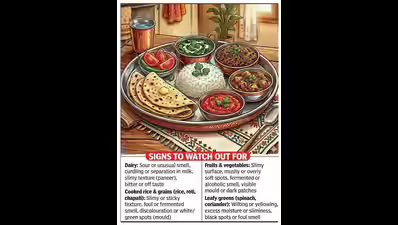
Bengaluru: The shocking news of a family of four dying of suspected food poisoning in Mumbai has made food safety a hot topic of discussion. In Bengaluru, where temperatures continue to climb, experts are urging people to prioritise hygienic preparation, storage and consumption to reduce the risk of spoilage and infection.“Warm temperatures and humidity create ideal conditions for food spoilage. Unrefrigerated milk, curd and paneer can go bad within hours. Bacteria such as Salmonella and E coli multiply rapidly in cooked rice and leftovers,” said Aditi Prasad Apte, clinical nutritionist at Aster RV Hospital. Certain foods are particularly vulnerable in heat. “Berries, bananas, and cut melons spoil quickly, while leafy vegetables wilt and rot faster. Meat, poultry and seafood require strict temperature control, and cream-filled bakery products can spoil almost immediately if not stored properly,” Apte said.Doctors said food contamination often comes with visible signs. “In dairy products, sour smell, curdling, or a slimy texture in paneer are red flags. Cooked rice or rotis should be discarded if they turn slimy, foul-smelling, or develop spots. Rice should not be left at room temperature for more than two hours. Similarly, fruits and vegetables with mushy patches, fermented smell or visible mould should be avoided,” said Dr Adarsh CK, HoD, medical gastroenterology, hepatology and advanced endoscopy, at Gleneagles BGS Hospital, Kengeri.With many turning to juices and tender coconut water for hydration, experts caution against poor hygiene in handling. “People don’t need to avoid them but must be careful. Choose vendors who use clean equipment, fresh ingredients and safe water. Avoid juices left open, pre-cut fruits exposed to flies or unclean glasses. Sugarcane juice should be freshly prepared, and tender coconut is safest when cut fresh with clean tools,” said Dr Nishmita R, consultant, internal medicine, at Sparsh Hospital, RR Nagar.For storage, experts recommend keeping refrigerators at around 5°C and ensuring raw and cooked foods are stored separately in covered containers. Overcrowding should be avoided to allow proper air circulation, which is essential to keep food fresh.“A simple guideline is the ‘rule of 2-2-2′ — do not leave cooked food outside for more than two hours, consume refrigerated food within two days and avoid reheating more than twice,” Dr Adarsh said.