




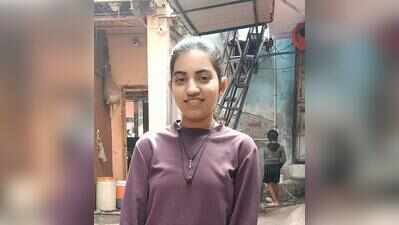
Mumbai: At 20, Thane resident Deepa Gupta has undergone a procedure most people her age would never expect to need: a second angioplasty.Deepa was born with familial hypercholesterolemia, an inherited disorder that causes abnormally high levels of low-density lipoprotein (LDL), or “bad” cholesterol, from birth. A few days before her second angioplasty on Friday, her LDL level was over 500 mg/dL, against a normal level of below 100 mg/dL. “Such high readings are usual for her,” said her father, Deepak Gupta, who runs a panipuri stall.Deepa underwent her first angioplasty at 11, after doctors found a 90% blockage in her left main coronary artery. Cardiologist Dr Hasmukh Ravat used a bioabsorbable stent to treat the blockage, making her one of the youngest patients in India to receive the disappearing stent. For Friday’s angioplasty at Fortis Hospital, Mulund, Dr Ravat said she needed two stents.“She was lost to follow-up for a few years, until the family came back a few days ago with Deepa again suffering from breathlessness,” said Dr Ravat. In the interim, Deepa had also undergone bypass surgery at another hospital.Despite being on cholesterol-lowering medication since childhood, she has continued to develop fresh blockages, said her father Deepak Gupta. Familial hypercholesterolemia is a major inherited metabolic disorder that can cause heart disease at a young age. In children, it can go undetected until symptoms such as breathlessness or chest pain emerge. The Guptas’ eldest daughter died soon after being diagnosed with the condition more than 12 years ago. Their third daughter, too, has elevated LDL levels, though her condition is less severe.To help control Deepa’s cholesterol levels, Dr Ravat administered inclisiran on Sunday. It is a newer, long-acting injectable cholesterol-lowering drug that can reduce LDL levels by about 50%. However, the treatment is expensive, with the first dose costing around Rs 1 lakh. Subsequent doses, administered at intervals of three or six months, cost considerably less. Dr Ravat and the hospital helped the family raise partial funds for the injection and the procedure.For patients with severe familial hypercholesterolemia such as Deepa, a liver transplant may offer a potentially curative option. “Young patients would benefit from a liver transplant as it replaces a defective liver with one that has functioning low-density lipoprotein (LDL) receptors,” said Dr Ajay Mahajan, head of cardiology at civic-run KEM Hospital, Parel.Dr Ravat said the family had been counselled about the possibility of a liver transplant. Since KEM Hospital is a designated Centre of Excellence under National Policy for Rare Diseases, Deepa could be eligible for financial assistance for the procedure.Dr Mahajan, who was not involved in Deepa’s treatment, said research was also under way to develop gene therapies for familial hypercholesterolemia over the next decade.Deepa has now been discharged. “I am feeling much better after the angioplasty. There is no pain now,” she said. Her frequent trips to the doctors have meant that she has developed an interest in studying medicine if possible, said her father.