









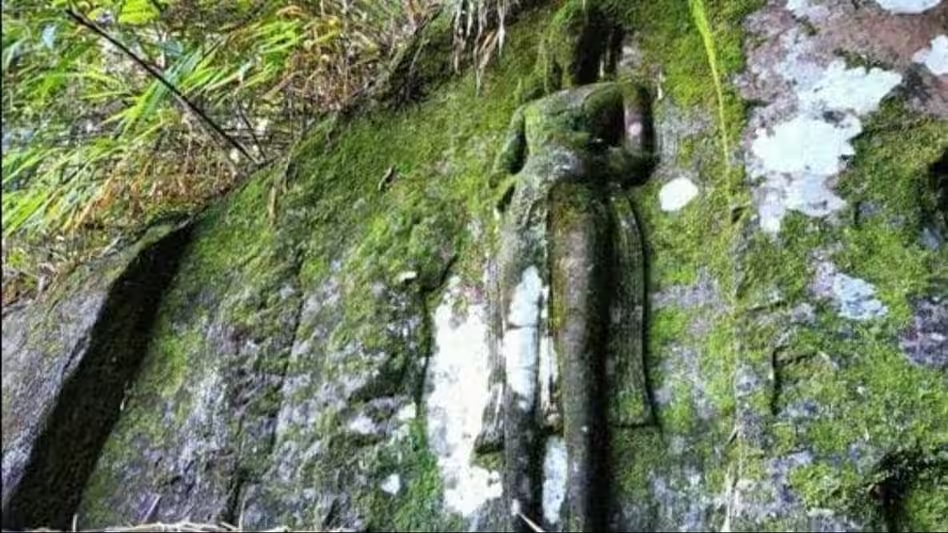
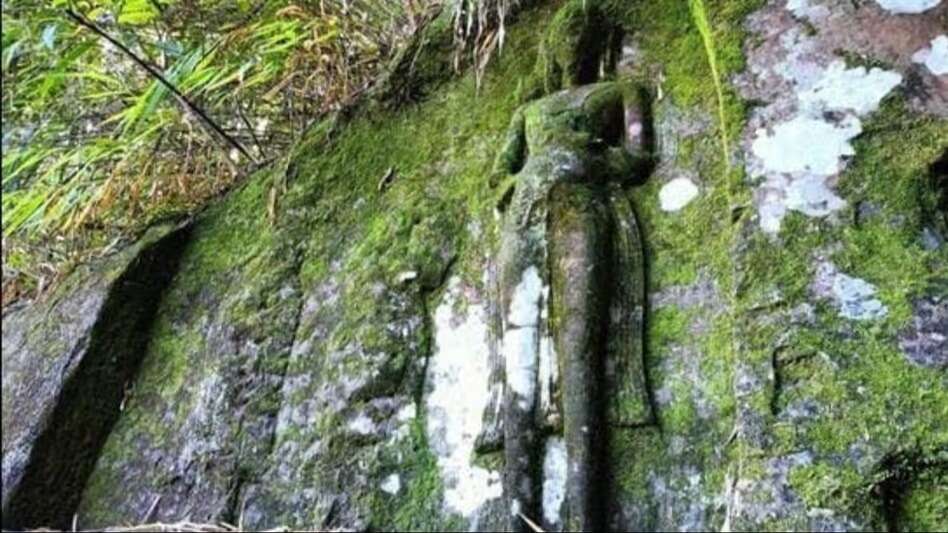
Silchar: The state govt is planning to undertake a detailed exploration of ancient Hindu-Buddhist sculptures and other archaeological remains in the remote Kalaniyan Hills along the Assam-Mizoram border in Hailakandi district.The administration is also working on improving road connectivity to the site, which could eventually be developed as a heritage and eco-tourism destination.Hailakandi deputy commissioner Jay Vikas recently trekked through difficult forest terrain with forest and district officials to inspect the remains and assess roads, communication facilities and other infrastructure in the area.The site came into focus after researchers from Assam University, Silchar, documented stone sculptures believed to be around 1,500 years old. Assistant professor Ganesh Nandi of the department of visual arts and researcher Binoy Paul said the sculptures reflect both Hindu and Buddhist influences.One figure bears features associated with Buddha imagery but has distinctly feminine characteristics. Another has been identified by researchers as resembling Goddess Parvati. The sculptures also show stylistic similarities with the rock carvings at Unakoti and archaeological remains at Pilak in Tripura. Researchers have suggested links with Gupta-Pala artistic traditions.Several sculptures have been damaged, raising the possibility that more remains may lie buried in the hills. Their exact age, religious affiliation and historical context, however, can be established only through systematic archaeological and scientific investigation. The Archaeological Survey of India had earlier taken note of reports about the discoveries.The hills and adjoining settlements are largely inhabited by Reang and other indigenous communities. Residents have reportedly preserved and worshipped some of the stone figures for generations.During the inspection, Vikas, DFO Tapash Das, Katlicherra circle officer Sourav Biswas and other officials met residents, who highlighted the difficulties caused by poor connectivity and rugged terrain.Officials said preservation measures would be considered after the remains are scientifically assessed. The proposed exploration could also provide new insights into the early history of the Hailakandi-Mizoram border region, which has remained largely unexplored because of its difficult terrain.