











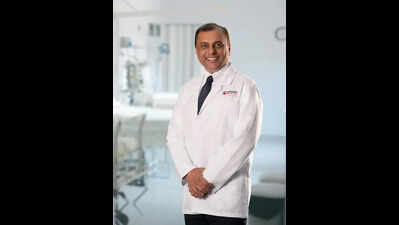
Bengaluru: “As a nation, we once exported a lot of doctors across the world. And now our nurses are going because we produce a very large number of them. And the next big thing will be allied healthcare workers. The whole world needs them. So, it is a great vertical for young people to get into.” This statement of Dr Sharan Shivaraj Patil, chairman, Sparsh Hospitals, summed up the Mission Admission webinar on future-ready careers in allied health sciences.At the webinar hosted by The Times of India in association with the Manipal Academy of Higher Education, experts noted that, driven by a new national regulatory framework, growing demand for skilled manpower and increasing focus on quality healthcare delivery, allied health sciences could be the new rage.Arun G Maiya, dean at the Manipal College of Health Professions under MAHE, explained how the National Commission for Allied and Healthcare Professions Act, 2021, has brought a paradigm change in the sector.The allied health professions largely include technology-oriented disciplines such as laboratory sciences and imaging, while healthcare professions include patient-care-focused fields like physiotherapy, occupational therapy and physician associate programmes. The commission currently oversees 10 major domains and 56 sub-domains under allied and healthcare education. From the 2026 admission cycle onwards, 17 programmes approved by the national commission will have to follow a standardised curriculum across institutions. “The vision is one nation, one curriculum. All institutions offering these programmes must implement the curriculum approved by the commission,” he said.The approved programmes include physiotherapy, occupational therapy, respiratory technology, optometry, dialysis technology, anaesthesia and operation theatre technology, emergency medical technology, physician associate courses, clinical nutrition, psychology and healthcare management.Experts noted that the demand for trained allied healthcare professionals has risen sharply. Dr Sharan urged students from smaller towns and rural areas to consider allied healthcare careers, calling them a pathway to social mobility, personal growth and nation-building. “In many cases, this becomes a life-changing opportunity for students from villages and tier-2 or tier-3 towns,” he said. Ageing populations in countries such as Japan and Germany are creating significant employment opportunities for Indian graduates. Salary packages in hospitals here start from Rs 25,000-Rs 30,000, with ample prospects of career growth.“Healthcare is teamwork. Many a times, patients remember the support people more than the doctor. Being in healthcare itself is the greatest privilege. It’s so fulfilling. There is a purpose when you take care of someone in pain. It also makes you better human beings. In the Western world, doctors and support staff are treated with same respect. While many doctors trained abroad follow the same practice here, that day is not far here when everyone is treated at par,” said Dr Sharan.Maiya added, according to the World Health Organisation’s 2016 projection, by 2030, more than 60% of the health force will comprise of allied and healthcare professionals. “The Union finance minister also highlighted that in the next five years, we need more than 1 lakh qualified and skilled allied and healthcare professionals in the country. So there is a significant demand. They have a very bright future,” he said.