






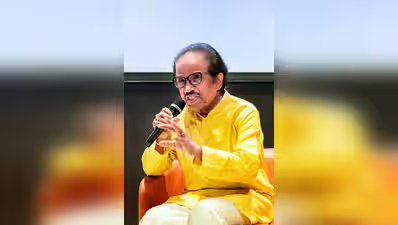
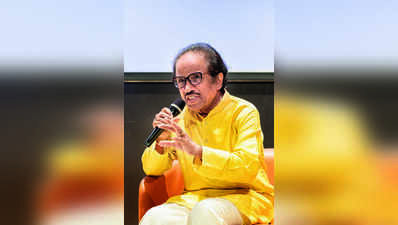
At 79, Dr L Subramaniam is a Padma Vibhushan awardee, a violin virtuoso celebrated the world over, and the recipient of Sri Lanka’s highest state honour. Yet all of it traces back to a six-year-old boy who first picked up the violin under the guidance of his father, the renowned violinist Vaidyanatha Lakshminarayana.“One of the things I learnt from my father is never to assume that this is what has to be done. There has to be creativity in everything — making music, interpreting a composition, even playing a single phrase,” he says. In an exclusive interview with Bangalore Times on the sidelines of the Indian Music Experience Museum’s seventh anniversary, the maestro reflects on creativity, AI, social media, Bengaluru’s music scene, and the lessons that shaped his journey.‘My father taught me to never stop creating’In memory of his legendary father, Sri Lanka recently named a street Violin Maestro Lakshminarayana Road, near Ramanathan College, where he once taught. The North Ceylon Sangeetha Sabha cultural centre stands just across the way.Describing the tribute as “deeply emotional,” Subramaniam says his father developed new techniques that transformed the Indian violin “from a mere accompanying instrument into one that could command the stage as a solo instrument.” He adds, “People see where you are today, but they don’t know what went on behind it. Seeing my father’s life’s work honoured like that was incredibly satisfying.”‘Everybody thought I was making a mistake’It was his father, Prof V Lakshminarayana, who stood by Subramaniam’s decision to pursue music after earning his medical degree. “Almost everybody thought I was making a mistake,” he recalls. Friends and fellow musicians urged his father to persuade him to practise medicine, arguing that a career in music was uncertain. “My father struck a simple bargain with me — pursue music wholeheartedly for a few years, and if it doesn’t work out, return to medicine. That was the deal,” says Subramaniam.Looking back, he believes that unconditional support gave him the confidence to pursue a career that would eventually take Indian classical music to the global stage.‘Indian classical music shouldn’t be boxed into world music’Long before fusion became mainstream, L Subramaniam was already blending Carnatic music with jazz and Western classical. “We have one of the oldest classical systems in India. Why should it be grouped under ‘world music’ while Western classical stands separately?” he asks.Beginning in the 1970s, he recorded for Warner Bros and collaborated with musicians from across the globe, including Yehudi Menuhin, Ravi Shankar, Zubin Mehta and Bismillah Khan. He believes those early collaborations laid the groundwork for the fusion scene we see today. “There are now hundreds of fusion groups, many centred around the violin. It brings me great joy to see how something that began then has grown, evolved, and branched out in so many beautiful directions.”‘AI is a tool, not a substitute’Subramaniam believes musicians should embrace artificial intelligence as it reshapes creative industries, but not without caution. Calling AI “a double-edged sword,” he says, “Learn how AI can enhance your capacity to practise and master the instrument, but don’t let it replace practice.” Asked how musicians could benefit from AI, he points to its ability to catch flaws instantly. “If AI tells you your third note is slightly flat, you can correct it sooner. But you still have to practise to correct it.”The virtuoso warns that technology may create temporary success, but not lasting artistry. “Longevity is very important. Today you may use technology to do something unique. Tomorrow someone else will have a newer model. But if you have the artistry, dedication and practice, people will remember you,” he says.‘Patience matters more than popularity’Asked what music has taught him beyond performance, Subramaniam pauses before answering. “Patience and believing in somebody above.” For him, technical perfection alone doesn’t explain why one performance moves an audience and another doesn’t. Subramaniam believes a greater power has guided him. “Since many of our compositions are rooted in devotion, spirituality makes music much deeper.”His advice to young musicians chasing viral fame: focus on the vision, not the view count. “Don’t be result-oriented. Have a vision of becoming a great musician.”‘Bengaluru is one of India’s most vibrant cities’Violin virtuoso Dr L Subramaniam believes Bengaluru is one of India’s most vibrant cities as music lovers embrace every genre, right from classical concerts to indie gigs and rock shows. “This city has a very cosmopolitan way of looking at things. There is an audience for every kind of music and that’s what keeps the culture alive,” he says.