







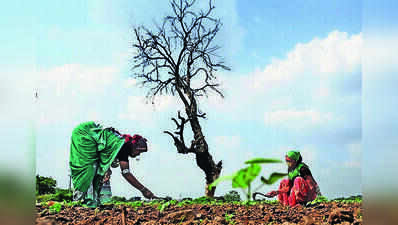
Pune: State govt has issued directions to all the district collectors to take action against the private moneylenders as well as financial institutions if they are found pressuring farmers for loan repayment.The directions were given by govt to the administration in the wake of drought conditions prevailing in most parts of the state. While declaring drought in nearly 75% of the tehsils of the state, govt, in an attempt to reduce the financial burden, decided to halt the loan repayment of farmers. However, amid some complaints by farmer activists, govt has told district collectors to convey the decision to all the financial institutions and remind them not to go after the farmers for loan recovery.State revenue minister Chandrashekhar Bawankule said, “In the past, we have seen farmers have ended their lives due to the pressure of loan repayment. Therefore, the govt has decided to reduce the financial burden of farmers by giving a stay to the loan recovery. The district collectors have been told to call a meeting of representatives of financial institutions from credit cooperative societies, private banks to national banks to tell them not to go after farmers for any demand.”While farmer activists have been complaining about the private money lenders recovering loans from farmers at much higher interest rates, Bawankule said that strict action will be taken against such moneylenders. “If farmers are being harassed by private money lenders, they should come forward and complain to the police or the district administration and they will face legal action,” Bawankule added.The opposition parties have criticised govt, claiming that instead of giving a stay on loan recovery, govt should give a complete loan waiver. NCP (SP) state president Shashikant Shinde said, “Giving stay on loan recovery will not solve problems for farmers as they will have to carry the burden of repaying it in future. Considering the severe drought situation, the govt should immediately declare a blanket loan waiver so that there will not be any issue of recovery.”