







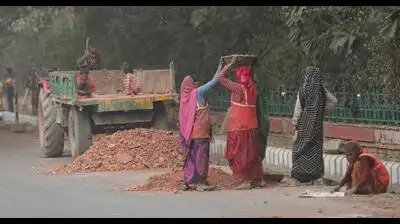
Gurgaon: Before the city wakes up, they are already at work — hauling bricks, climbing scaffolding, sorting garbage, clearing waste. In Gurgaon’s vast and often invisible labour economy, some of the hardest and riskiest jobs are done by men who arrived here quietly, through routes few see and fewer question.The detention of 13 Bangladeshi illegals last week has pulled that hidden network into view.Police said the men — picked up from construction sites and settlements in sectors 69, 70 and 104 — had entered India illegally through the Kaliaganj border in West Bengal and spent years working across Gurgaon’s construction belt. After medical examinations, they are expected to be shifted to a “deportation centre” in IMT Manesar before being handed over to Bangladeshi authorities through the BSF once documentation is completed.Their detention has now widened into a closer look at how undocumented foreign nationals enter cities and blend into the workforce.Officials and labour contractors said the route is rarely accidental.It often begins in border districts of West Bengal and Assam, where recruiters identify workers willing to migrate for jobs. Contractors travel there, offer advance payments to families, and arrange transport to cities like Gurgaon.“We give them advance money, fix the travel and make sure there is a place to stay once they arrive,” said a labour contractor, requesting not to be identified.From there, the transition is swift. Workers are placed in jhuggi clusters, rented rooms and unauthorised colonies near worksites. Local landlords and settlement operators become a key link in the chain, renting out cramped rooms close to industrial areas and construction hubs, creating a ready labour pool that contractors can tap into at short notice.The jobs themselves are often those others increasingly avoid.Industry sources said garbage collection, waste segregation and high-risk construction work have seen fewer takers from traditional migrant belts, such as Bihar, UP and Rajasthan, as workers look for better-paying or less physically punishing options.This gap, contractors said, has created a demand. These workers are often deployed for door-to-door waste collection, transporting garbage, segregating recyclable material and carrying out cleaning operations. Contractors said many are willing to work for lower wages and rarely ask for statutory benefits such as provident fund, insurance or paid leave.“Garbage collection is among the toughest jobs. Many workers from Bihar and UP now prefer other work. So, contractors look elsewhere,” one contractor said.The nature of work is often evident at construction sites. Police said some of the 13 detainees were involved in hazardous scaffolding work at heights — jobs that contractors allegedly reserve for workers willing to accept lower wages and harsher conditions.Most earn between Rs 8,000 and Rs 10,000 a month after deductions for rent, transport and commissions. Labour sources said that while civic agencies and outsourced sanitation companies may officially pay according to govt norms, multiple layers of subcontracting often reduce the amount that finally reaches workers.For many, it is the first rung of survival in the city. Some later move into driving, loading or delivery jobs. Others pick up skills such as operating collection vehicles or handling machinery, allowing them to slowly shift into less physically demanding roles.But last year, when police rounded up over 250 Bengali-speaking workers during a similar verification drive in July, panic spread fast. Only 10 were eventually deported, but entire settlements saw an exodus. Societies and households felt the fallout almost immediately — garbage collection slowed, domestic work was disrupted, and labour shortages surfaced.Officials admitted that the challenge goes beyond immigration. “We have to break the network, but also ensure essential civic work is not disrupted,” an official said.Police spokesperson Sandeep Kumar said the verification exercise will continue across slums, rented accommodations, industrial areas, hotels and commercial establishments, adding that the drive will be carried out keeping national security and public safety in mind.