










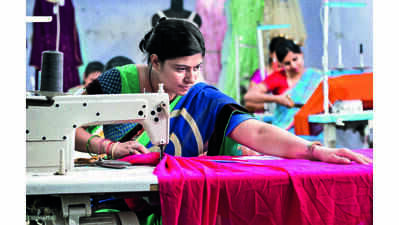
Hyderabad: Vision problems are common among garment industry workers in Hyderabad and are associated with reduced work productivity, according to a study by researchers from the LV Prasad Eye Institute.The study, which examined 1,361 workers across five garment factories in the city, found that 6.9% had distance vision impairment, while 52.4% of workers aged 40 years and above had near vision impairment. Researchers reported that workers with visual impairment recorded significantly higher productivity loss scores than those with normal vision, highlighting the impact of untreated eye conditions on industrial labour.Uncorrected vision problems emerge as major concernThe study, titled “Distance and near vision impairment and its impact on work productivity among garment industry workers in Hyderabad, Telangana, India”, was published online on June 10, 2026, in Scientific Reports. It was conducted by Vinitha Mingi, Dharani Nandyala, Thirupathi Reddy Kumbham and Srinivas Marmamula.The research covered workers from five garment factories located in Hyderabad’s western and north-eastern industrial zones. It found that distance vision impairment (DVI) affected 6.9% of participants, while near vision impairment (NVI) affected more than half of workers aged 40 years and above.Researchers identified uncorrected refractive errors as the leading cause of DVI, accounting for 90.4% of cases. Near vision impairment was largely attributed to uncorrected presbyopia. The study noted that many of the visual problems affecting workers could be corrected with spectacles.Women constituted 87% of participants, reflecting the workforce composition of the garment industry in the region. The authors noted that visual impairment can significantly affect workers engaged in tasks requiring precision, such as stitching and garment assembly.Productivity losses linked to impaired visionUsing the Work Productivity and Activity Impairment (WPAI) score, the researchers found a clear association between vision impairment and reduced work performance. Workers with DVI recorded a productivity impact score of 12.6, compared with 8.8 among those without impairment. Similarly, workers with near vision impairment had a score of 13.3, compared with 7.7 among those with normal near vision.The longitudinal study concluded that blurred vision and presbyopia substantially hinder occupational efficiency, with findings indicating that visual deficits can reduce output by more than 40%. The authors said the impact extends beyond workplace performance, affecting daily activities and overall well-being.To address the issue, the researchers recommended regular workplace eye examinations and the timely provision of spectacles for both distance and near vision correction. They argued that delivering eye-care services on-site could help overcome barriers such as lack of time, fear of wage loss due to absenteeism, and travel-related costs.The study also highlighted the potential economic benefits of workplace eye-care programmes, particularly for women workers who may have limited access to healthcare services. According to the authors, improving access to vision correction could enhance worker well-being, support productivity, and contribute to broader economic development goals by improving the earning potential of industrial labourers.