



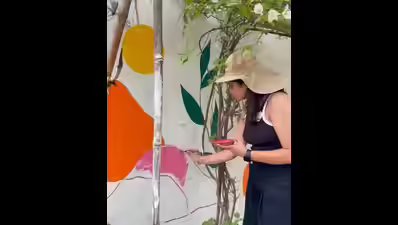
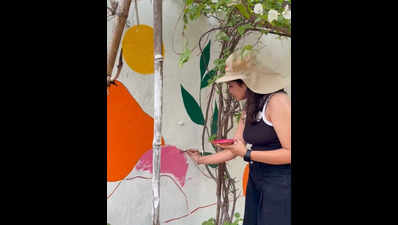
The paintbrush has proved mightier than the sword once again, and Bengaluru’s citizens have shown how. When a wall near Sundaravana became an eyesore, people chose action over complaint. Volunteers from Rang 4 A Cause, Community Task Force Charitable Trust (CTFCT), Rotary Bengaluru HSR, and SayTrees came together with a shared vision: to create meaningful public art. The result is a striking mural that not only beautifies the space but also educates visitors about environmental stewardship.
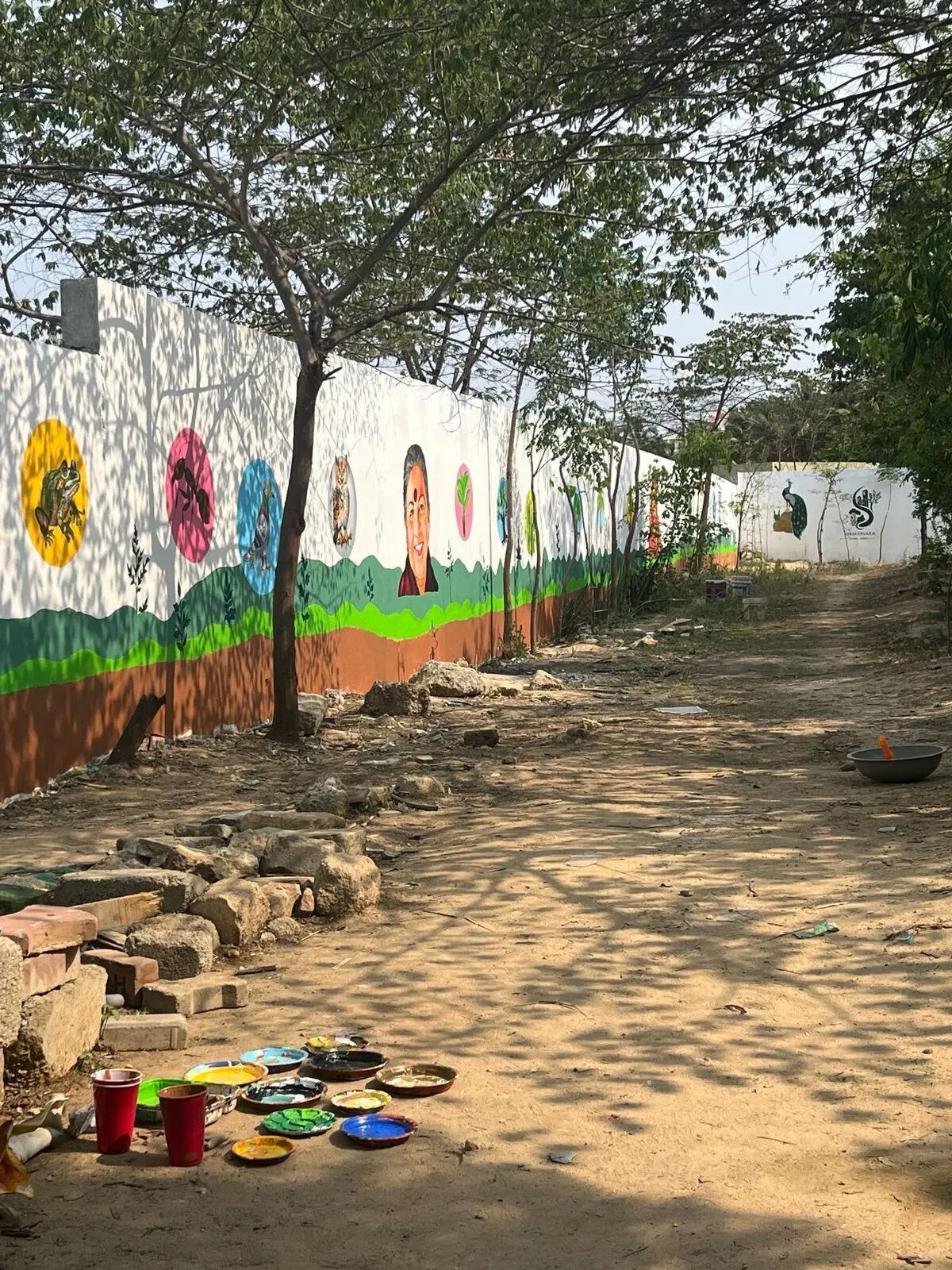
Sundaravana mural
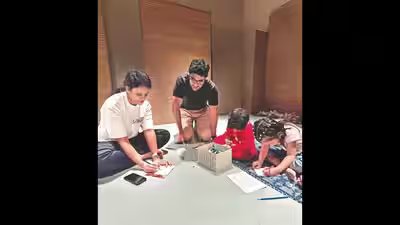
The mural features four noted environmentalists—Saalumarada Thimmakka, Tulsi Gowda, Vandana Shiva, and Ra-hibai Soma Popare—alongside illustrations of birds, butterflies, insects, reptiles, flowers, and native trees, bringing the essence of an urban forest onto the wall. Through pictorial storytelling, the artwork traces Sundaravana’s inspiring journey, helping visitors understand its origins and purpose. More than 80 volunteers—artists and non-artists, children and senior citizens—worked for five to six days from planning to execution, including cleaning, whitewashing, and touch-ups to create the mural. “Only about half were artists; for the rest, it became a hands-on learning experience,” says Raghav Uppar, 28, a self-taught artist and founder of Rang 4 A Cause, an NGO dedicated to art and education that led the mural project at Sundaravana. Uppar, who through his flagship initiative, RANG DOO, has revamped over 15,00,000sqft of public spaces. The Sundaravana Wall Mural Project cost close to Rs 1,00,000. The funds were raised mainly through social media. “The wall that measures close to 300 feet now stands as a testament to community spirit,” says Gayathri Shekar, trustee, CTFCT.Voice BoxSundaravana was heavily polluted with plastic earlier. We removed plastic from the top two feet, improved the soil with a mix including manure, hay, and red soil. The land was transformed into a Miyawaki forest with 14,000 trees. We continue planting flowering, fruit-bearing, and medicinal plants in the forest. The produce is grown without pesticides. Fallen fruits and vegetables are not harvested for sale, and contribute back as manure.Venkatesh HS, PRESIDENT, COMMUNITY TASK FORCE CHARITABLE TRSUT