








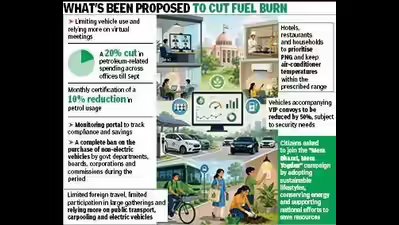
Gurgaon: The work-from-home routine that became normal during the Covid-19 pandemic may return to parts of Haryana’s corporate sector, with the state govt preparing to ask industry bodies to help firms revive remote working wherever feasible. The push, along with staggered office timings, is aimed at easing gridlock and cutting fuel burn and energy demand.The proposal is an extension of austerity steps the state has already rolled out for its own departments and agencies. The measures include limiting vehicle use and relying more on virtual meetings — something the govt wants the private sector to adopt as well.If implemented, the city — home to offices of several Fortune 500 companies and headquarters of major Indian firms — would feel its effect the most. According to some estimates, nearly five lakh cars enter the city every day from Delhi, Faridabad and other NCR areas, then head back after office hours, making daily commuting a dominant source of traffic.“If vehicles of officegoers are taken off the roads, they will appear significantly less crowded. A majority of the city’s traffic comprises daily commuters travelling to and from workplaces,” a govt official said.A notice issued by chief secretary Anurag Rastogi said the step was prompted by continuing disruptions to global supply chains linked to the conflict in West Asia, which have pushed up fuel prices and added pressure to imports and the wider economy.“The industries department has been asked to engage with industry bodies such as Nasscom, CII and Ficci to encourage work-from-home arrangements wherever feasible and introduce staggered office timings to reduce traffic congestion and fuel consumption,” the communication said.Nitin Sahini, president of Foqal Analytics, said his firm prioritises efficiency, cost, effort and the environment, and backed the govt’s approach as sensible. “For knowledge-based industries, hybrid working has proven that productivity and client service can be maintained effectively while reducing commuting time,” said Sahini, adding that the gains could include lower fuel use, lighter congestion and cleaner air as well.He said adoption will differ by sector, but companies that can offer flexibility should weigh it seriously. “Responsible use of resources benefits employees, businesses and society alike,” Sahini said.Pramod Singh, who works with a global company, said businesses operated fine with WFH during Covid-19. “It has no impact on productivity. In fact, employees and companies save on rental and office expenses,” he added.On the govt side, the finance department has been asked to enforce a 20% cut in petroleum-related spending across offices till Sept. Departments will also have to certify each month that vehicle use has been reduced by at least 10%, while a dedicated monitoring portal will be created to track compliance and savings.The govt has also said that vehicles accompanying VIP convoys be reduced by 50%, subject to security needs. It has simultaneously imposed a complete ban on the purchase of non-electric vehicles by govt departments, boards, corporations and commissions during the period.Residents have been advised to avoid unnecessary foreign travel, limit participation in large gatherings and rely more on public transport, carpooling and electric vehicles. The advisory has also urged people to support local tourism, buy local products and adopt energy-efficient practices at home and at work. Hotels, restaurants and households have been asked to prioritise PNG and keep air-conditioner temperatures within the prescribed range.The govt has further appealed to citizens to join the “Mera Bharat, Mera Yogdan” campaign by adopting sustainable lifestyles, conserving energy and supporting national efforts to save resources.Officials said the directions have been circulated among all administrative secretaries, heads of departments, divisional commissioners, deputy commissioners, boards, corporations and universities in Haryana for immediate implementation and compliance.