










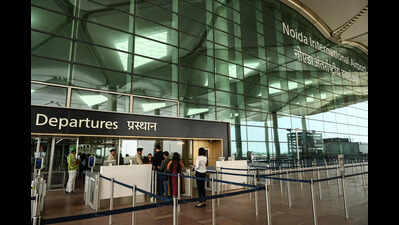
Noida: When the first aircraft lifts off from Noida International Airport on June 15, it will take off from a runway that nearly did not exist.The 40-acre stretch of land at the heart of the runway — 16.4 hectares in the middle of what is now a fully operational airstrip — was missing from the original land calculations for the project. It was only caught in time, acquired in 2023 and folded into the airport’s foundations.Even as land acquisition for Phase 1 began in 2018, the challenges were already stacking up.The consent crisis
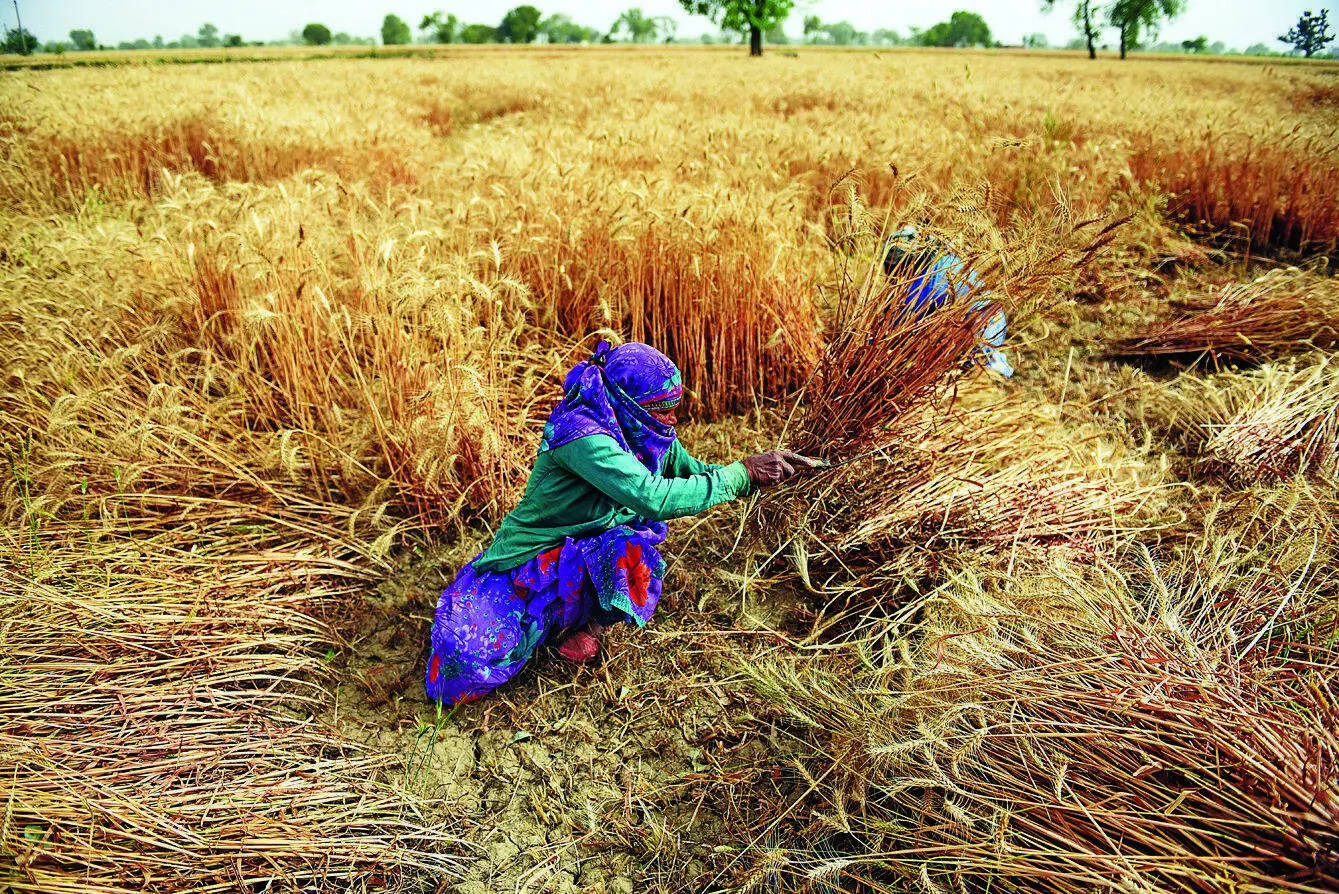
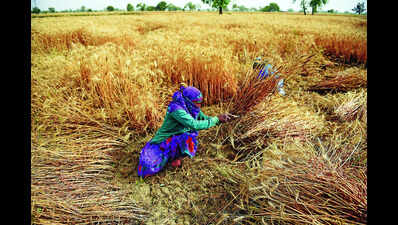
Agriculture was the mainstay of villagers before land was acquired for the airport
In the six villages — Ranhera, Rohi, Dayantpur, Kishorpur, Parohi and Banwarbas — where the terminal now stands, there stood swathes of agricultural fields and a way of life built around the land.The Land Acquisition Act, 2013, required consent from at least 70% of the 5,905 affected families. At the outset, four gave it.The problem was partly legal, partly human. Four of the six villages were reclassified as urban and industrial during the acquisition process. Under the 2013 Act, that shift moved compensation calculations to a lower multiplier. Farmers who had expected rural-rate compensation found the ground shifted under them. “There was resistance, doubt and anger,” said BN Singh, then district magistrate.
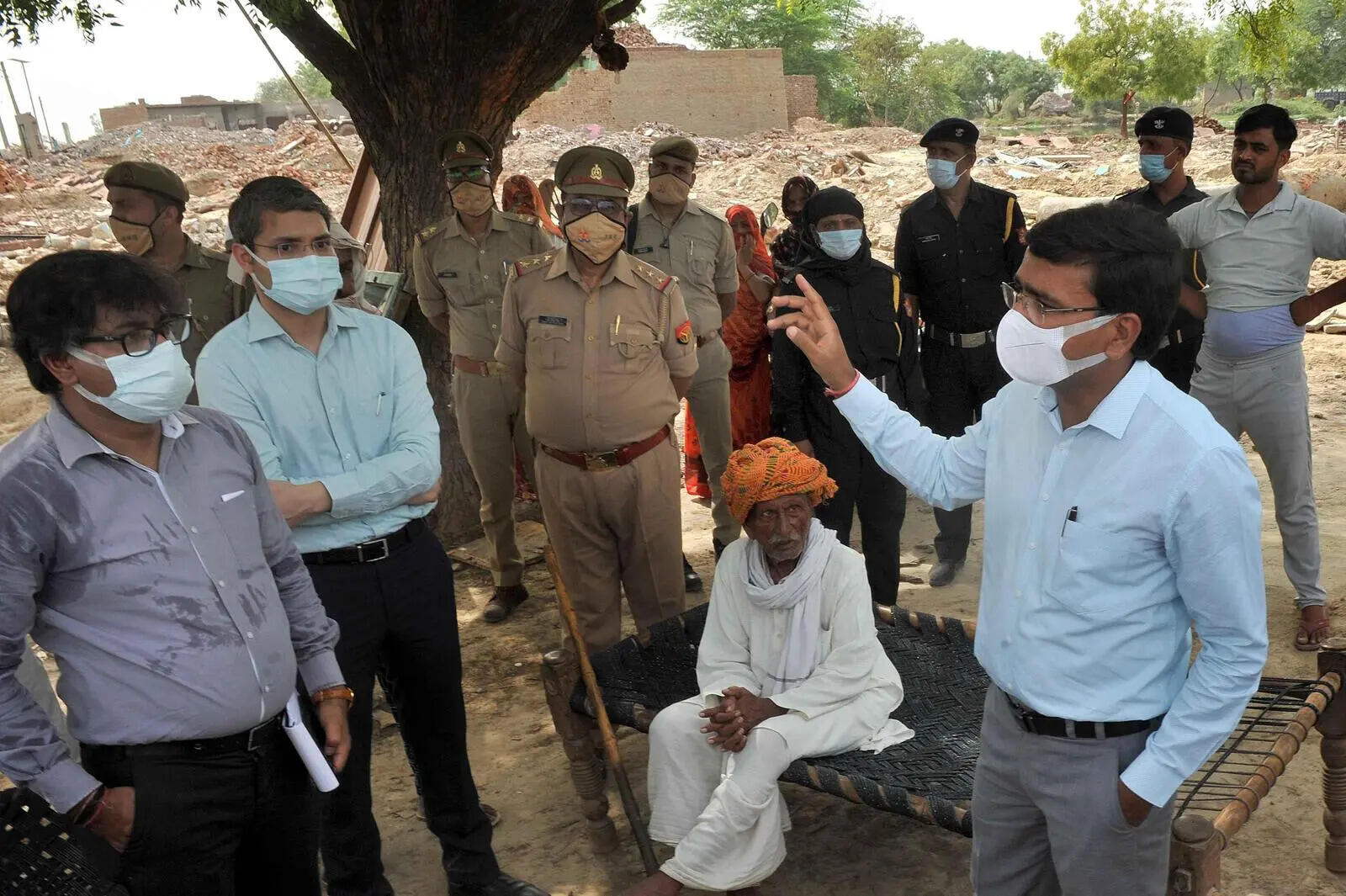
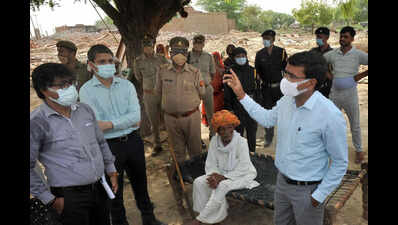
Meerut divisional commissioner visited the six villages in Jewar to monitor the progress of the rehabilitation process
At an emergency meeting at Gautam Buddha University, a workaround was floated: treat the airport as a transport project under a no-consent route, bypassing the deadlock entirely. But Singh rejected it. Instead, he went to the villages himself for seven consecutive days. He held meetings and had direct conversations with farmers about compensation, rehabilitation, resettlement and what the airport would mean for the region. The landowners, he found, were not all in the villages. Many had moved to Delhi, Gurgaon, Faridabad, Ludhiana, Lucknow, Kanpur, Agra and Mathura. Revenue officials were told to fan out across cities, tracking co-sharers, explaining the project, collecting signatures. Naib tehsildars Jeet Singh and Durgesh Singh led much of the ground outreach.Within roughly 20 days, consent was given by 4,235 families.Eventually, more than 90% of affected farmers accepted compensation voluntarily. “This was not magic,” said Singh. “It was the result of field contact, repeated explanation, transparent process and the hard work of officers and staff.”Logistics of acquisitionSpeed was the second crisis. The possession deadline was tight, manpower was limited, and the scale of the acquisition was unlike anything the district administration handled before.Eventually, every lekhpal, revenue inspector and naib tehsildar involved in the acquisition was given independent vehicle support — a first in any land acquisition in the state. “A missing vehicle could delay a file, a farmer’s signature, a site inspection or a payment paper,” he said.
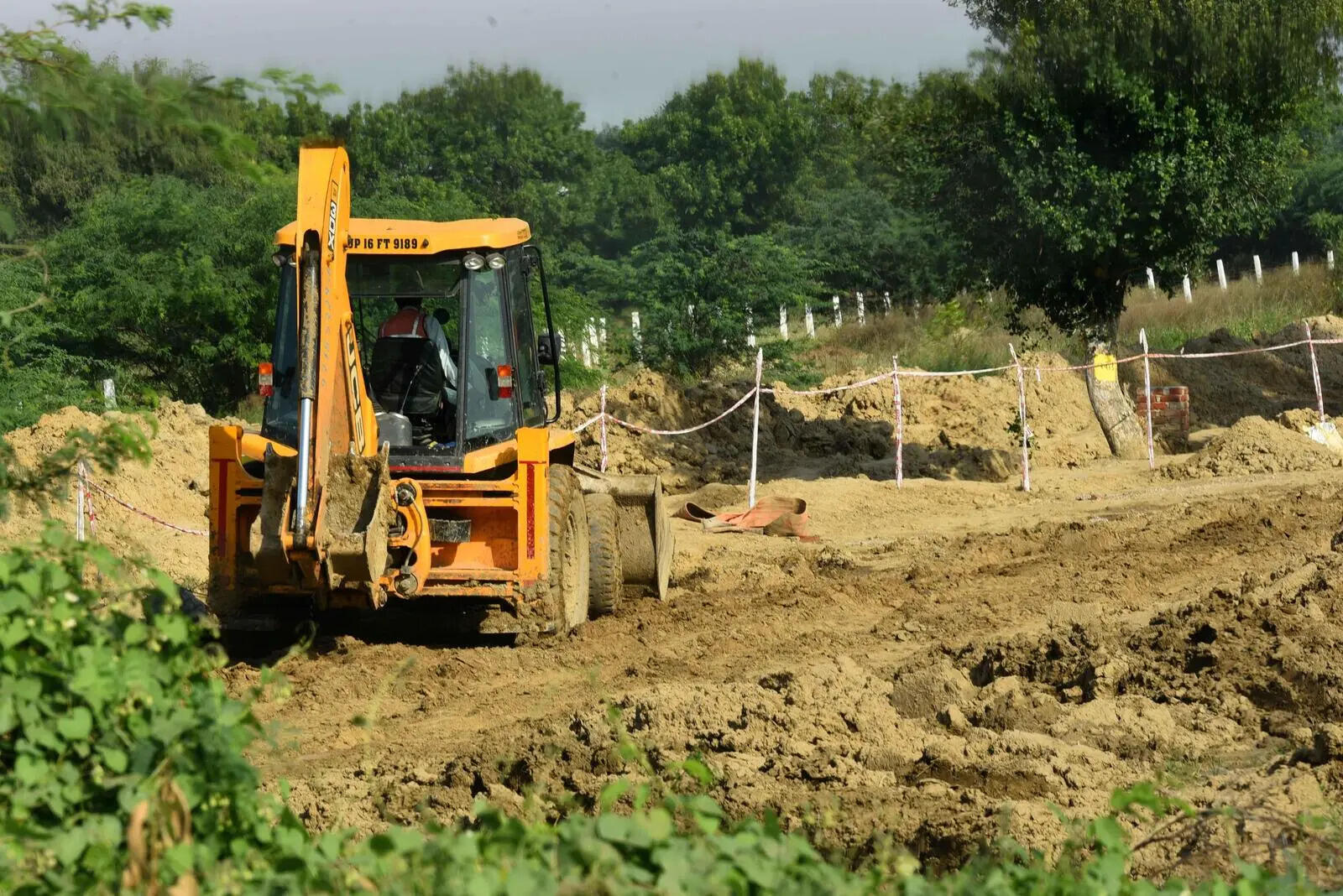
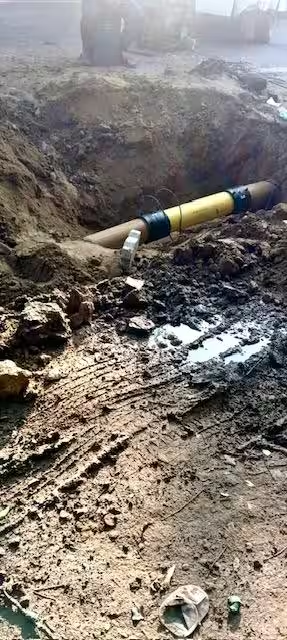
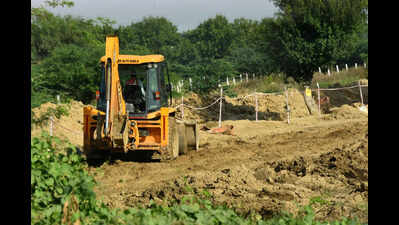
Bulldozers roll in at Jewar
Five help centres were set up close to the affected villages, each functioning as a mini-administration office. Photocopy machines, generators, computers, printers, stamp vendors, notary advocates, photographers and CCTV cameras were deployed at each. Data-entry operators and sub-registrar support were on hand so that farmers could complete paperwork without travelling to distant offices.“A photocopy machine mattered. A notary mattered. A vehicle for a lekhpal mattered. Food for a staff member working at midnight mattered. A farmer’s bank account details mattered. A co-sharer living in another city mattered,” said Singh, who monitored the entire process remotely through CCTV.A ‘missing’ runwayWhen Arun Vir Singh, then CEO of YEIDA and chairman of Noida International Airport Limited, reviewed the acquired land, something did not add up. The original 1,334-hectare boundary was marked using latitude and longitude coordinates. But village boundaries had shifted from rural to urban, older pillars and markers had been obscured by newer structures, and in the recalculation, 40 acres — 16.39 hectares — had dropped out of the count. That missing land was precisely where the main runway now stands.
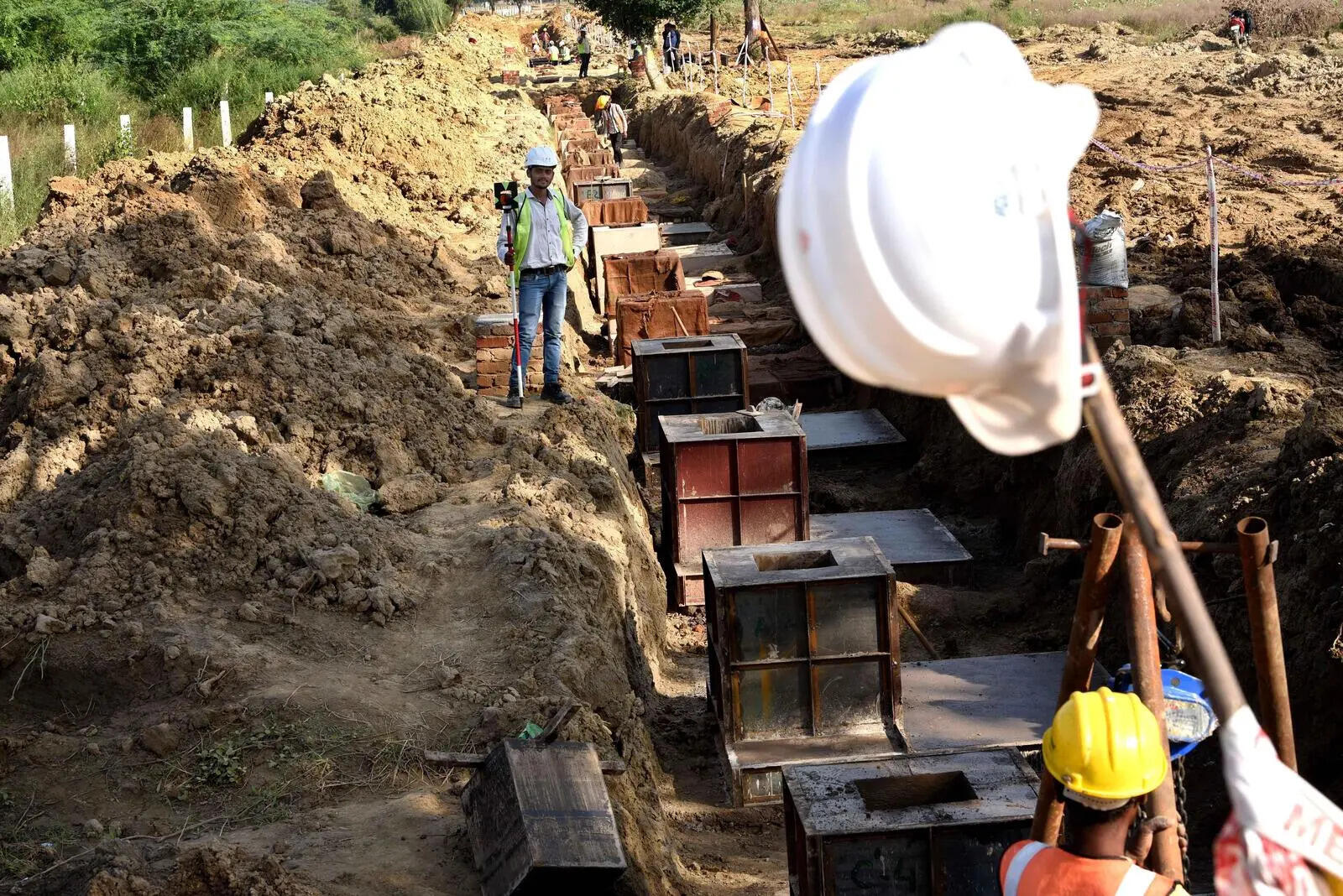
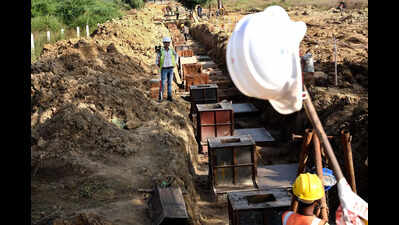
Construction of the airport’s boundary wall at Ranhera village
“It is the middle path of the runway on which aircraft will fly on June 15. Had we not rechecked and acquired this land later, there would have been no runway today,” Singh told TOI.The land belonged to roughly 247 stakeholders, most of whom had subdivided and sold their plots. Many had scattered to Mumbai, Bengaluru and Delhi. YEIDA officials spent four to five months locating them. The land was eventually acquired in 2023 through registered sale deeds.An idol that could not be moved — until it was
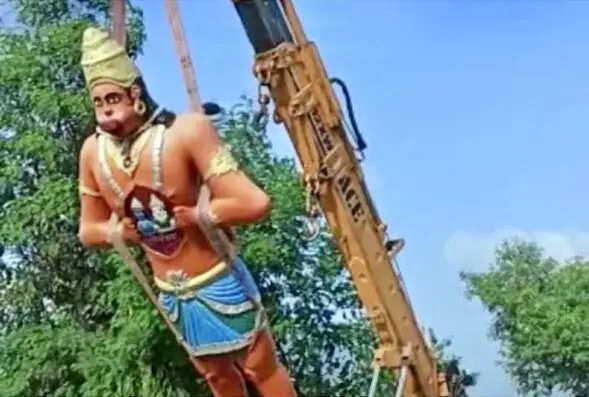
A 70-year-old Hanuman idol was shifted to Banwari Bagh village from Rohi
In Rohi village, on land already acquired for the airport, stood a Hanuman idol about 20 feet tall, 70 years old, sunk deep into its plinth. The villagers would not hear of it being dismantled or shifted. Arun Vir Singh negotiated a solution to relocate the idol, with full ceremony, to Banwari Bagh village, also known as Banwaribas. After the villagers gave their consent, cranes were brought in and the extraction was carried out with care. A hawan was performed at the new site. The land was finally cleared.