







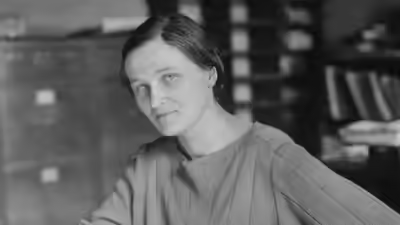
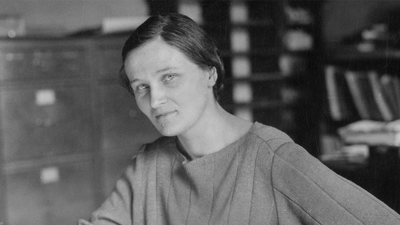
More than a century after she revolutionised astronomy with a discovery that reshaped humanity’s understanding of the cosmos, Cecilia Payne-Gaposchkin is receiving fresh recognition for her extraordinary achievements. English Heritage has unveiled a blue plaque at her former home in Notting Hill, London, commemorating the scientist whose groundbreaking work revealed that stars are composed primarily of hydrogen and helium. At a time when women faced significant barriers in higher education and scientific research, Payne-Gaposchkin challenged accepted wisdom and produced one of the most influential doctoral theses in astronomy. Her findings transformed astrophysics, laying the foundation for modern studies of stars, galaxies and the wider universe.
How Cecilia Payne-Gaposchkin discovered what stars are made of
In 1925, Payne-Gaposchkin completed her doctoral thesis at Harvard, where she analysed the light emitted by stars to determine their chemical composition. Using advanced theories of atomic physics, she concluded that stars are made overwhelmingly of hydrogen and helium.The finding contradicted the prevailing scientific belief that stars had a composition similar to Earth. Today, her conclusion is considered one of the most important discoveries in modern astronomy and remains fundamental to our understanding of how stars form and evolve.Despite the strength of her research, Payne-Gaposchkin’s conclusions were initially met with scepticism. Leading astronomers of the era believed her results were impossible because they challenged established scientific assumptions.Under pressure from senior scientists, she softened some of her claims in her thesis. However, subsequent research confirmed that her original conclusions were correct. What was once viewed as controversial eventually became one of the cornerstones of astrophysics.
A brilliant student who overcame barriers
Born in England in 1900, Payne-Gaposchkin displayed exceptional academic talent from a young age. She earned a scholarship to Newnham College, Cambridge, where she studied physics and astronomy.Although she excelled academically, women at the time were not awarded full degrees by Cambridge University. Seeking greater opportunities, she moved to the United States in 1923 and joined Harvard College Observatory, where she would make her historic breakthrough.
Breaking new ground at Harvard
Payne-Gaposchkin’s career was filled with firsts. She became the first woman to earn a PhD in astronomy from Harvard and later became the university’s first female full professor in the Faculty of Arts and Sciences. She eventually chaired Harvard’s astronomy department, another milestone achieved during an era when women rarely held senior scientific positions. Her success helped open doors for future generations of female researchers.
Contributions beyond the composition of stars
While she is best known for discovering what stars are made of, Payne-Gaposchkin’s scientific career extended far beyond that achievement. She published hundreds of research papers and conducted extensive studies on variable stars, stellar atmospheres and stellar evolution. Working alongside her husband, astronomer Sergei Gaposchkin, she produced important catalogues of variable stars that continue to be valuable to astronomers today.Her work helped scientists better understand how stars change over time and how galaxies are structured.The new blue plaque marks the London home where Payne-Gaposchkin lived as a young woman before embarking on her remarkable scientific journey. According to English Heritage, the plaque recognises both her groundbreaking discoveries and her perseverance in overcoming barriers that limited women’s participation in science.The honour places her alongside some of Britain’s most celebrated scientific figures and serves as a reminder of the immense impact her work continues to have on astronomy.
A legacy written in the stars
More than 100 years after her landmark thesis, Payne-Gaposchkin’s influence remains visible throughout modern astrophysics. Every time scientists study the composition of a star, model stellar evolution or explore the history of the universe, they build upon foundations she helped establish.