










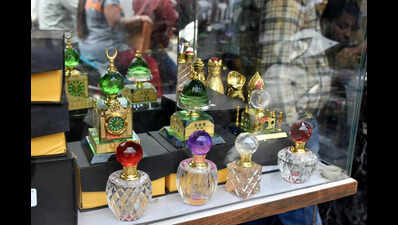
Bengaluru: Prices of diethyl phthalate (DEP), a chemical derivative of crude oil imported largely from Iran, have surged from Rs 100 per kg in Jan to Rs 180 per kg. DEP is a key ingredient in perfumes and agarbattis as it acts as a solvent and fixative, helping fragrance oils dissolve properly and retain aroma for a longer duration. Manufacturers say the increase in DEP prices has directly impacted both the perfume and incense stick industries.Apart from DEP, prices of bamboo sticks, charcoal powder, plastic caps and joss powder have also increased significantly. Industry representatives said lamination and packaging costs have nearly doubled, forcing many companies to look for alternatives such as TEC, benzoyl compounds and paper-based packaging solutions.Overall production costs in the industry have gone up by 20% to 30%, with some manufacturers already increasing retail prices by 10% to 15% and others reducing the quantity in perfume bottles.Speaking at the recent 12th International Agarbatti and Perfume Expo 2026, organised by Incense Media, industry players said the raw material prices have gone up by an average 20% to 30% owing to the Iran-US conflict.Praveen Goyal, head of operations, Incense Media, said: “With around 1,000 agarbattis and perfume industries located in the state, the industry is under pressure as raw material costs, including fragrances, wood powder, charcoal and packaging materials, have risen by 20% to 30% in the last three-four months, forcing some manufacturers to increase prices by 10% to 15%. The prices of raw materials have gone up because of the Iran-US conflict affecting the industry.”Yash H Buddhdev, director, JP Perfumery Works, said: “Good-quality odourless wood powder imported mainly from Vietnam, used in premium incense sticks, has become expensive because of higher duties, container shortages and global disruptions. Prices of binder materials, fixatives and several chemicals have increased by 20% to 40% in recent months. Despite that, we have limited our hike to 5% to 10% as we do not want customers to bear the entire burden. We expect costs to stabilise in the next three-four months.”Surendra Sipani, head of finance, ITC Ltd, said: “We are exploring alternate solutions, different chemicals like TEC, to see if we can come out stronger with an alternate formulation. As for the war, we do not know how long it will continue. If we all work together towards alternate solutions — not just in fragrance but also in laminate, which has doubled in price, and shift towards paper packaging — we can find a way through.”Dipen K Haria, managing partner, Balaji Agarbatti Company from Prakshnagar, said: “From bamboo sticks to powder, perfume, packaging, plastic caps and shrink wraps — logistics plays a major role in every single element of this industry, nothing has been left out. The only way to come out of this is without affecting the quality of the product. Rather than reducing quantity, we must hold the line on quality at every point. Price increases are inevitable, but the challenge is that many people will not adhere to them. The real answer lies in reducing costs smartly, educating the customer on value, and maintaining healthy competition.”Coffee Fragrance New TrendDipen Haria, partner at Balaji Agarbatti Company, said: “Gen Z in particular tends to experiment more, often spending time at the start of the month and trying multiple products and fragrances. Because of this evolving demand, the industry is also innovating with new offerings such as coffee-based fragrances in incense and sprays, along with fruity notes like orange and pineapple.”Hardil H from JP Perfumery added: “Consumers today are experimenting with fragrances based on their mood and personality. While some prefer floral and sweet notes for peace and calmness, others choose woody or earthy fragrances depending on the aura they connect with. Younger consumers are exploring multiple products and fragrance families, including fruity notes.”