









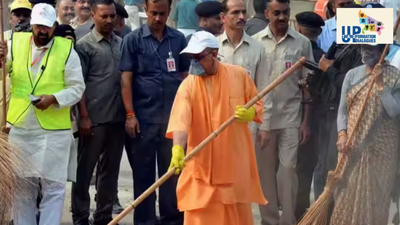
LUCKNOW: Lucknow has become the clearest symbol of the Yogi government’s push for cleaner cities. In Swachh Survekshan 2024-25, it secured third position among cities with more than 10 lakh residents.It also became Uttar Pradesh’s first seven-star Garbage Free City and received a Presidential Award. More recently, it topped the Swachh Vayu Sarvekshan 2026 rankings among million-plus cities, linking everyday cleanliness to the quality of the air residents breathe.
A capital that raised the bar
The seven-star Garbage Free City rating reflects a high standard in municipal solid waste management. It covers collection, segregation, processing and scientific disposal.For Lucknow, it signals a move away from garbage piling up in public spaces and towards an organised, end-to-end system.The recognition matters because the capital faces the same pressures as any fast-growing city: expanding colonies, rising population and growing consumption, all of which generate more waste. Removing garbage from streets is no longer enough.A city of Lucknow’s size needs a full chain of collection, segregation, transportation, processing and disposal, and the national recognition suggests the capital is building one.
Topping the clean air charts
Lucknow’s second major honour came in September 2026, when it topped the Swachh Vayu Sarvekshan 2026 rankings among cities with populations above 10 lakh. It scored 198 points, ahead of Indore with 197 and Jabalpur with 195, a narrow margin that shows how closely contested the race was.The clean-air assessment rewards cities for pollution-control measures such as reducing road dust, improving waste management, preventing open waste burning and promoting cleaner transport.This makes Lucknow’s result especially meaningful. Uncollected garbage, open burning, road dust and construction activity all add to urban pollution, so sanitation and air quality cannot be treated separately. Mechanised sweeping, better waste collection, scientific disposal and cleaner municipal transport work together as one environmental strategy, and Lucknow’s ranking suggests the city is acting on that idea.The achievement is more than a ranking. It shows how municipal governance shapes quality of life in a rapidly expanding city.
The statewide backdrop
Lucknow’s success sits within a larger transformation. Cleanliness in Uttar Pradesh has grown from a programme centred on toilet construction into a wider agenda covering waste management, sanitation infrastructure, environmental protection and public participation.In rural areas, the state built more than 2.74 crore individual household toilets in the first phase of the Swachh Bharat Mission (Gramin). In 2023, all 95,767 villages were declared ODF Plus, meaning they are sustaining open-defecation-free status while moving towards solid and liquid waste management.Urban areas show similar momentum. In Swachh Survekshan 2024-25, the number of ODF++ urban local bodies rose from 129 to 337. Verified door-to-door waste collection improved from 48 per cent to 62 per cent, and waste processing jumped from 48 per cent to 85 per cent in a year.Among the state’s 17 municipal corporations, 13 now hold Water-plus status, compared with just two earlier. Lucknow, as the capital, stands at the front of this shift from simply transporting garbage to processing and disposing of it properly.Lessons from the MahakumbhAnother test of the state’s capacity came with Mahakumbh 2025 in Prayagraj, where millions of pilgrims arrived over an extended period.Toilets, urinals, waste collection, sanitation workers, cleaning schedules and monitoring systems all had to run continuously. The Swachh Survekshan 2024-25 awardee list included a special recognition for Swachh Mahakumbh 2025.The experience showed what advance planning, manpower deployment, infrastructure and constant monitoring can achieve at scale. For a city like Lucknow, which hosts large religious, cultural and political gatherings throughout the year, these practices offer a useful template.
The safaimitras behind the rankings
No ranking is won without the sanitation workers, popularly known as Safaimitras, who sweep streets, clear drains, collect and transport garbage and operate sanitation facilities every day. Sustainable urban sanitation depends on their safety, dignity and working conditions.That is why mechanised cleaning, better infrastructure and safer waste-handling practices are central to the cleanliness agenda. The Swachh Survekshan framework itself recognises Safaimitra safety, and Gorakhpur’s third-place finish in the Safaimitra Surakshit Shehar category shows the state’s attention to this area.Lucknow’s own progress will depend on how well these workers are protected and supported.
A people’s movement
Infrastructure and municipal spending alone cannot keep a city clean. Behavioural change, community participation and accountability matter at every level.In Lucknow, that means resident welfare associations, market associations, schools and colleges, and individual households taking part in waste segregation, responsible disposal and the prevention of littering.
The road ahead
Lucknow’s achievements, together with the state’s ODF Plus villages, the rise in ODF++ urban local bodies and the Mahakumbh arrangements, point to a clear change in priorities.The early goal was toilets and an end to open defecation. The emerging focus is scientific waste processing, wastewater treatment, plastic waste management, cleaner public spaces and better air.For the Yogi government, the larger task is to carry these gains across all 75 districts and make cleanliness an everyday part of governance rather than an effort aimed at national assessments.The ultimate test for Lucknow will not be the number of trophies on display. It will be whether residents feel the difference in cleaner neighbourhoods, safer sanitation facilities, well-managed waste and healthier air.From toilets to waste management, and from garbage-free streets to clean air, Lucknow is showing how cleanliness can become part of a city’s development model.