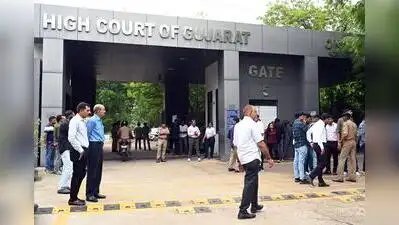








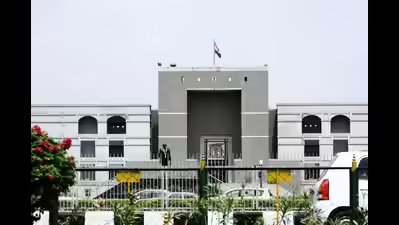
Ahmedabad: The Gujarat State Subordinate Services Selection Board’s (GSSSSB) changing stand on a basic economics principle — the law of demand — triggered a legal battle after it treated two different answers to the same question as correct in recruitment exams held eight years apart. In 2016, the board in its answer key had held that the relationship between demand and price is direct but in 2024, it insisted that the association is inverse!The dispute erupted when in its 2024 recruitment test for research assistants, the Board in the MCQ-based exam paper asked candidates: “What is the relationship between demand and price?” While some candidates marked option B, “direct”, the official answer key declared option C, “inverse”, as correct.The Board revised its answer key three times, correcting 22 answers but questions remained over four questions including the one on law of demand. The dispute reached in Gujarat high court when candidates raised objections over four questions. Three were resolved during year-long proceedings but two candidates persisted challenging the answer to law of demand relation as they were only one mark short of the qualifying marks needed to jump to the next stage of recruitment.The candidates’ counsel argued that their answer ‘direct’ was correct and justified because GSSSB had accepted the same answer in a 2016 recruitment test held for the same posts. Though the Board revised the 2016 answer key four times, it had retained option B, “direct”, as the correct answer and not option C, “inverse”.The petitioners argued that an economic principle could not change over eight years and that the Board’s own inconsistency showed confusion over the law of demand and the demand-price relationship. They contended that the benefit of such doubt should go to the candidates.In Sept 2025, the high court allowed the two candidates to participate in the next round of recruitment and stayed the appointment of eight other candidates whose merit position could be affected if option B were accepted. Those eight candidates later joined the case, maintaining that option C was the correct answer.Last month on April 23, the Board ultimately placed an expert opinion before the court stating that option C, “inverse”, was correct. The govt, however, said the certificate containing the expert opinion was confidential and urged the court not to formally take it on record. After seeking an affidavit on the issue, the high court accepted the Board’s stand and dismissed the petition.With that, both candidates remained short by one correct answer and failed to clear the cut-off.On perusing the expert opinion, Justice Nirzar Desai said, “Considering the fact that the expert’s opinion along with certificate was made available for perusal of this Court and on the basis of the same aforesaid affidavit is filed and as the same was also shown to the learned Advocates for the parties, there is no question of disbelieving the opinion of the expert. Further, when the law is very clear that even in case of doubt, the benefit must go in favour of the examining body and not in favour of the candidate, the prayers made in this petition cannot be granted and the same are required to be rejected.“