









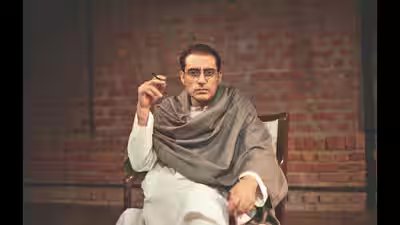
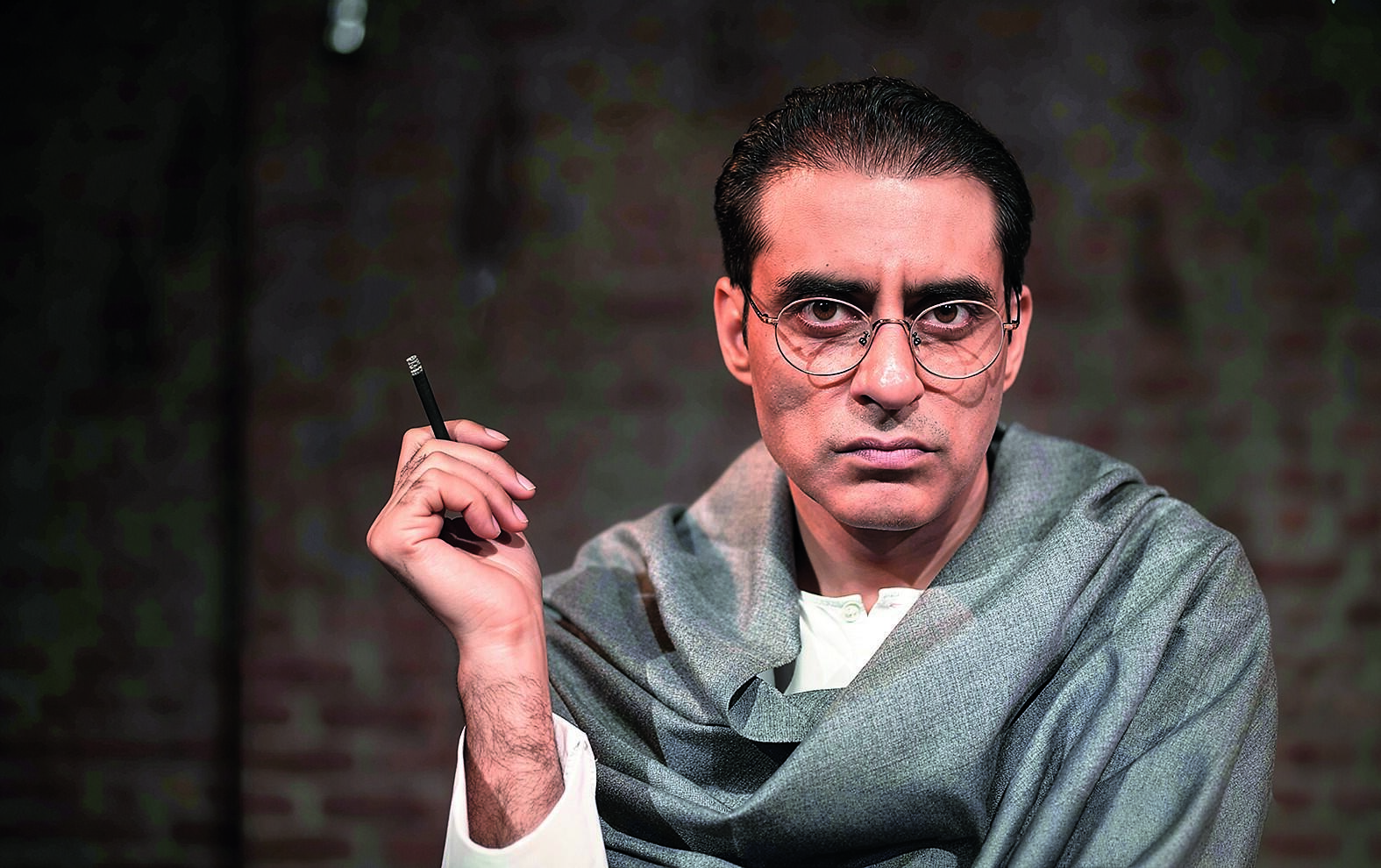
A rickety chair, dim lighting and a ghazal by Begum Akhtar drifting through the room. Then, one man and the ghost of another. In Ek Mulaqat Manto Se, actor Ashwath Bhatt brings Saadat Hasan Manto to life through the writer’s own stories, essays and words. The solo performance, which returns to Bengaluru after eight years, will be staged at Sabha on November 21. As he revisits the journey, from discovering Manto’s rage to travelling to Lahore to the writer’s former home, the actor talks about the responsibility of carrying Partition’s wounds on stage and why Manto continues to unsettle audiences.What was the first Manto story that stopped you in your tracks?Thanda Gosht blew me away. Even as a young boy, I found it incredibly powerful. Perhaps because of the exodus, I could relate to the darkness in Manto’s writing. I was angry then, questioning everything and seeing the hypocrisy around me. It felt as though someone had voiced what was going on inside me. He gave my anger a language.Why bring him to the stage?Because people often misread him. I can’t change anyone’s perception, but I can present what I read and how I interpret it. I fell in love with Manto then, and I’m still in love with him.His essays and stories weren’t written to be performed. How did you decide what to retain and what to leave out?That was the biggest struggle. People don’t come to watch a lecture; they come to watch an actor perform. A story or article would suddenly catch my attention, and I’d think, “Wow, this belongs in the play.” The first piece I learnt was the map sequence, which I presented to friends at the National School of Drama. It took three or four years to evolve, and the play finally came together at LAMDA in London. Manto’s words constantly test your sensibilities, conscience and ethics.
You travelled to Lahore and visited Lakshmi Mansion, where Manto once lived. What did you find?There was nothing left. Lakshmi Mansion is no longer there. The government did nothing to preserve it or turn it into a memorial. It’s ironic. Manto spent his life fighting court cases over his writing, and the government posthumously honoured him with the Nishan-e-Imtiaz. Yet, his home wasn’t saved. People still visit the place, almost like devotees, asking, “Did Manto really live here?” and bow their heads in reverence.In Lahore, what did Manto’s eldest daughter, Nighat Patel, tell you that no book could?She was very kind. I stayed with her for a couple of nights and felt fortunate to have had that experience. She joked, “Unke saamne koi bhi niji baat karna mushkil tha kyonki agle din woh afsaana ban jaata tha.” (It was impossible to have a private conversation in front of him because, by the next day, it would become a short story.) That’s the gift of a writer and poet: to turn the most personal exchanges into something that speaks to everyone.Is Manto still relevant?More so with every passing year. Read his Letters to Uncle Sam through a contemporary lens, and they seem to be about America today. He wrote about asylums, prostitutes, democracy and hypocrisy, all before he turned 42. Imagine how deeply he understood the world. I often say that the day Manto becomes irrelevant, we will have progressed as a society. I don’t see that happening anytime soon.
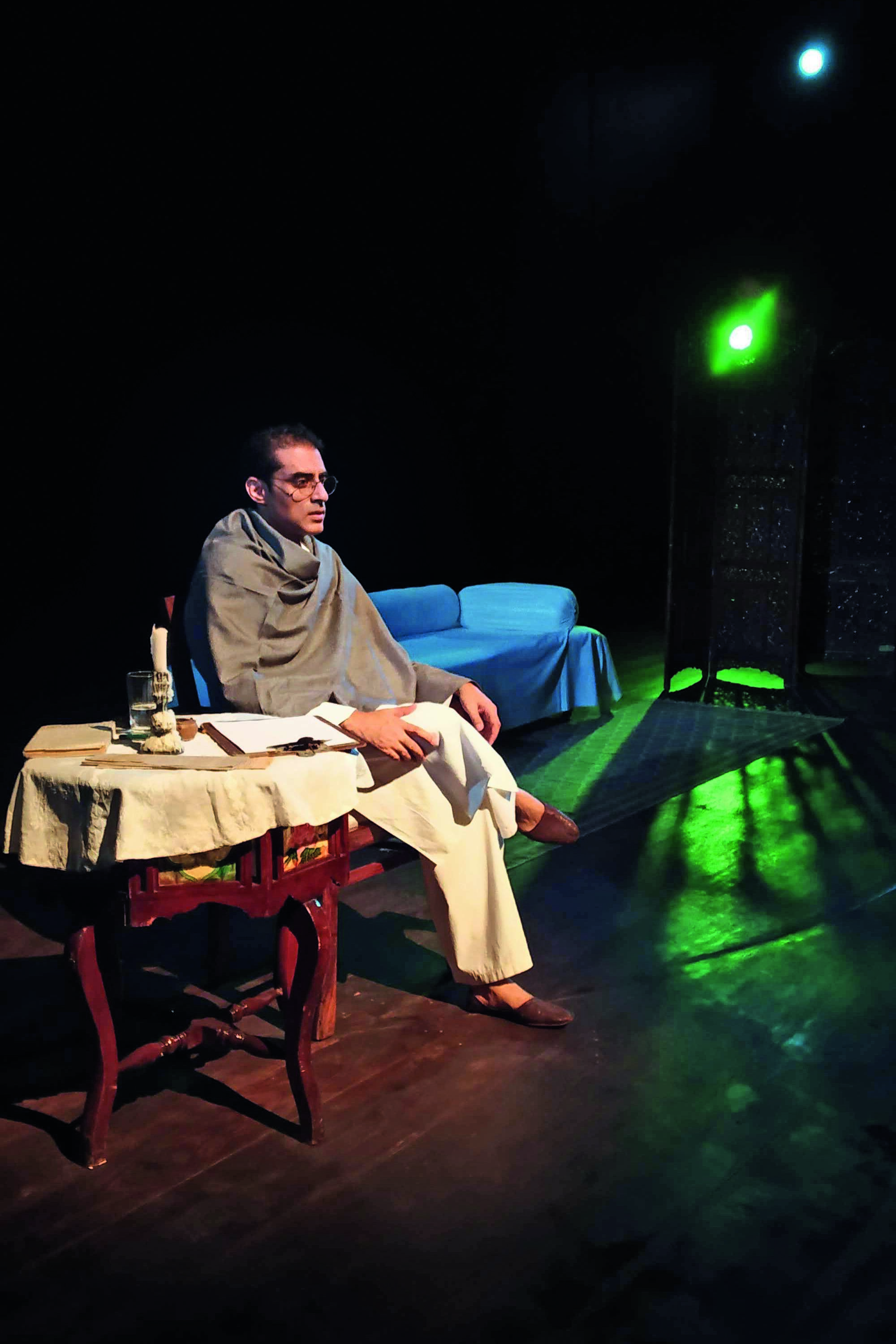
You play him as a doppelgänger or an inner spirit. Why?It’s Manto talking about Saadat Hasan, and Saadat Hasan talking about Manto. His message was that if you talk about Manto, don’t forget Saadat Hasan. So the play opens with his own words: “Aisa mumkin hai ki Saadat Hasan mar jaaye, par Manto zinda rahe!” (It is possible for Saadat Hasan to die, but Manto will live on!)Why was he so widely misread?Because of the way his work was presented by editors and publishers. Manto never had an editor. He wrote because he needed money to survive, or money to drink. Later, people packaged his stories as “obscene stories” to sell books and titillate readers. He never categorised them that way. They did him a real disservice. He wasn’t being obscene. Take his work out of context, and you’ve missed the point.How do you revisit the darkest moments of Khol Do night after night?Audiences are shocked by a father’s horror as he searches for his daughter. But that horror still exists. It may not be Partition today, but it could be a father seeking justice for a daughter who has been wronged. At its heart, it’s about human tragedy, relationships and injustice. Women suffer in every conflict because their honour is made to represent the honour of an entire community. To hurt a community, you dishonour its women. Manto understood that very clearly.Did Partition teach us anything?Did we learn? No. Every time an innocent person is beaten up, Manto becomes relevant again. He wasn’t a feminist; he was a humanist. He had extraordinary empathy for those at the margins of society.How do Gen Z and younger audiences, who may know Manto only by name, respond to the play?Gen Z is far more informed than people give them credit for. The horror dawns on them, and then the penny drops. After the show, many come up to me and say they’re going to buy his books. They aren’t as naïve as people imagine. They see hypocrisy more clearly because it’s right in front of them. We were more docile and disciplined, but they are fearless. They question contradictions openly: “You tell us not to lie, and then you defend lies.” They don’t try to colour things, and I’m glad they’re questioning the world.You’re returning to Bengaluru after eight years. What is different about the city’s audience, and how has the play evolved since you first performed here?Bengaluru is a cosmopolitan city, and its audiences need an outlet beyond films and OTT. I’m happy the city has opened its heart to languages beyond Kannada. People are willing to watch Hindi and Urdu theatre too, and the play keeps evolving as I revisit Manto’s work.If Manto sat in the front row, what would you hope he’d say?“It was an honest performance.” That’s more than enough. Long time ago, two people who actually knew Manto came to see the play and said, “We have seen Manto alive again after 40 years.”