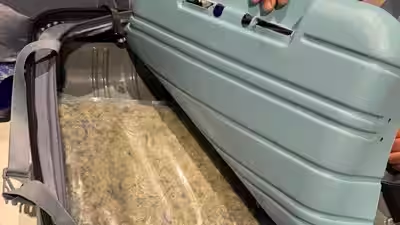










Bengaluru: Ahead of Deepavali, concerns are being raised over the possible presence of cancer-causing asbestos in rangoli powders and children’s play sand, after products sold in New Zealand and several other countries were found to be contaminated.Experts in Bengaluru have advised consumers to exercise caution while handling coloured powders, particularly around children, even as asbestos contamination in products sold in India remains unconfirmed.Since January, five rangoli products sold in New Zealand have been found to contain asbestos, while 24 coloured sand products have been recalled. Similar products have also been recalled in Australia, Japan, the US, the UK and parts of Europe. Research by Auckland University of Technology (AUT) in New Zealand found airborne asbestos in 90% of the play sand products tested. However, the specific rangoli products were not tested to determine whether their asbestos fibres could become airborne.Associate Professor Terri-Ann Berry of AUT’s School of Future Environments, who conducted the research, said, “We have not tested any products sold in India, but given that many of these products are internationally traded, there is a risk that asbestos-contaminated rangoli powder might also be available on the Indian market.”Berry said the samples in which airborne fibres were detected were dry, decorative sand products similar to rangoli powders. “We believe that sand-based rangoli powders should be handled with care,” she said, stressing that the risk of exposure cannot be quantified without testing the specific product and assessing the circumstances of its use.Doctors TOI spoke to said that while a one-time, brief exposure is likely to carry a lower risk than repeated or prolonged exposure, the actual risk remains difficult to determine without knowing the extent of contamination and the circumstances of exposure.Dr Koushik N, consultant pulmonologist and sleep medicine specialist at Aster RV Hospital, said the health risks depend on the concentration of airborne fibres and the frequency and duration of exposure. “Asbestos exposure can cause asbestosis, lung cancer and mesothelioma, among other diseases, which may take decades to develop. A brief exposure is generally expected to carry a lower risk than repeated or prolonged exposure, but it cannot automatically be considered harmless,” he said.Children need particular attention, he added, as they frequently touch their faces, put their hands or objects in their mouths, and play close to dusty surfaces. Activities such as pouring, scattering or rubbing contaminated powders could release fibres into the air.Dr Darshana Reddy, senior consultant in internal medicine at Altius Hospitals, said children’s play habits and longer life expectancy meant precautions were important. “Their longer remaining lifespan also provides more time for asbestos-related diseases, which typically develop decades after exposure, to manifest,” she said. She advised parents to discourage children from blowing, throwing or vigorously scattering coloured powders and to keep them away from products suspected of contamination.Doctors also outlined precautions for families during the festive season. Dr Sruthi Alanghat, consultant general paediatrician and allergy and asthma specialist at Rainbow Children’s Hospital, Hennur Clinic, HRBR, advised people to work in well-ventilated areas and keep children away while making rangoli to minimise airborne dust.“Never dry sweep or vacuum leftover powder, as this disperses fine asbestos fibres into the air,” she said, advising people to seek appropriate guidance on cleaning if contamination is suspected.