







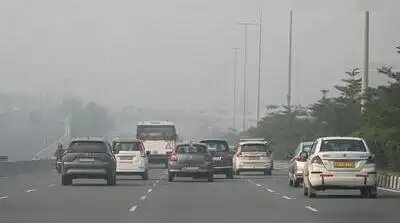
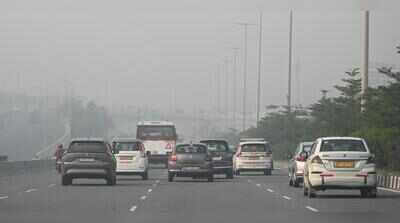
Gurgaon: The city’s air quality deteriorated to the ‘very poor’ category for the first time this season on Tuesday, despite GRAP-II being in effect across Delhi-NCR. In four days, the air quality index (AQI) jumped from 69 (satisfactory) on Oct 30 to 305 (very poor) on Tuesday. Of the four monitoring stations in the city, TERI Gram recorded the highest AQI at 335 (very poor), followed by NISE Gwalpahari at 328 (very poor).Sector 51 recorded an AQI of 300, while Vikas Sadan reported 256, with both in the poor category.Dr Sunny Kalra, director and unit head of pulmonology at Max Hospital, Gurgaon, said, “PM2.5 and PM10 particles enter the respiratory system, with fine PM2.5 particles capable of penetrating deep into the lungs and even entering the bloodstream. Exposure to these pollutants can trigger inflammation, breathing difficulties and worsen existing respiratory and cardiovascular conditions. Immediate effects include coughing, throat irritation, breathlessness, wheezing and eye irritation, while prolonged exposure can lead to reduced lung function, chronic bronchitis, aggravated asthma, cardiovascular diseases and an increased risk of lung cancer. Children, elderly people and those with existing illnesses are particularly vulnerable.”Dr Kalra advised residents to check daily AQI levels, avoid outdoor activities during high-pollution hours and wear well-fitted N95 masks when outdoors. He also recommended keeping windows closed during severe pollution, using HEPA air purifiers indoors and avoiding strenuous outdoor exercise. “Residents should seek medical advice if they experience persistent coughing or breathing difficulties,” he said. The spike reflects typical winter conditions in North India. Low temperatures, calm winds and early-morning fog reduce the dispersion of pollutants from vehicles, construction, industry and waste burning. As a result, pollutants remain trapped near the ground, keeping AQI levels elevated for extended periods.The city has seen similar episodes over the past few winters. Authorities typically implement measures under the Graded Response Action Plan when pollution levels rise sharply, but the broader pattern shows air quality often deteriorates in late December and early January when weather conditions remain still.‘Very poor’ air causes breathing discomfort for most people, particularly children, the elderly and those with asthma or heart and lung conditions. Health advisories recommend avoiding strenuous outdoor activity and reducing exposure.The city recorded a minimum temperature of 14.1 degrees Celsius on Tuesday, as the mercury continued to dip in the mornings. The maximum temperature settled at 28 degrees Celsius, according to India Meteorological Department (IMD) data. The minimum temperature at Gurgaon’s automatic weather station (AWS) was 3.1 degrees below normal.The maximum temperature at Gurgaon’s AWS fell from 28.7 degrees Celsius on Monday to 28 degrees Celsius on Tuesday, while the minimum dropped from 17.2 degrees Celsius to 14.1 degrees Celsius.Meanwhile, air quality continued to deteriorate in several parts of Delhi despite GRAP-II restrictions in place from Monday. Experts said weather unfavourable for dispersal of pollutants was the major reason behind the spike.Temperatures were below normal in Delhi. The maximum at Safdarjung was 29.1 degrees Celsius, a notch below normal. The minimum was 16.4 degrees Celsius, a notch above normal. Met expects the maximum and minimum temperatures to hover between 27-29 and 14-16 degrees Celsius Wednesday.