








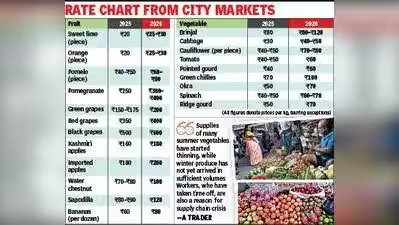
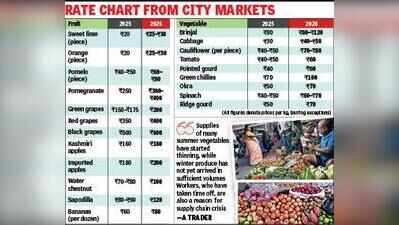
Kolkata: On the eve of Lakshmi Puja, the retail markets in the city saw a sharp rise in fruit and vegetable prices, forcing several households to cut down their purchases even as they prepared for one of the season’s most important rituals. Fruits, which are one of the important edibles in the puja offering, got costlier than last year.The prices of vegetables, used in festive culinary preparations, also breached the range that is considered budget-friendly by middle-class consumers. Shoppers at Lake Market, Gariahat and other neighbourhood markets said they were spending more money but carrying less items home. Apples were sold for Rs 150-Rs 300 per kg, depending on their quality.The price for quality pomegranates touched Rs 400 per kg-mark. Pomelos were being sold for Rs 70 to Rs 80 each. Red grapes were priced around Rs 400 a kg, while black grapes were priced at Rs 600 a kg at several stalls. Consumers said they curtailed the purchase quantity, opted for items of cheaper grades or limited their purchases to puja essentials only.Be it the homemakers or salaried persons, the spiralling cost of fruits and vegetables added to the budgetary woes, for all. Traders said the rise in price of fruits and vegetables was a result of multiple factors, besides high demand and limited supply. Vendors and sellers said Lakshmi Puja leads to an increase in demand for fruits, as families seek apples, bananas, pomegranates, grapes and seasonal fruits for offerings to the goddess. But higher transport cost, risk of spoilage and shorter shelf life of fruits had added to the price burden, often faced by the traders and vendors. Unsold stock often cannot be held beyond a day, making traders price their items amid the risk of wastage.Vegetable traders pointed to a seasonal transition in production. Supplies of many summer vegetables have started thinning, while winter produce has not yet arrived in sufficient volumes. This demand-supply gap has made everyday consumable commodities, including fruits and vegetables, costlier. Festive holidays have also disrupted the supply chain, with truck drivers, loaders, middlemen and market labourers taking time off their work, affecting the supply of the produce from areas of their cultivation to wholesale and retail markets.The impact is most visible on purchases of small quantities. Amid such situations, buyers resort to hard bargains, moving from stalls-to-stalls, and postpone the purchase of non-essential items, hoping the prices would reduce after the festive rush.Traders expect the inflation to ease out after Bhai Phonta, when demand for fruits and vegetables may drop and labourers return to work. Until then, many households are balancing tradition with restraint.