






A garba circle has no beginning or end. Strangers fall into step, hands clap to the rhythm, and for the length of a song, individual journeys become one shared celebration. The earth is round, too. Its borders are another matter.Maybe that explains why seeing people dance to “Pankhida re udi jaajo” in Karachi, Pakistan, evokes a deep sense of kinship. The Gujarati garba song, which asks a little bird to fly to the goddess at Pavagadh, has crossed borders without a passport, carried in memory and passed down through generations.In the Narayanpura, Ranchhor Lane and Keamari neighbourhoods of Karachi, home to Gujarati-speaking communities, garba is a fixture of the annual festive calendar. Hindu families organise celebrations throughout Navratri, while Gujarati Muslim communities also perform garba at weddings and other social gatherings. For some, it is an act of devotion; for others, a way to stay connected to Gujarati heritage.Karachi’s garba circuitRamesh Mana, an 84-year-old social activist and columnist in Karachi, has watched these celebrations for decades. A former member of the film censor board of Pakistan’s Sindh govt, he writes for several Pakistani publications, including a Gujarati daily. “I have visited relatives in Gujarat and Maharashtra, and I can say there is no difference between garba in Pakistan and garba in India. I have been watching garba here for years. The Swaminarayan temple in Karachi is a major centre for garba revellers,” he says.
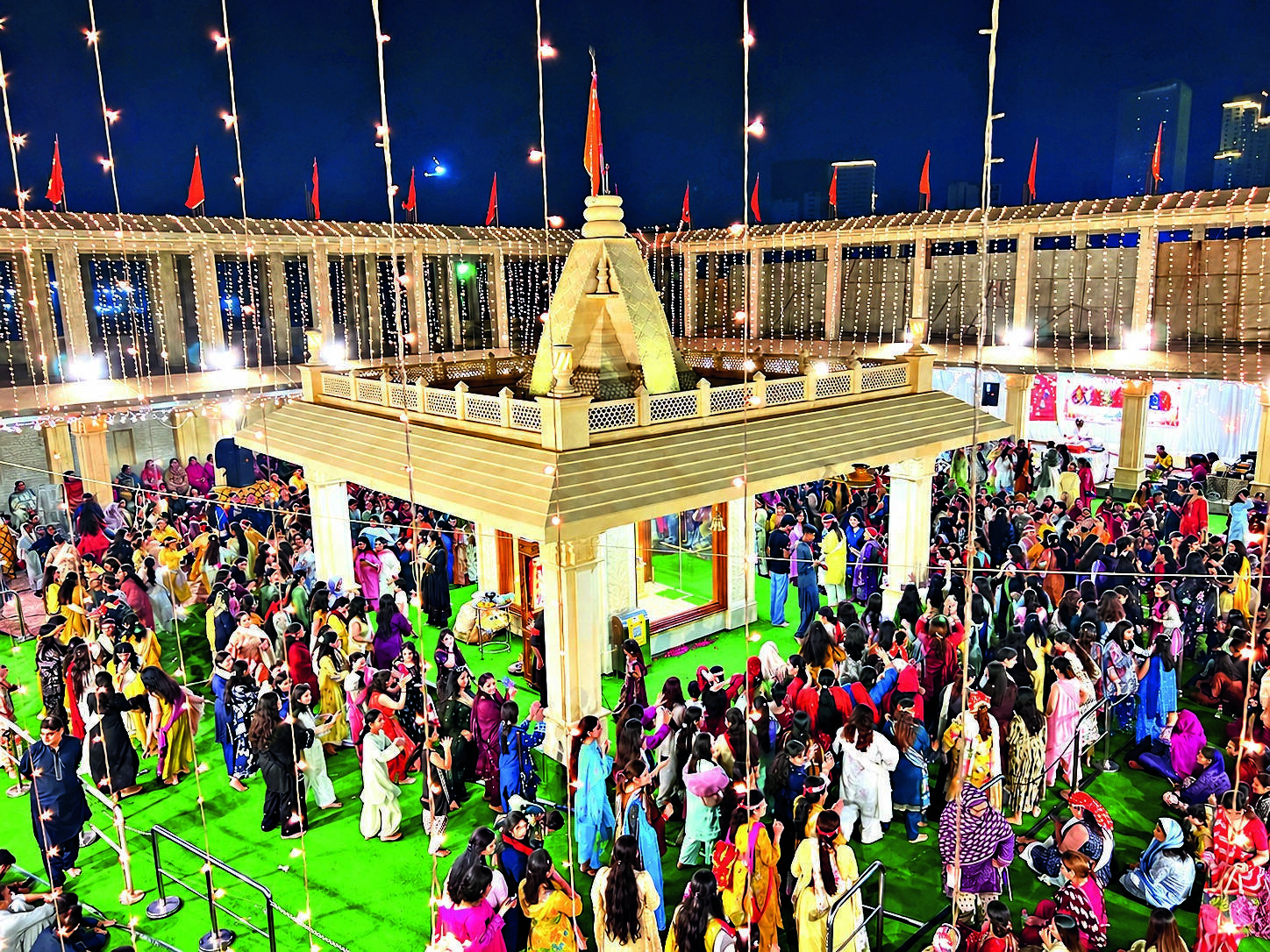
Joy in every beat: Faith and festivity came together at Karachi’s Shree Ratneshwar Mahadev Temple as Hindus celebrated Navratri with garba and prayers.
The similarities extend to the way celebrations are organised. As in Gujarat, people have neighbourhood gatherings and larger events at dedicated venues, with familiar songs, dance steps, and traditional attire.Amarshi Bhatti, 46, works in Karachi’s health department and has participated in garba events for about three decades. He lives in the Gujarati neighbourhood around Ranchhor lane.“My forefathers were from Jamnagar. We organise and perform garba wherever Gujarati people live, including Ranchhor Lane, Keamari and Narayanpura. Some people organise sheri garba, while there are also large events at party plots,” Bhatti says.At smaller gatherings, neighbours dance in community lanes. Larger programmes require crowd-management arrangements, and organisers must consider permissions, timings, and noise levels, particularly when events are held outdoors near residential areas. “We have to maintain proper security and arrange bouncers for safety. But it has seldom happened that a garba event in Karachi has led to a clash or tension,” Bhatti says.Familiar songs, new audiencesThe music reflects both continuity and changing tastes. Traditional favourites such as “Umbre ubhi sambhlu re bol” share space with Bollywood numbers, including “Dholi taro dhol baaje”, “Chogada tara” and “Nagada sang dhol baje”. Film songs appeal particularly to younger participants, while traditional folk favourites continue to feature in the celebrations.
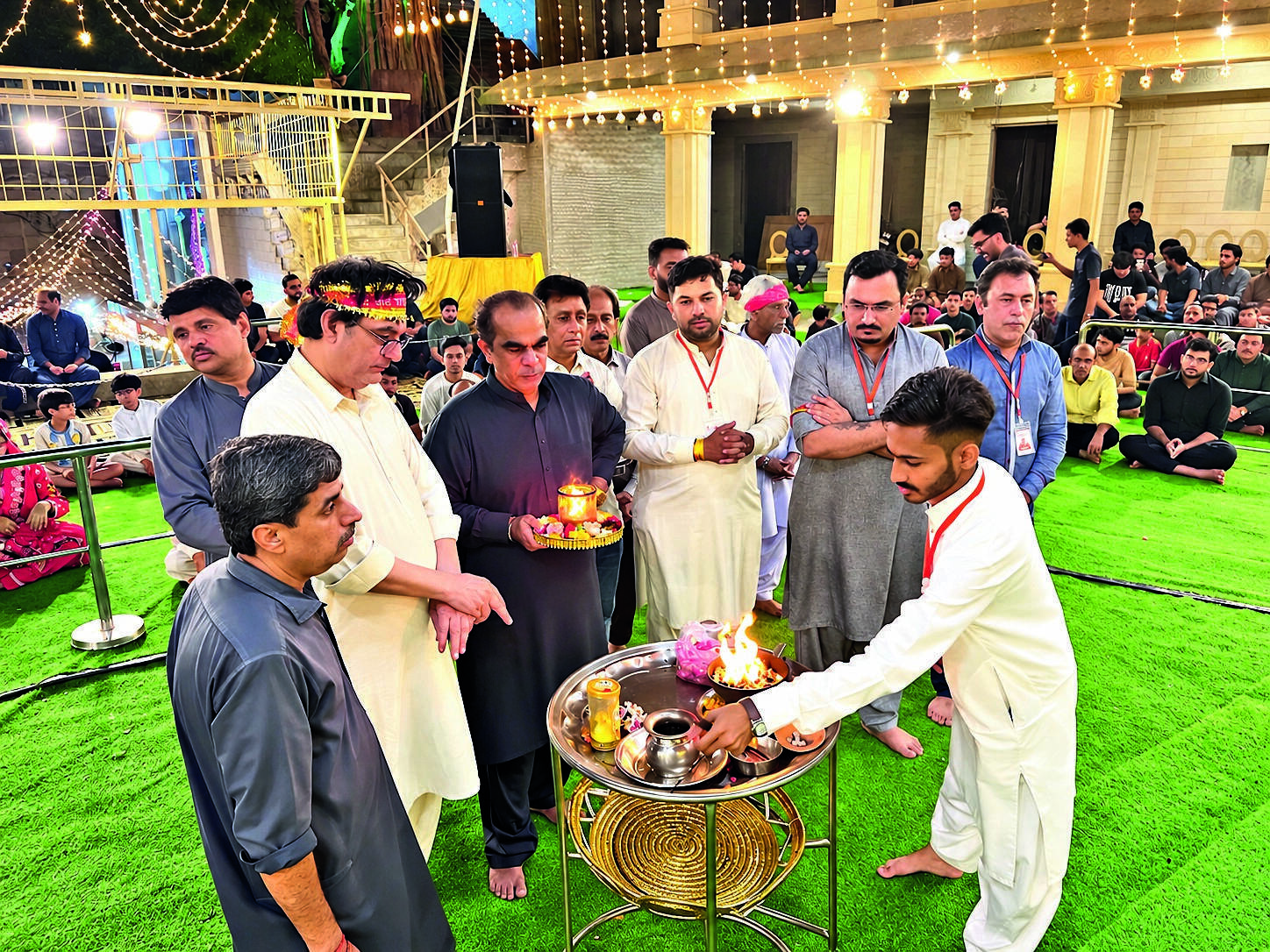
Seeking blessings: The temple unveiled its Nav Durga Bhavan on the first day of the festival
Hyder Khoja, who leads a movement to preserve the Gujarati language in Karachi, says garba has become more visible over the past decade, with more organised events and interest from people beyond the Gujarati Hindu community. “More people are taking part in garba, and non-Gujaratis are showing interest too. Over the past decade, I have seen an increase in events, with the Hindu community organising them openly,” Khoja says. He believes Indian pop culture has helped spark greater interest among younger Pakistanis. He points particularly to the television comedy “Taarak Mehta Ka Ooltah Chashmah”, whose characters and cultural references have familiarised viewers with aspects of Gujarati life.The celebrations have also retained familiar dress styles. Women from Hindu and Muslim Gujarati communities may wear chaniya cholis or saris, while men opt for kurta-pyjamas. This growing interest isn’t limited to Gujarati speakers. Syed Abdul Rehman, a senior journalist and Gujarati linguist in Karachi, believes social media has played a big role in introducing younger Pakistanis to festivals and cultural practices outside their immediate communities.
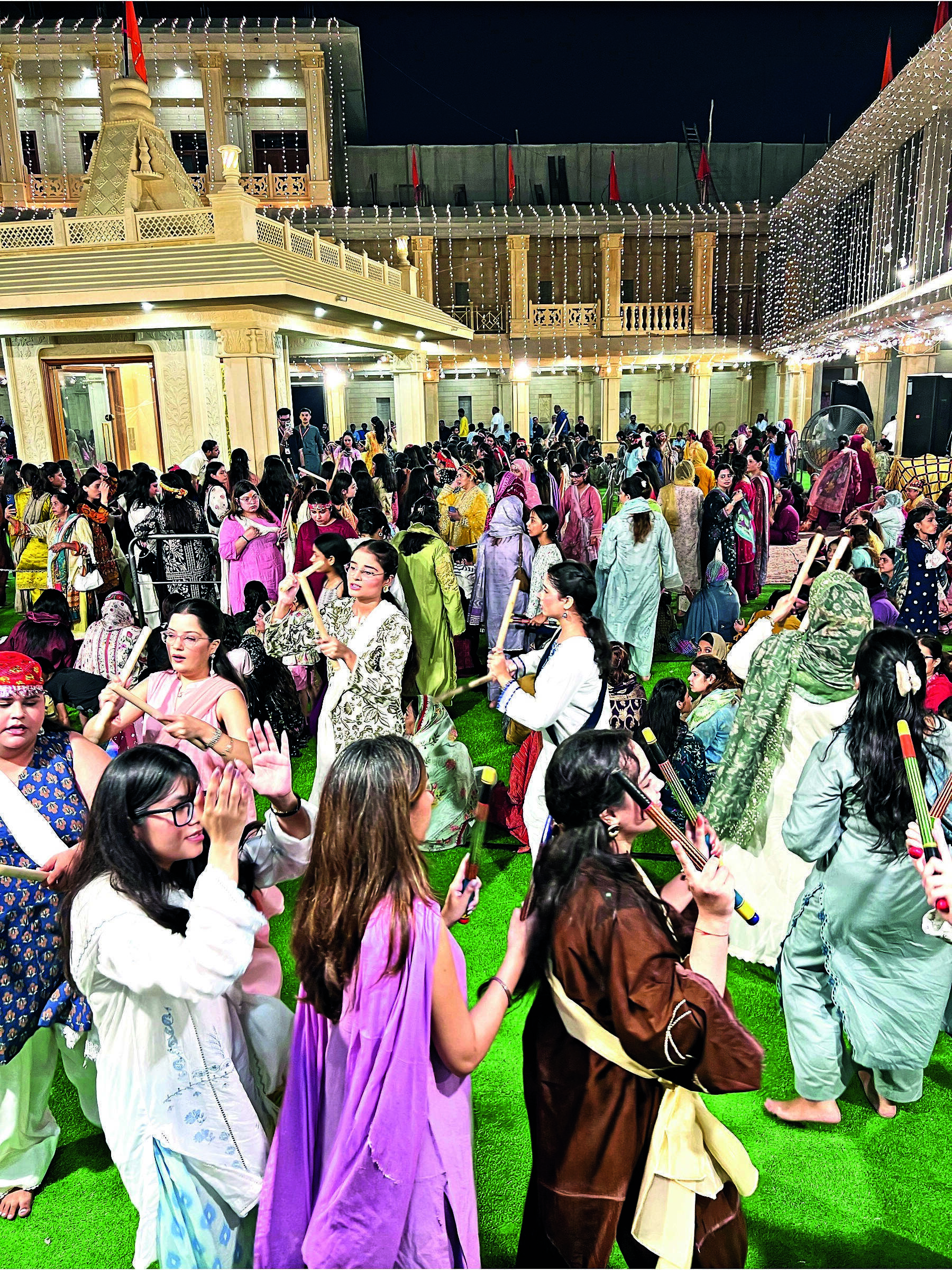
Navratri in the neighbourhood: In the Narayanpura, Ranchhor Lane and Keamari neighbourhoods of Karachi, home to Gujarati-speaking communities, garba is a fixture of the annual festive calendar
“With the rise of social media, attitudes have begun to change. Young Muslims are showing greater interest in Hindu festivals and attending garba celebrations and other cultural events,” he says.Rehman attended a garba event last year and recalls meeting several Muslim women participating in the dance. He believes interest in Rakshabandhan and other Hindu festivals has also increased among Muslim youngsters, particularly women.Faith and shared traditionsVideos of garba performances circulate widely on social media, exposing viewers to celebrations they may never have attended. For some, that curiosity translates into participation. The same dance finds different expressions across communities. For Hindu devotees, garba during Navratri is an act of worship; for Gujarati Muslim communities, garba is part of weddings and social gatherings. Khoja says garba and dandiya-raas can bring people from different religious backgrounds together through their shared Gujarati heritage.
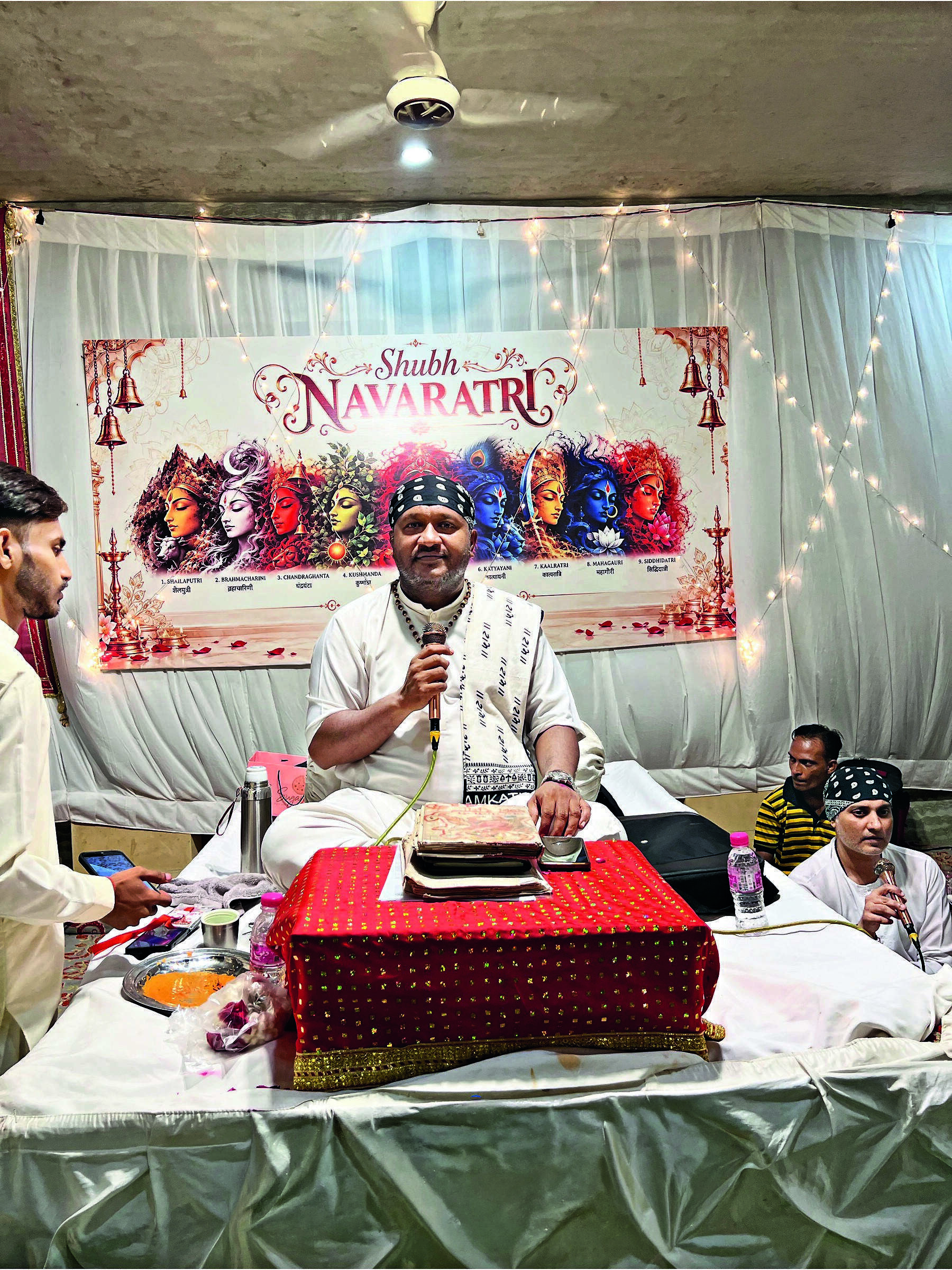
Devi’s grace: Priest Nimit Matra Maharaj Ravi Ramesh led the festivities at Shree Ratneshwar Mahadev Temple
He also points to a separate tradition among Khoja Ismaili Muslims, who, according to him, perform garba on Oct 12 to mark the birthday of their 50th imam.Khoja says he has not observed widespread religious or social objections to garba events in Karachi, though views on music, dancing and mixed-community gatherings differ among Muslim communities.“Not everyone in the Muslim community shares the same perspective on dancing, music or participation in such events. Views can differ among the members, depending on their religious and cultural practices,” he says.Bringing communities togetherIn Karachi, where Gujarati Hindus have continued their religious observances and other Gujarati-speaking communities have kept the dance alive in different social settings, a new initiative attempts to bring some of these groups together. Eruj Fatima, a Karachi-based influencer who recently graduated from a university in New York, is organising a garba night on Oct 25. The event is open to participants of any religion, caste or community.“When I was studying in New York, I had several Indian friends, and many of them were Gujaratis. I liked their culture and used to participate in festivals such as Navratri and Diwali,” Fatima says.When she returned to Pakistan, she found that garba was already part of the cultural life of Gujarati Hindus, Ismailis and other Muslim communities with Gujarati roots. “When I came back to Pakistan, I noticed that people from different communities performed garba, but often within their own circles. A garba night brings everyone together under one roof, celebrating unity in diversity. That is its true purpose,” she says.Fatima has decided to use her savings to organise the event. She has been engaging with Gujarati, Marathi and other communities in Karachi, inviting them to participate. “We have reached out to different communities, and everyone is welcome to join us on Oct 25,” she says.Unlike established neighbourhood celebrations, which are largely organised by communities familiar with garba, Fatima’s event aims to bring together people with limited prior exposure to the dance form. The success of the Oct 25 event will depend on turnout, arrangements, and the willingness of participants from different backgrounds to join.For Fatima, garba’s appeal lies in something quite simple. “You often dance with people you have never met. And that is what makes it special,” she says.