









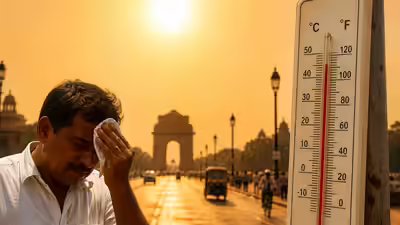
Step outside into 45-47°C heat and it is not just uncomfortable. It is immediate and overwhelming. The sun beats down relentlessly as the air feels heavy and unbearably still, hitting your face like a wave from an open furnace and clinging to the skin even as you step into shade. Within minutes, the body begins to slow. The throat dries, the eyes strain, and even standing still becomes tiring. The surroundings start to feel almost dizzying as roads shimmer in the distance and metal surfaces grow hot enough to burn on contact. The city no longer feels like it is moving through seasonal heat. It feels trapped under it.Indoors, relief isn’t the same for everyone. While air conditioning offers escape for some, it remains out of reach for many Indian households, and even where it is used, cooling systems push out waste heat into already dense urban spaces, adding to the surrounding temperature burden. For others, walls absorb heat through the day and release it slowly at night, keeping rooms warm well past sunset. Sleep is often disrupted, recovery remains limited, and for many, there is little escape from the cycle, often stretching for months.Scorching summer heat is not unusual in India, but this year it has arrived in sharper bursts, earlier than expected, and with greater intensity. In April, large parts of the country were already under heatwave conditions, with temperatures crossing 40°C in several regions and climbing close to 45°C in some pockets. Akola in Maharashtra recorded the highest temperature at 46.9°C as Vidarbha region entered an early-summer heatwave, briefly placing multiple Indian cities among the hottest in the world during peak afternoons even before May.In late April, a few isolated spells of rain offered brief relief, cooling conditions in parts of the country for short periods, but the respite did not last. The heat has returned in waves, keeping large regions locked in a cycle of rising discomfort. During this period, global temperature trend data showed that 95 of the world’s 100 hottest cities were in India, underscoring how widespread and intense the heat had become even before peak summer had fully set in.
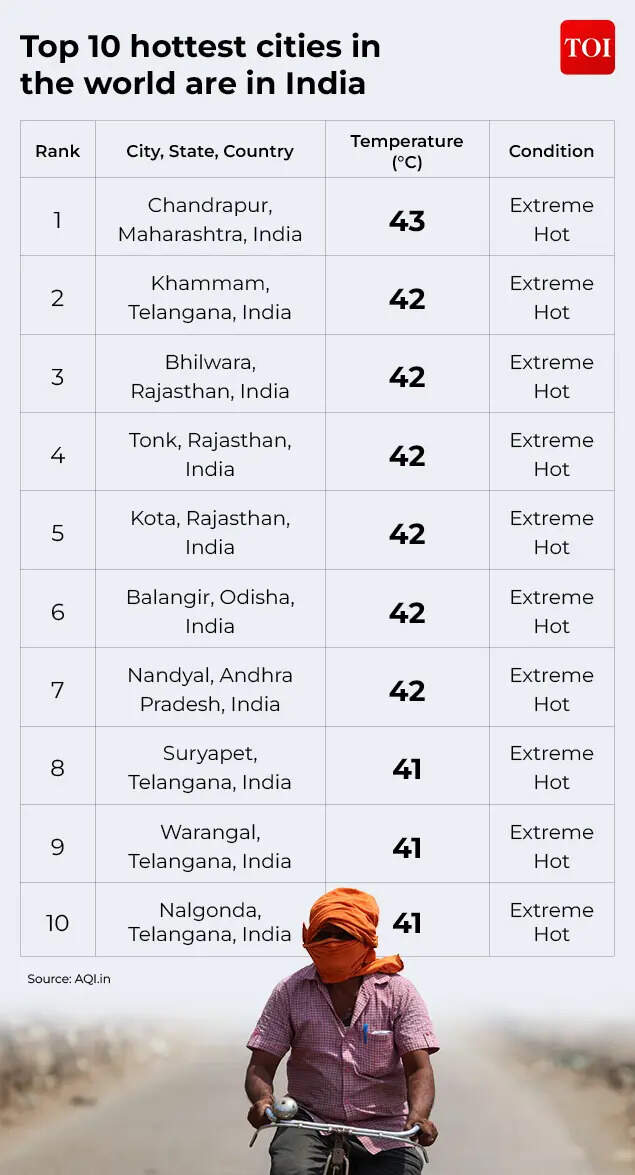
Top 10 hottest cities in the world as on May 1, 2026
Is the worst of the heat yet to come?
This year’s heat is unfolding alongside a shifting global climate pattern. In the equatorial Pacific, El Niño is a naturally occurring ocean-atmosphere phenomenon marked by warming sea surface temperatures and weakening trade winds. It is part of the El Niño-Southern Oscillation system that influences weather across the world by altering rainfall, wind patterns and heat distribution.When it strengthens, it can intensify extreme heat, disrupt India’s monsoon and raise global temperatures. The World Meteorological Organization has indicated that conditions are tilting towards a likely El Niño development around mid-2026. This raises concerns of additional stress on an already warming world, particularly for India as this period coincides with the monsoon onset and can significantly affect the agrarian sector.
What is El Niño?
El Niño is a naturally occurring climate phenomenon that describes the periodic warming of sea surface temperatures in the central and eastern equatorial Pacific Ocean. It is part of a larger system known as the El Niño Southern Oscillation, or ENSO, which has three phases: El Niño, La Niña and neutral conditions.Under normal conditions, trade winds push warm surface waters westward toward Asia and Australia, while cooler waters rise along the South American coast. During an El Niño event, these trade winds weaken or reverse. As a result, warm water shifts eastward, disrupting the ocean-atmosphere balance.This shift has global consequences because the Pacific Ocean strongly influences atmospheric circulation. Changes in sea surface temperature alter rainfall patterns, jet streams and storm formation across continents.El Niño typically occurs every two to seven years and lasts around nine to twelve months. Its impacts vary by region but often include drought in Australia, Indonesia and parts of South Asia, and heavier rainfall in parts of South America and East Africa. It can also influence tropical storm activity, reducing hurricanes in the Atlantic while increasing them in the Pacific.
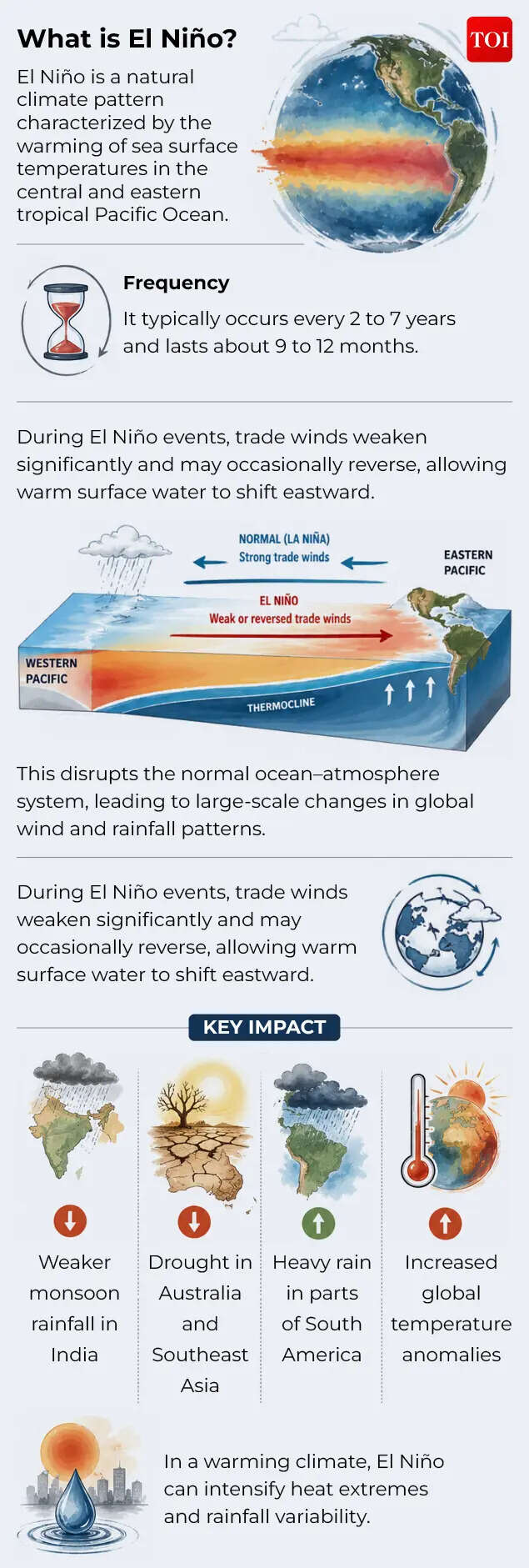
What is El Niño
Importantly, El Niño does not operate in isolation. In a warming world, its impacts are amplified. A hotter baseline means that when El Niño adds extra heat to the system, extreme weather events intensify. This is why recent strong El Niño years have been linked to record global temperatures.
El Niño and India: a familiar but intensifying link
El Niño is one of the most influential climate drivers as it alters global atmospheric circulation, reshaping weather patterns across continents within months.Some of the strongest El Niño events in modern history include 1982 to 1983, 1997 to 1998 and 2015 to 2016. The 1997 to 1998 event was among the most intense and was linked to flooding in parts of South America, severe drought across Southeast Asia and Australia, and widespread wildfires in Indonesia. The 2015 to 2016 event contributed to global temperature spikes and major regional disruptions.For India, El Niño has a well-established relationship with the southwest monsoon. It is often associated with below-normal rainfall, delayed onset and uneven distribution. Years such as 1987, 2002, 2009 and 2015 saw weak monsoon performance and drought-like conditions in several regions. It is also linked with increased likelihood of intense pre-monsoon heat, raising heatwave risk across northern and central India.Historical records show how El Niño can intersect with food insecurity. The 1877 to 1878 event coincided with severe drought conditions across multiple continents and is associated with the global famine period of 1877 to 1879. Research links this period with widespread mortality in India and China, shaped by climatic stress interacting with structural vulnerabilities. Climate variability acted as a trigger, but outcomes were shaped by deeper social and economic conditions.What is increasingly important today is that these natural cycles are unfolding on a warmer global baseline. This amplifies their effects, increasing heat extremes and sharpening rainfall contrasts across regions.
What is a ‘super El Niño’ and why are scientists warning about it?
A “super” El Niño refers to an unusually strong version of the climate phenomenon, marked by sea surface temperatures in the central and eastern Pacific rising by at least 2°C. Such events are rare, occurring only a few times since 1950, with just one instance pushing beyond 2.5°C.Scientists say the stronger the warming, the greater the likelihood that El Niño’s global impacts are intensified, including heat extremes, disrupted rainfall patterns and shifts in monsoon systems.According to the US National Oceanic and Atmospheric Administration (NOAA), there is about a one-in-four chance of such a strong or “super” El Niño developing by the coming autumn or winter. However, researchers caution that forecasts made in spring can be less stable, as seasonal transitions often introduce uncertainty in climate patterns.Even so, early indicators are already pointing towards a potentially strong event. Dr Paul Roundy, professor of atmospheric and environmental sciences at the State University of New York at Albany, recently said in a post on X there is “real potential for the strongest El Niño event in 140 years.” Similarly, Dr Andy Hazelton, associate scientist at the University of Miami, noted that “all models and observations are pointing in the same direction: a very strong El Niño with significant impacts on global climate this year.”
India’s heat reality: exposure rising, protection lagging
India is already experiencing a steady rise in heatwave frequency, duration and intensity. Climate assessments and meteorological records indicate that several of the warmest years in India’s history have occurred in the last decade.Despite this trend, heatwaves are not formally classified as a notified disaster under India’s central disaster framework. This limits structured compensation, long-term adaptation funding and a uniform national response mechanism. States can use State Disaster Response Funds for heatwave-related relief under certain conditions, but this creates a patchwork system where preparedness and response vary across regions.
What it means for India
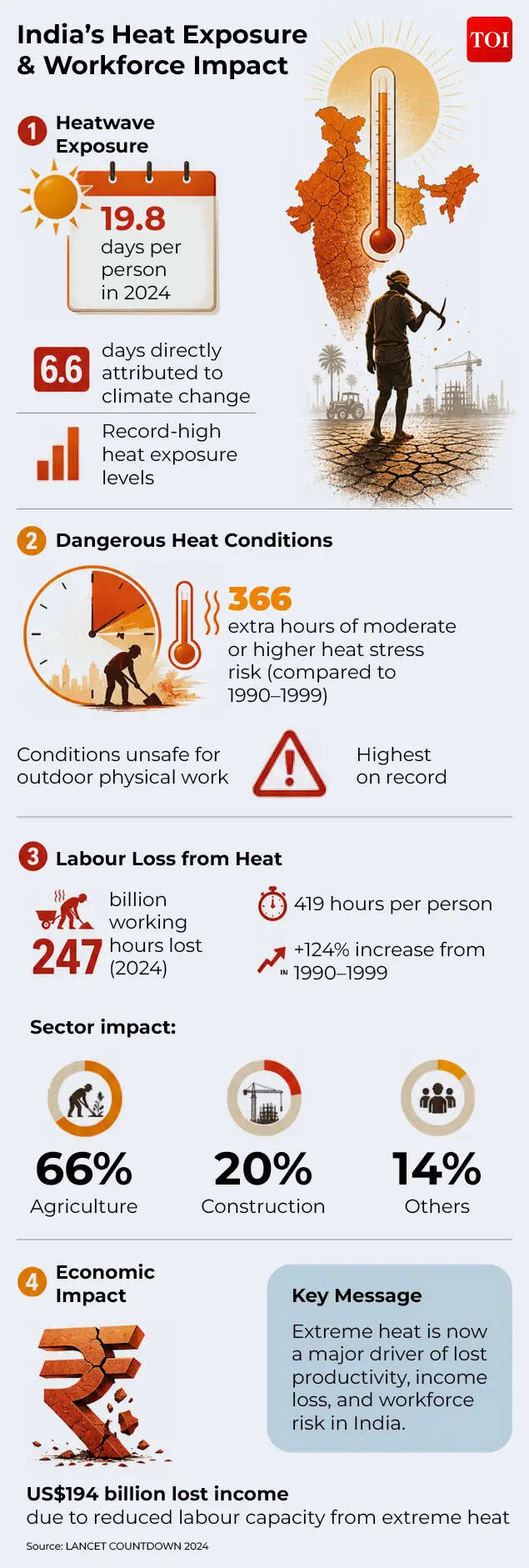
For India’s informal workforce, heat is not just a weather event but an occupational hazard that directly cuts wages and reduces working hours.Street vendors, construction workers, rickshaw pullers, farm labourers and delivery workers remain directly exposed to extreme temperatures with little protection. Office goers and daily commuters also spend long hours moving through the same conditions, often with limited relief. Work does not pause when temperatures rise, and air conditioning remains out of reach for many households. Even where it is used, cooling systems release waste heat into already dense urban areas, adding to the surrounding temperature burden.
–
The health and economic toll is already visible. According to the Lancet Countdown on Health and Climate Change, people in India experienced an average of 19.8 heatwave days in 2024, the warmest year on record. The study links rising heat exposure to increased illness, reduced labour capacity and falling productivity. It estimates potential income losses of about 194 billion dollars due to heat-driven labour reduction.At the same time, extreme heat is feeding into wider economic stress. Higher electricity demand for cooling increases power consumption, water shortages strain urban supply systems, and climate variability affects food production and prices, adding pressure to household budgets.
Health impacts
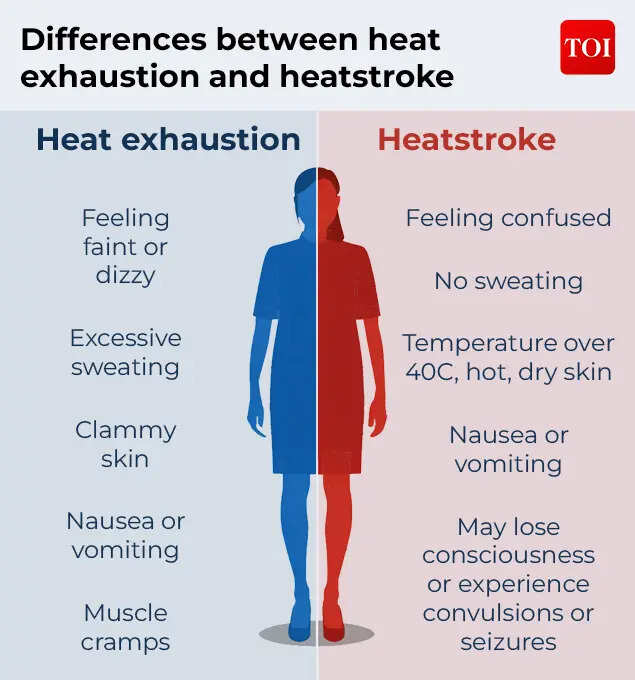
Extreme heat disrupts the body’s ability to regulate internal temperature. When ambient conditions exceed physiological thresholds, sweating alone becomes insufficient.Common conditions include dehydration, muscle cramps, heat exhaustion and heatstroke. Severe exposure can lead to organ failure and death.
–
Heatwaves are strongly associated with increased mortality from cardiovascular, respiratory and neurological conditions. Estimates suggest between 10,000 and over 20,000 heat-related deaths in India over two decades. Independent studies indicate that the actual toll may be higher due to underreporting, as heat is often not recorded as a primary cause of death.
Urban India: Heat trapped by design
Urban areas face amplified risk due to the urban heat island effect. Dense construction, reduced vegetation and limited airflow trap heat, making cities warmer than surrounding rural areas, especially at night, a phenomenon known as the Urban Heat Island (UHI) effect.Rapid urbanisation has replaced tree cover and green spaces with concrete surfaces that absorb heat during the day and release it slowly at night. This creates persistently high nighttime temperatures, reducing the body’s ability to recover between heat exposure cycles.Heat is therefore not only meteorological. It is also shaped by planning, land use and ecological change.
Economy under heat stress
Extreme heat is increasingly feeding into economic stress. Higher temperatures drive electricity demand for cooling, increasing power consumption during peak summer months.At the same time, agricultural productivity declines under heat stress and erratic rainfall. In 2022, unusually high pre-harvest temperatures during the grain-filling stage caused significant yield losses in major wheat-growing states such as Punjab, Haryana and Uttar Pradesh. This led to a ban on wheat exports aimed at stabilising domestic supply and controlling prices.For households, this creates a dual burden of rising food inflation and higher cooling costs.
Poll
What do you think is the main contributor to the increasing heatwave conditions in India?
A longer, harsher summer
In the convergence of rising temperatures, shifting climate patterns, India’s summer is no longer merely a seasonal cycle. It is becoming a prolonged test of endurance, measured not only in degrees Celsius, but in loss of wages, health risk, mortality and survival. And, as temperatures rise and climate patterns shift, India’s summer is becoming harder to navigate and stakes are rising. How the country adapts to this growing heat stress, whether by slowing deforestation and protecting existing forest cover, expanding urban green spaces that can lower local temperatures, reducing reliance on coal-based power, which still accounts for roughly 70% of electricity generation, and accelerating the shift to cleaner energy sources such as solar, will shape livelihoods and public health outcomes.