






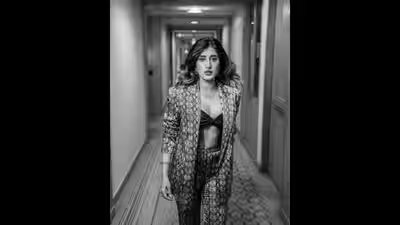
With recent hits such as Jab Talak and Panwadi adding to her growing popularity, Akasa Singh is enjoying an exciting phase in her musical journey. But for the singer, having a chartbuster is only one part of what it means to be an artiste today. From delivering high-energy stage performances to maintaining visibility on social media, expectations for singers are changing rapidly. During her recent visit to Bengaluru, Akasa opened up about the changing music industry, the pressure to stay relevant and why she remains firmly sceptical about AI taking over music. Excerpts:‘The bar for live performers has gone up’Akasa belongs to a generation of singers who do much more than simply walk on stage and sing. Her shows involve movement, energy and performance. But she does not believe every singer needs to follow the same template. “Sunidhi Chauhan has been one of my idols. She and many other artistes have been doing these kinds of performances for years. This isn’t really something new. The bar has definitely been raised, but I don’t think every singer is expected to dance on stage,” she says. She believes every performer can create their own identity on stage. “Someone like Shreya Ghoshal is not going to be expected to dance. But even her performances are so much more than just standing and singing. There are many ways to own a stage,” she explains.For Akasa, the higher expectations are a welcome challenge. “It’s good pressure. Why shouldn’t India have its own Sabrina Carpenters or Taylor Swifts? We are capable of it,” she asserts. She does feel, though, that the production ecosystem needs to catch up. “People also need to understand how much money it takes to put up that kind of show. Many artistes have to put their own money in just to show someone what their vision can look like.”‘Talent is often judged alongside followers’The singer admits that being an artiste today also means being visible online. “Over the last few years, there has been a huge shift because of social media. Today, you don’t necessarily have to go knocking on music directors’ doors or depend only on labels or reality shows. You can build something independently,” she says. But the freedom comes with its own pressures. “I’ve heard that even singers are sometimes preferred based on how many followers they have. That is sad. Also, the fact that I have to be a content creator along with being a singer can be frustrating,” she says. At the same time, she acknowledges that audiences are now consuming music and performances from across the world. “Young audiences are watching K-pop, Korean music and artistes who sing, dance, dress up and create a whole world around their music. Obviously, their standards will go up,” she adds.‘I’m scared for what AI means for musicians’When it comes to AI, Akasa does not attempt to hide where she stands. “I am one of those disgruntled people who is like, ‘Please stop using AI,’” she laughs. Her concern, she says, extends beyond singers to the larger community of musicians. “What is going to happen to instrumentalists, guitarists and live musicians? I’m scared for everyone. I really believe in authenticity. I did not like Auto-Tune when it became so commonly used. So with AI, I’m even more sceptical,” she says.Her message is simple: “Let AI handle the more mundane chores – like laundry for instance. Why should I use it to do something creative, something that I enjoy doing, and something that I can ensure is authentic and unique? As long as I can sing myself and go to the studio to do my thing, I don’t want AI to do it for me.” ‘Bengaluru has always been a happy place for me’Akasa says Bengaluru is far from a new destination for her. “I’ve been coming here since 2011. I have always spoken about how unfair it is that Bengaluru is blessed with such good weather literally all around the year,” she says with a laugh. Traffic complaints aside, the singer says she has always enjoyed her visits. “I love the weather and I love the food. The last time I was here, I actually went out to eat in my gig outfit at one of those famous places where you stand and eat idli-dosa,” she says.