








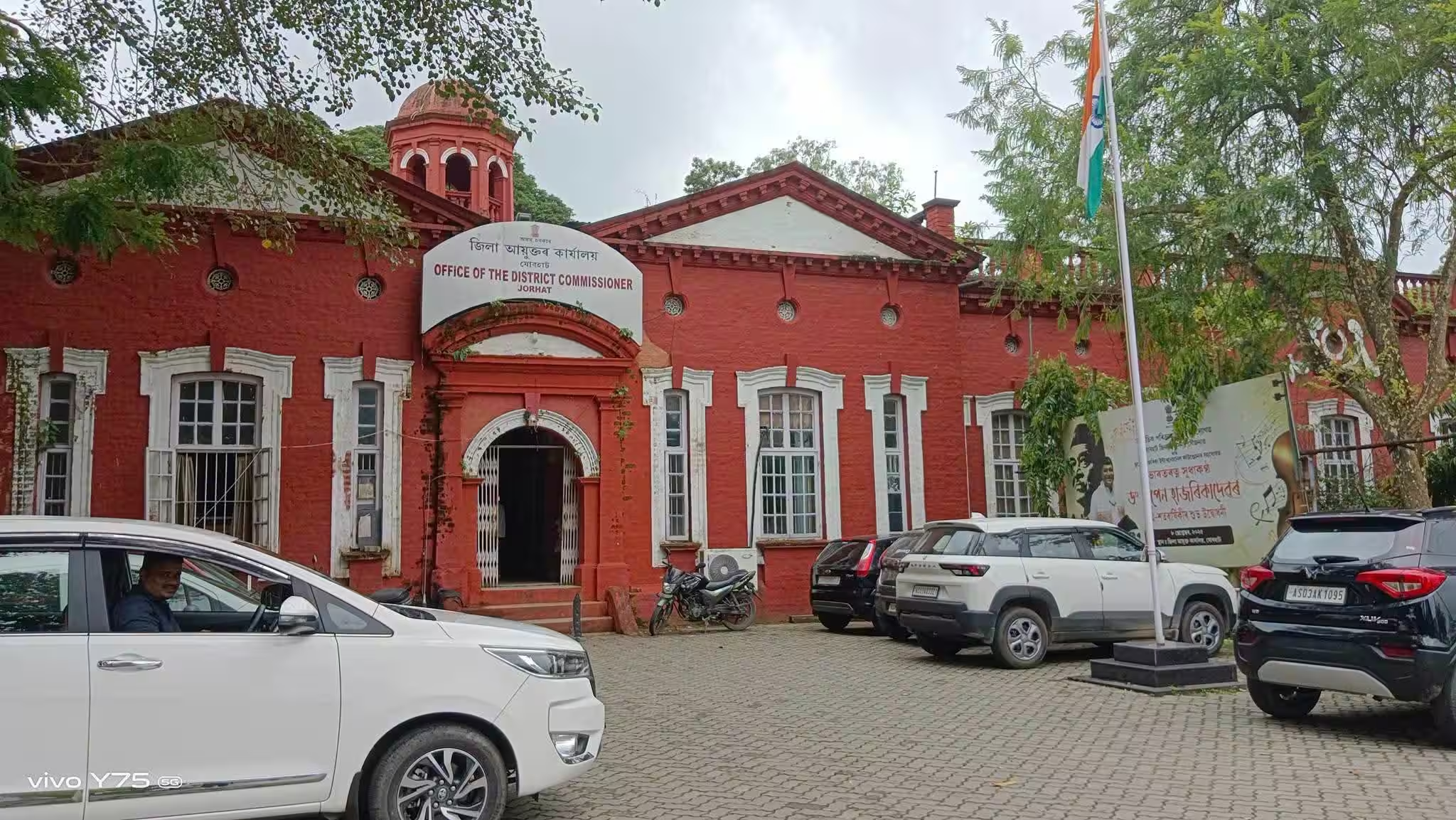
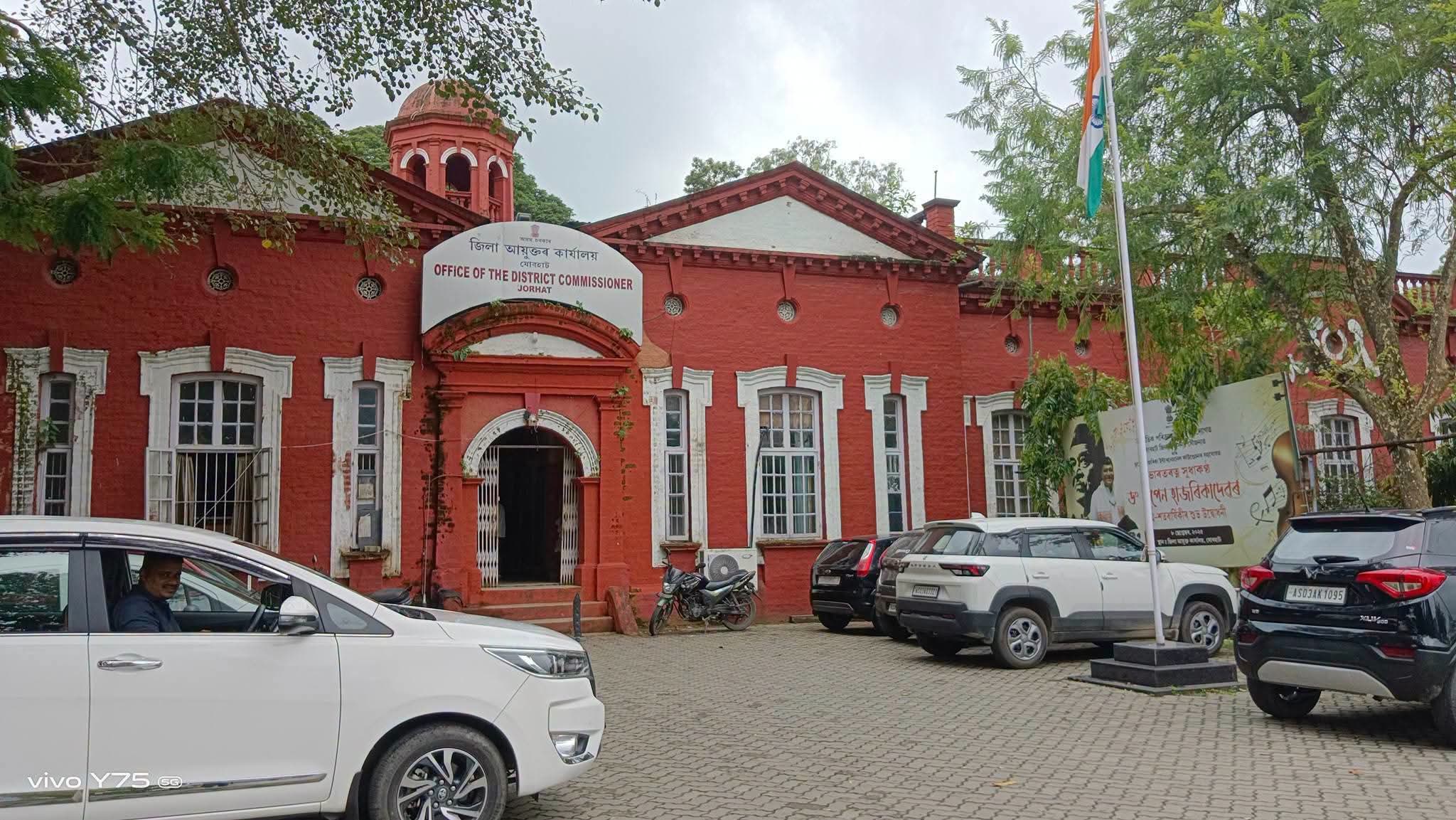
Dibrugarh: An important chapter in Jorhat’s administrative history is set to close as the city’s iconic 112-year-old Ronga Bhavan prepares to cease functioning as the district commissioner’s office after more than a century.The Victorian-style red-brick building, constructed in 1914 during the British period, is set to fall silent as the Jorhat district administration shifts to a new integrated office complex at Cinnamara later this month. The new facility is nearing completion, while the transfer of official records and files from the historic building is already under way.The transition holds special significance for Jorhat district commissioner Jay Shivani, who assumed charge on Sept 20, 2024. He will be the last DC to function from Ronga Bhavan and the first to begin administrative work from the new Cinnamara complex.“The building is a historic heritage structure and has a very special place in Jorhat’s administrative history. Being the last district commissioner to serve from the old Ronga Bhavan and the first to begin functioning from the new integrated office complex is both a matter of pride and a unique coincidence for me,” Shivani said.“Ronga Bhavan has been an integral part of Jorhat’s administrative journey for more than a century. As we shift to the new complex, our priority is to ensure that the transition is carried out in a systematic, responsible and scientific manner. This is particularly important because the old building houses records of immense historical value, some of which date back nearly 200 years. We must preserve these records and at the same time ensure that the legacy of Ronga Bhavan is protected for future generations,” he said.Ronga Bhavan’s history is intertwined with the emergence of modern Jorhat as an important administrative centre in upper Assam. Jorhat was declared the headquarters of the undivided Sivasagar district in 1911, and the district headquarters was shifted from Rangpur to Jorhat in 1912. The present red-brick structure was built two years later, in 1914.Over the decades, the building witnessed successive generations of administrators, officials, lawyers and ordinary citizens visiting it for administrative work. Even after Jorhat became a separate district on July 1, 1983, the historic building continued to serve as the nerve centre of the district administration.The relocation is not merely an administrative exercise but also a major archival undertaking. The building reportedly contains records dating back nearly 200 years. While older records belonging to different branches have begun to be shifted, documents required for routine administrative work continue to be handled from the existing office.For many elderly residents, the building represents memories of a Jorhat that has changed dramatically around it. “I have seen generations of people come to this building for land matters, certificates, official work and court-related issues. The red-brick walls are part of the identity of old Jorhat. It will feel strange to see the DC office move out, but I hope the building is preserved rather than allowed to deteriorate,” said Dr Bolin Kharghoria, a physician and a long-time resident of Jorhat.The future of Ronga Bhavan, however, has not yet been formally settled. There is speculation that the structure could be conserved as a heritage centre or transformed into a district museum. CM Himanta Biswa Sarma had earlier indicated that the building could be given a museum-related purpose, although formal instructions are awaited.The move, therefore, is unlikely to mark the end of Ronga Bhavan’s public life. Instead, serving as a centre of administration for 112 years, the landmark could embark on a new journey as a custodian of Jorhat’s history and collective memory.