







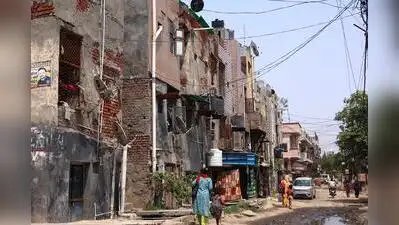
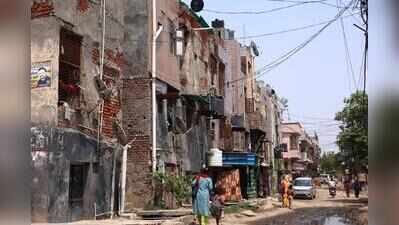
Ghaziabad: The collapse of the Satya Niketan building in Delhi, which has claimed seven lives so far, has once again exposed the risks posed by the city’s growing list of unsafe structures. The city now has more than 150 buildings classified as unsafe or dangerous, up from 26 in a 2018 survey and 102 in 2020.UP govt introduced the Urban Redevelopment Policy 2026, its first policy for redeveloping unsafe and dilapidated buildings, but little has changed on the ground since it came into effect. Affected residents said the policy remains largely “on paper”.A resident of Tulsi Niketan, Kulddeep Kasana, said, “Tulsi Niketan has been Ghaziabad’s most dangerous society for years. The township had been declared unsafe in 2019. For almost eight years now, no repair work has been done on the buildings. Initially, there was a consensus about rehabilitation of the residents between the RWA and GDA. The Authority, later, evaded it and the residents also did not agree to it. GDA developed the colony three decades ago but they don’t want to invest in its redevelopment.”“The building collapse in Satya Niketan has caught the attention but Tulsi Niketan has remained neglected,” he added. Last year in May, a 25-year-old man and his 5-year-old nephew were killed after a first-floor balcony collapsed on a grocery shop. An initial investigation found that a woman, Shabina, who lived with her family in that first-floor flat, had illegally built a toilet on that balcony. “There have been incidents of roof collapse and many people have been grievously injured,” Kasana said.There are 220 LIG flats, 2,004 EWS flats and 60 shops that are in a dilapidated state and over 500 people still live in these colonies.
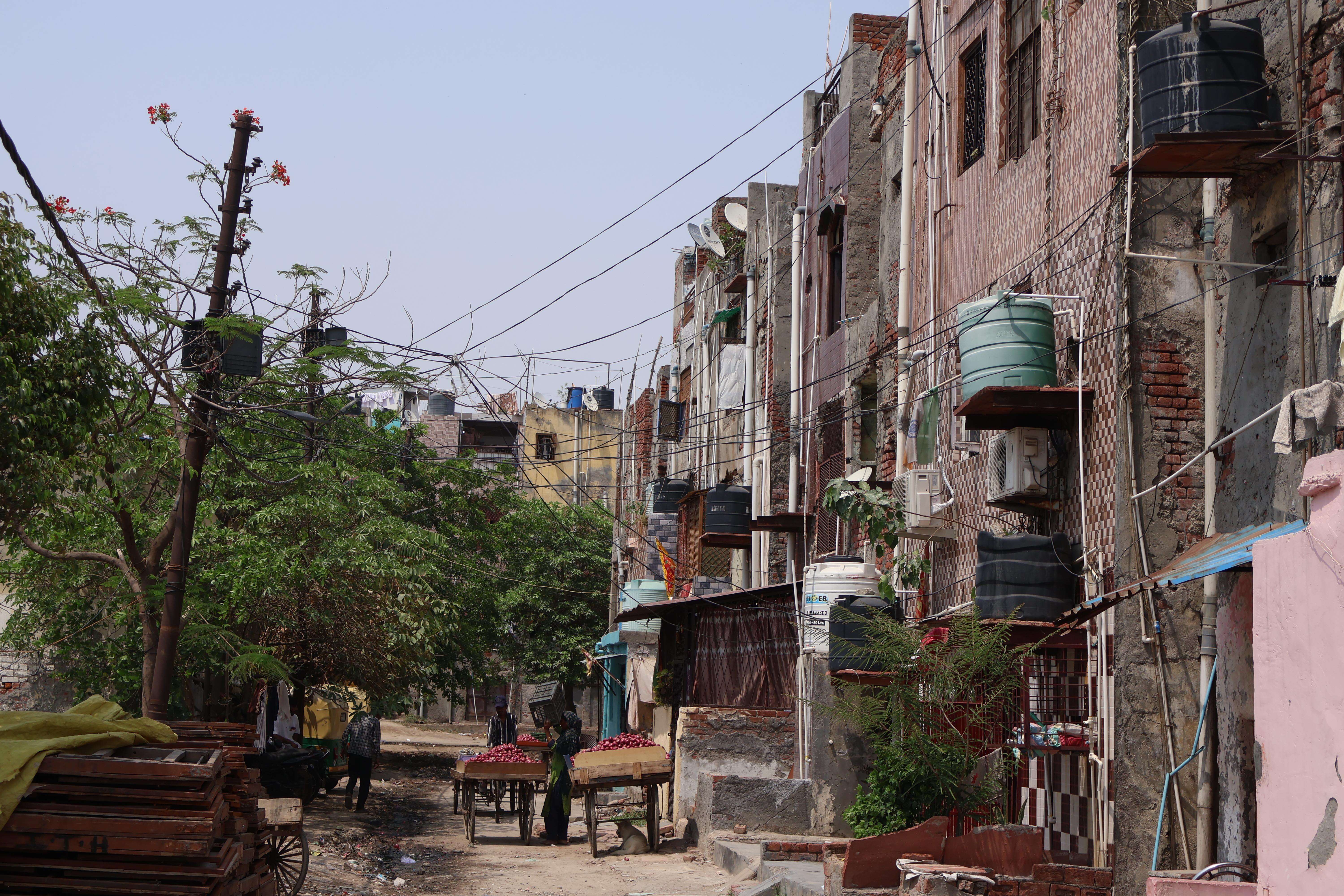
Dangerous Buildings Zarzar flats in Tulsi Niketan -Photo Umesh Kumar
In Vaishali too, at least three towers — Alaknanda, Manadkani and Saryu towers — which are inhabited have been declared dangerous, and yet for many years no efforts have been made to restore them.On Tulsi Niketan, GDA officials said that work is progressing on the redevelopment of Tulsi Niketan. “Under the Urban Redevelopment Policy-2026, the GDA board also approved the redevelopment of Tulsi Niketan. The complex was developed by GDA on 7.8 hectares about three decades ago in the 1990s. But years of neglect and lack of maintenance led to the gradual deterioration of the structures, making it the city’s most unsafe building,” added the official.When asked about other dangerous buildings, the official said that the state govt has introduced Urban Redevelopment Policy-2026 to deal with the redevelopment of dangerous buildings and gradually it will be extended to other colonies and houses as well.According to the policy, private or govt housing schemes which are at least 25 years old or more can be allowed for redevelopment based on a structural audit. The minimum land parcel of buildings or societies should be 1,500 sqm.Industrial units which are defunct for three or more years and that were declared sick by the NCLT, with no legal issues, will also be covered under the said policy.Govt agencies will implement this policy and, if the need arises, it could also be redeveloped under a public-private partnership mode. In case of private developers, AOA will be allowed to effect redevelopment work only if consent is received from two-thirds of residents.The construction work has to be completed in three years and, in case of special circumstances, an extension of two years could be given. To incentivise the scheme, a rebate of 50% will be given on development charge. Also, a 25% rebate of land conversion charge will be given, while 1 FAR over and above base FAR will be granted without any charge.Once formalities are worked out within 60 days, the inhabitants of the said buildings will have to vacate the society or flats, and within 12 months the work has to start.The agency executing the redevelopment work will also have to make arrangements for transit accommodation, which also includes rent until the time they are rehabilitated in their old flats. LIG and EWS flats will be 10% of what is constructed.