









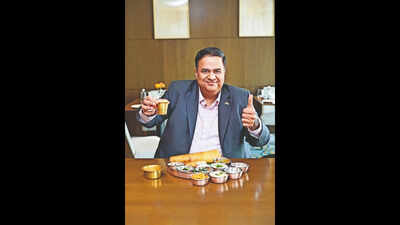
Savouring one of his last masala dosaes in Bengaluru, just a day before completing his tenure as British Deputy High Commissioner for Karnataka, Chandru Iyer sits down with Bangalore Times to reflect on the city and state that have been home to him for four years. The rakhis still adorning his wrist — some sent by his sisters and others tied by family in Bengaluru — are a reminder of the personal connections he has made here. But as he looks back on his time in Karnataka, it is the people, culture, art, food and distinctive character of the state that dominate his reflections. Having travelled extensively across Karnataka during his tenure, Chandru says what stands out most is its diversity — not just in its landscapes and cuisine, but also in the way its communities coexist. Excerpts:‘There’s so much to see and do in Karnataka’His experience of Karnataka extends well beyond Bengaluru. Over the past four years, Chandru has travelled to Mysuru, Hubballi-Dharwad, Davangere, Belagavi, Dakshina Kannada, Chikkamagaluru and Kodagu, among other places. “I think if you want to understand a state or a region, you need to go around,” he says. “There’s so much to do here and so much to see. We’ve got Hampi, the Western Ghats, temples, forts, waterfalls and Jog Falls. I think it’s time that we take the Karnataka story to the world,” he reflects.‘Can we have a Karnataka festival at Trafalgar Square?’For Chandru, the next step is taking Karnataka’s diversity beyond the state and even beyond India. He hopes to see a festival in London that showcases Karnataka’s food, culture, traditions, crafts and products. “My vision is to get Mysore sandal soap, Mysore silk, Chikkamagaluru coffee and Channapatna toys to the UK. We can celebrate the food, culture, traditions and people of Karnataka,” he says.One of the easiest ways to experience Karnataka, Chandru says, is through its food. His travels across the state have introduced him to Davangere benne dose, Hubballi-Dharwad’s susla, Mysuru’s Mylari dosa, Mangaluru buns and goli bajji. “Mangaluru is also the ice cream capital of the country. It’s amazing to see the quality of ice cream brands there. I’m keen to see if some of these brands can come and set up outlets in the UK. That’ll be fun,” he says.‘People coming together and living together is what defines Bengaluru’Living near Ulsoor Lake gave Chandru a particularly intimate view of Bengaluru. His mornings brought together sounds, sights and experiences that, for him, captured the essence of the city. “Every morning, I wake up to the view of the lake and its greenery and the modern skyline. I hear the Shabad Kirtan from the nearby Gurudwara and smell the kada prasad. I can hear the bells from Someshwara Temple and the azaan from the mosque. I think that’s what really defines India, Karnataka and Bengaluru — people coming together and living together,” he says.For him, this spirit of coexistence is one of Bengaluru’s defining characteristics. “The warmth of the people is what sets this city apart from some of the other global cities,” he says. He also believes Bengaluru’s green spaces remain central to its identity, even as the city continues to grow and its weather changes.“I think it is still one of the greenest cities in India. I love the weather. There are a few months when it’s hot, but post-summer, it’s beautiful. When I come out of my house, have a cup of South Indian filter coffee and look at the skyline, I think no other metro city in India has what Bengaluru has.”Ultimately, however, it is the everyday Bengaluru experience that appears to have left the strongest impression on Chandru. “I’ve made friends for life here,” he says. “Sometimes, with diplomatic postings, you move from one city to another and you forget people. But this city has been such that I don’t think they will allow me to forget them.”