







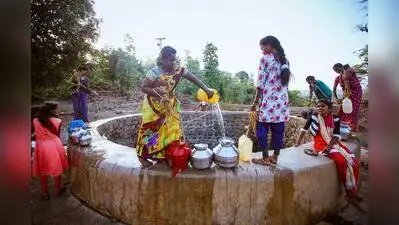
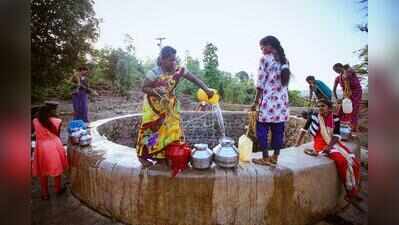
Bengaluru: Karnataka may be facing a rainfall deficit and burgeoning drought conditions, but the state is not leaving its water reserves to chance. Even as drought tightens its grip across Karnataka, the state government is going back to basics — assessing its water resources and planning their judicious use during times of crisis. In a first-of-its-kind initiative, Karnataka has become the first state in India to launch village-level water budgeting to assess available water resources against current and future demand from various sectors.At a time when the state government is yet to complete its drought assessment, the Rural Development and Panchayat Raj (RDPR) department has already completed the water-budgeting exercise in as many as 4,565 villages. The ambitious initiative involves scientifically assessing the water available within a geographical area against present and future demand, covering domestic, agricultural, industrial and other requirements. The state’s initiative received appreciation at the recently concluded two-day national summit on Sustainable Water Resources in New Delhi, according to RDPR minister Eshwar Khandre.The minister said the exercise assumes significance as the state faces increasing water stress and cannot afford to wait for wells and other sources to dry up before responding. “Instead of digging wells only after drought strikes, we need to anticipate water stress and take preventive measures. Water availability must be assessed scientifically and its use planned accordingly,” Khandre said. Karnataka has the second-largest extent of drought-prone land in the country after Rajasthan, making access to safe drinking water particularly challenging in rural areas. The state has 26,589 villages and 57,879 habitations, with about 44.5 million people living in rural areas.“The water-budgeting exercise was planned with the aim of changing the way villages manage water — from crisis response to advance planning. Currently, there is no dearth of water, and hence citizens may not realise its importance. But the days are not far when we could struggle to source fresh water, given the changing climatic conditions. By collaborating with multiple agencies, including meteorologists, geologists, hydrologists and revenue officials, local administrations can identify potential shortages, regulate consumption and plan conservation measures before a severe crisis develops,” the minister explained.According to the minister, water stress is compounded by Karnataka’s geology. “In several parts of the state, hard rock and laterite formations restrict rainwater from percolating into the ground. Excessive extraction has further depleted groundwater reserves, with lakhs of borewells drying up during summer. Constant degradation and erratic rainfall have resulted in excessive surface runoff without sufficient groundwater recharge. If these trends continue, surface-water sources will become the main basis of survival in the coming years. If lakes, ponds, reservoirs and rivers are not protected, water scarcity will become unavoidable,” Khandre said.He explained that Karnataka is also linking the water-budgeting exercise with more efficient water-delivery systems. “A 24×7 drinking water supply scheme has been introduced in 268 villages, resulting in around 7% savings in water use and a 12% reduction in electricity consumption for pumping water. Volumetric billing in these villages has enabled authorities to track actual consumption and improve supply planning. To ensure the quality of water supplied, we have also trained 1.5 lakh women to test water samples and provided them with field-testing kits,” Khandre said.